Click the flash player below to listen to or the mic to download an mp3 copy of this BA Radio commentary.
The multinational oil corporation Royal Dutch Shell faces civil charges of complicity in Nigerian government crimes against its citizens, most notably the execution of writer/activist Ken Saro-Wiwa and others in 1995. Shell will no doubt present itself as a victim. "It is a false dichotomy to separate the corruption of Nigeria's governments - military or civilian - from the predatory presence of Big Oil. The two are locked in the deepest embrace." Both the paymasters and the thugs are equally guilty of the crime.
Big Oil on Trial For 1995 Nigerian Executions
A Black Agenda Radio commentary by Glen Ford
“Shell can be compared to a businessman who hires a hit man to kill a union organizer.”
The Royal Dutch Shell oil corporation is on trial , in New York, charged in a civil suit with complicity in the death of Nigerian writer and environmental activist Ken Saro-Wiwa and eight comrades in 1995. Saro-Wiwa’s execution drew world attention to the environmental catastrophe that oil production has brought to the delta region of the Niger River, home to the Ogoni people. Saro-Wiwa and his co-defendants were tried by a military government, but Shell oil is charged with collaboration in the hangings, and in the torture of many other Ogonis – all to facilitate multi-billion dollar profits. Multinational corporations everywhere are following the case, fearing they too may called to account for their symbiotic relationships with murderous regimes in the resource-rich regions of the world. Nigeria’s environmental degradation is a by-product of the moral and political rot that flows from neocolonialism. It is the physical manifestation of the total surrender of national sovereignty to foreigners – like Shell oil – by those native classes that rule the land for the benefit of foreigners. To put one’s country’s resources at the disposal of foreigners is the ultimate corruption – which leads to every other conceivable crime.
It is a false dichotomy to separate the corruption of Nigeria’s governments – military or civilian – from the predatory presence of Big Oil. The two are locked in the deepest embrace. The foreign corporations pay the regime to maintain peace – and the regime reciprocates by imposing on the people a “peace of the dead.” There are other sources of corruption in the developing world, other contradictions between people and their governments, but the dominance of economic resources by foreigners exacerbates every other division in society. The competition to get into the foreigners’ money flow becomes the Great Game of national political life. The bigger the money flow, the greater the imperative to keep the people in check. The police and army serve as paid thugs for the foreigners’ protection. The national debasement is total. Nigeria’s most important city, Lagos, is also one of the most expensive in the world – yet 70 percent of Nigerians subsist on a dollar or less a day. There is no greater corruption imaginable.
“To put one’s country’s resources at the disposal of foreigners is the ultimate corruption.”
In court, Shell oil will seek to present itself as an innocent party – even a victim of African brutality and corruption. Shell is more properly compared to a businessman who hires a hit man to kill a union organizer. The businessman and the hit man are both guilty of capital murder. The greater onus is on the businessman, whose money made the crime possible.
In the Niger Delta, Ogoni rebels have cut Nigeria’s oil production in half , putting the squeeze on U.S.-based Chevron Oil (where, incidentally, Condoleezza Rice used to work). According to Amnesty International, hundreds of civilians have been killed in the fighting. The Nigerian government has declared the entire delta a military zone. No doubt, great crimes are being committed, at the behest of Big Oil. Before he was put to death, Ken Saro-Wiwa predicted it would come to this.

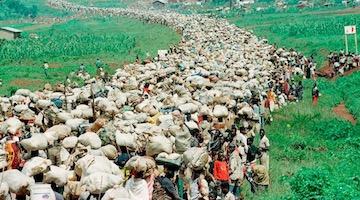 The real story of the Rwandan genocide begins in 1990, when exiled Tutsis from Uganda invaded northern Rwanda, unleashing a deadly campaign that uprooted a million Hutu peasants and set ethnic tens
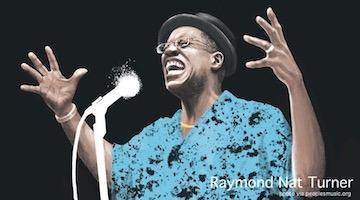 Northeast, midwest, southwest, south, down south, up south, out south—south of the Canadian border—Slouched down in his cruiser, slow-rollin’ the ‘hood; Or a-
 The new Democratic administration seems determined to sabotage an agreement to end the “longest war.”
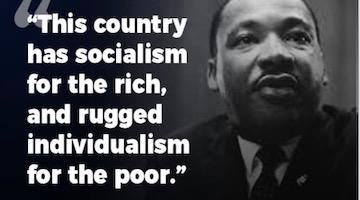 King explicitly linked the value of human dignity to the material conditions necessary to enable people to live a decent life.
 In "On Anarchism and Black Revolution" Peter James Hudson examines the historical roots of critiques of anarchism and its relationship to Black liberation movements.



