A Black Agenda Radio commentary by Glen Ford
By signing the preventive detention law that his operatives in Congress helped to craft, President Obama has nullified the pillars of the Bill of Rights: due process of law and freedom of speech. Journalist Chris Hedges is suing the would-be King Obama, while Nation of Islam leader Louis Farrakhan dares the president to charge him with “sedition and treason.” Every potential political dissenter can now be “locked up for the rest of their lives without charge or trial – essentially, on the president’s say-so.”
Barack Obama vs. Farrakhan, Hedges and the Bill of Rights
A Black Agenda Radio commentary by Glen Ford
“That act signed into law by our president is an act that is destined to stop those of us who speak truth to power.”
When it comes to preventive detention, journalist Chris Hedges Louis Farrakhan
Chris Hedges, the author and former New York Times correspondent, suspects that “the real purpose of this bill is to thwart internal, domestic movements that threaten the corporate state.” He has sued President Obama in the Southern District Court in New York City, challenging the National Defense Authorization Act that Obama signed when most people were celebrating New Years Eve. Hedges is especially troubled, and with good reason, by the language in the law that describes who can be locked up for the rest of their lives without charge or trial – essentially, on the president’s say-so.
The people that may be deprived of their fundamental rights are those that “substantially supported al-Qaeda, the Taliban, or associated forces that are engaged in hostilities against the United States or its coalition partners.” The key words are “substantially supported” and “associated forces.” In legal terms, “substantial” support, as opposed to “material” support, could easily be applied to speech that the government decides gives “aid and comfort” to al Qaeda or the Taliban. And “associated forces” could be anybody that the president’s men claim have some kind of association with terrorists – and that, too, could be in the form of speech.
This is a dungeon big enough to throw all kinds of people into, including reporters and citizens simply expressing their political opinions. “Dissent,” says Hedges, “is increasingly equated in this country with treason.”
“The real purpose of this bill is to thwart internal, domestic movements that threaten the corporate state.”
Minister Farrakhan told a Chicago radio host, “ That act signed into law by our president is an act that is destined to stop those of us who speak truth to power.” The Nation of Islam’s lawyer said the law might be interpreted as a “justifiable basis to detain [Farrakhan] in military custody without benefit of his constitutional right to trial” if he dissents with official U.S. policy. Farrakhan noted that the late Nation of Islam leader Elijah Muhammad was imprisoned during World War Two for advocating resistance to the draft. “If America goes to war,” he said, President Obama may be forced “to take Farrakhan off the streets; and charge him with ‘sedition’ and ‘treason.’”
The point here, of course, is not that Louis Farrakhan or Chris Hedges is in imminent danger of preventive detention in perpetuity, but that everyone is, because the Fifth Amendment to the Constitution, which provides for due process of law, and the First Amendment’s guarantees of free speech, no longer exist if a president finds them inconvenient.
Black America has always championed civil liberties, and could not possibly support preventive detention. But too many African Americans have failed to pay attention to Obama’s actual policies. They have treated him like an icon, or worse, a king. Now, with preventive detention the law of the land, he has become King Obama, a monarch with no constitutional bounds. Next year, it could be King Mitt, or King Newt – and it really doesn't matter which.
For Black Agenda Radio, I’m Glen Ford. On the web, go to BlackAgendaReport.com.
BAR executive editor Glen Ford can be contacted at Glen.Ford@BlackAgendaReport.com .

 The U.S. departure from Afghanistan is a victory against imperialism.
 Frantz Fanon’s influence on Paulo Freire’s thought is well known, but the Brazilian educator also drew considerably from Amílcar Cabral, the revolutionary intellectual from Guinea-Bissau.
 Census data show that gentrification is accelerating Black displacement.
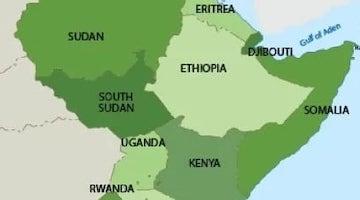 Cold War and War on Terror destabilize Somalia and cause great suffering for its people.
 In 1976, prisoners in the United States Penitentiary at Marion, Illinois wrote a collective document explaining the status of the prisoner within the prison—and the role of the prison


