by Mark P. Fancher
The U.S. and European media frame “racial” conflicts among the peoples of Africa as endemic to the continent, rather than a legacy and tool of colonial rule. However, “the crisis in Mali is not a simple conflict between two racial groups that can’t get along, even if race is somewhere in the mix.”
Arab/Black Conflict: A Colonial Gift to Africa That Keeps on Giving
by Mark P. Fancher
“The fingerprints of imperialism are all over the crisis.”
West Africa teeters on the brink of disaster because of an armed conflict in Mali that escalated after a Tuareg secessionist movement gained control of northern regions in the country. The situation became even more intense when, according to reports, the armed movement was hijacked by extremist elements that are alleged to have used torture and mutilation to enforce what is purported to be Islamic law. These extremist forces are also accused of having connections to terrorist formations.
Although the situation in Mali is rooted in a claimed desire for self-determination for the region that secessionists call “Azawad,” there are no doubt many outside of Mali regard it as yet another conflict between Arab and/or Islamic communities and “blacks.” A BBC News report stated: “The pale-skinned Tuaregs, who inhabit northern Mali, have long complained of neglect and discrimination by the government dominated by [southerners] in far-off Bamako.” The story reports that a Malian arson victim complained of retaliation for the Tuareg insurrection. “People started attacking anything Tuareg. They burnt houses, cars and attacked anyone with white skin – even Arabs.”
Mali is not the only place in Africa where a conflict has lent itself appropriately or inappropriately to a solely racial analysis. With varying degrees of accuracy the media and other observers have posited this Arab versus black paradigm in Sudan. In Libya, there actually were racial conflicts that were underreported. In that country, among those who sought Gadhafi’s overthrow were explicitly anti-black forces that carried out racially targeted torture and killings. Some even called themselves “The Brigade for Purging Slaves, Black Skin.”
“Many outside of Mali regard it as yet another conflict between Arab and/or Islamic communities and ‘blacks.’”
Little is gained by trying to understand the crisis in Mali, or other African conflicts, with only a racial analysis. Race may play a significant role, but the complexity of the history and context of seemingly racial conflicts is explained very well by Frantz Fanon in his classic work, The Wretched of the Earth. He described how actual and perceived racial antagonism can be traced back to European colonizers. He said the bourgeois elements in Africa have “…totally assimilated colonialist thought in its most corrupt form…” and they have established “…a racial philosophy which is extremely harmful for the future of Africa…”
Fanon elaborated by explaining: “Africa is divided into Black and White, and the names that are substituted – Africa South of the Sahara, Africa North of the Sahara – do not manage to hide this latent racism. Here, it is affirmed that White Africa has a thousand-year-old tradition of culture; that she is Mediterranean, that she is a continuation of Europe, and that she shares in Greco-Latin civilization. Black Africa is looked on as a region that is inert, brutal, uncivilized, in a word, savage. There, all day long you may hear unpleasant remarks about veiled women, polygamy, and the supposed disdain the Arabs have for the feminine sex…”
Fanon condemns both black and Arab bourgeoisies for the racist thoughts that travel in both directions - north and south of the Sahara by saying: “By its laziness and will to imitation, [the bourgeoisie] promotes the engrafting and stiffening of racism which was characteristic of the colonial era.” Even the post 9-11 “niggerization” of Arabs and Muslims has not completely erased much of the racial division Fanon observed in the 1960s.
Racial confusion serves well the interests of imperialism because race becomes the quick, easy explanation for wars when a more detailed analysis would reveal the true nature and extent of exploitative practices of external political and corporate forces. Mali is a case in point. It is not racial conflict, but a U.S.-trained captain in Mali’s army who can be largely blamed for having escalated tensions to crisis level. Amadou Sanogo led a military takeover of Mali’s civilian government purportedly to devote more resources to crushing the secession movement. However, it was during the post-coup confusion that secessionists were able to make their move and gain control of northern territories.
“Fanon condemns both black and Arab bourgeoisies for the racist thoughts that travel in both directions.”
Hilary Clinton and the leadership of U.S. Africa Command (AFRICOM) have been busy behind the scenes trying to pressure regional African governments to intervene in Mali militarily. The Economic Community of West African States (ECOWAS) recently resolved to send 3,300 soldiers from Nigeria, Niger, Burkina Faso and other African countries to regain control of northern Mali. This was certainly welcome news for the U.S. because the prospect of a “terrorist” stronghold in northwest Africa must be an imperialist’s nightmare given the amount of oil imported from countries in the region.
Algeria has resisted the call for intervention in Mali because of the potential for a regional war. Algeria’s terrorism and security advisor said: “The question in Mali is an internal matter and there is no need to further internationalize it.” Another Algerian official said: “We have not stopped emphasizing that a way out of the crisis, through dialogue between the Malian authorities and the rebel groups in the north is completely possible.”
Clearly then, the crisis in Mali is not a simple conflict between two racial groups that can’t get along, even if race is somewhere in the mix. The fingerprints of imperialism are all over the crisis. Lessons should be learned from Sudan, where the U.S. lurked and meddled while claiming there were racial tensions. After the balkanization of the country the U.S. slithered in and began making preparations to ease or avoid sanctions that had prevented U.S. oil companies from competing with China for access to South Sudan’s oil.
Until “Arabs,” “blacks” and other racial and ethnic groups in Africa become simply “Africans,” the U.S. and others in the imperialist camp will remain able to engage in low-profile political manipulation and military intervention by creating, exploiting or fanning the flames of mistrust that exist among the many diverse communities that live on the African continent. Notwithstanding interracial feelings that range from simple suspicion to, in some quarters, intense hatred, it remains possible for Africans of all backgrounds to recognize shared political interests even if, in some cases when it comes to culture, religion and social relations there is no common ground.
Mark P. Fancher is an attorney who writes frequently about the U.S. military presence in Africa. He can be reached at mfancher@comcast.net.

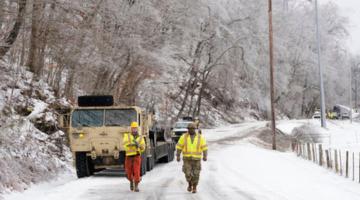 The militarization of disaster response is an indication that public infrastructure is not a governmental priority. The deployment of the National Guard to aid in times of emergency demonstrates a…
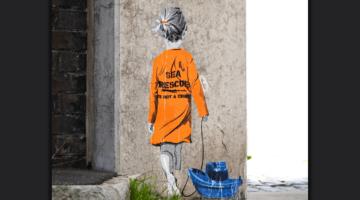 The Mediterranean is now the planet's deadliest migration corridor. Cyclone Harry exposed how European policies, not just storms, are driving the death toll.
 The Dow Jones hit 50,000, yet 200,000 people a day are selling their blood plasma to survive. This contrast illustrates the accelerated transfer of wealth from the working class to the ruling class.
 Racism explains the disconnect between influential Cuban American voices and the majority population of Cuba.
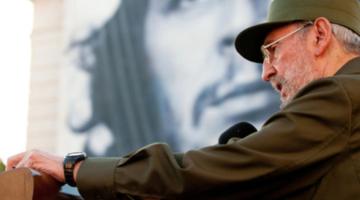 Fidel Castro warned of a scenario in which Cuba would have zero oil, zero imports, and zero outside assistance. That contingency plan is no longer theoretical. It's being implemented in real life by…


