African Women, White Men, Sex and Don Imus
by Mark P. Fancher
"It is no longer enough to simply point fingers at rap artists whose lyrics reference ‘hos' and ‘bitches' and somehow imply that Imus was inspired by African youth."
It is likely that on countless street corners throughout America, young Africans continue to ponder with great bewilderment how a crusty old racist with a radio show caused the national spotlight to focus on them and what they believe to be their music. Imus's vile pronouncement that the women of Rutgers' basketball team are "nappy-headed hos" triggered expected condemnation from "Black Leadership." But like a tornado that first wreaks havoc on a trailer park and then skips gingerly across several miles of grasslands before causing more destruction in a distant location, the leaders' criticism moved swiftly from Imus, landed at Hip-Hop's door, and lingered there.
The misogyny and self-loathing racial references of Hip-Hop are indefensible, and "Black Leadership's" instincts were on target. However, Africans in America find themselves in a moment when the struggles for liberation, human rights and justice demand that every blow that a "leader" strikes for the people enjoy the benefit of informed analysis rooted in an accurate understanding of history. It is no longer enough to simply point fingers at rap artists whose lyrics reference "hos" and "bitches" and somehow imply that Imus was inspired by African youth. Very basic questions must first be asked about whether Hip-Hop recordings released by mega entertainment corporations represent the honest expression of African youth culture, or whether they are instead products of white middle-aged executive male fantasies that have been tailored to appeal to the white, suburban teenaged demographic that accounts for more than three-quarters of all Hip-Hop music sales. Questions must then be asked about what drives the handful of young African "artists" who engage in Hip-Hop minstrelsy.
"The Imus affair is but a 21st Century manifestation of a white American pathology that has very deep historical roots."
Even the most cursory research reveals that the Imus affair is but a 21st Century manifestation of a white American pathology that has very deep historical roots. From the earliest days of their nightmarish, but nevertheless glorious sojourn in the western hemisphere, African women have been pegged as "hos" without any regard for their actual conduct. In a well-researched little book titled Ar'n't I a Woman?, historian Deborah Gray White described not only the experiences of African women on slave plantations, but also the attitudes held by white society. She wrote: "One of the most prevalent images of black women in antebellum America was of a person governed almost entirely by her libido, a Jezebel character."
White explained how proponents of the Jezebel idea used African dance styles, African women's sparse tropical clothing, and instances of polygamy as evidence of lust and lewdness. Victorian-era white women who dressed in layers of satin and lace looked with disdain on African women who tied their skirts around their upper thighs as they labored in water-filled rice fields. White men who took to routinely referring to African women as "wenches" convinced themselves that every African female they encountered looked upon them with lust. White quoted one white visitor to the antebellum south as stating: "...in almost every house there are negresses, slaves, who count it an honor to bring a mulatto into the world." This notion of black female sexuality became the foundation for an unspeakable history of mass rape. Countless enslaved African families endured the horror of having slave masters break into their homes and sexually assault a mother, or even pubescent and pre-pubescent daughters - sometimes as the family watched in helpless terror.
"The notion of black female sexuality became the foundation for an unspeakable history of mass rape."
There is much about the slave era that Africans themselves internalized. The word "nigger" became not only a derogatory word that accompanied acts of racial terrorism, but also a word long used by Africans themselves as a term of endearment. It is but one of numerous manifestations of self-hatred and a widely-shared inferiority complex. It is no wonder then that African men and many African women also internalized racist notions of black female sexuality.
While some might suggest that Hip-Hop misogyny is entirely home-grown, history indicates that the denigration of women is at odds with much of the culture of traditional Africa. For example, men not only recognized the genius of the Angolan queen, Nzinga, but also followed her into battle repeatedly in an ongoing war against the Portuguese. Likewise, the Ashanti Queen Mother Yaa Asantewa enjoyed universal respect, as did many other African queens. Among even the common folk, matrilineal succession was a distinct feature of certain traditional ethnic communities. As Africa's cultures were impacted by Arab and European influences, attitudes toward women changed. U.S. male chauvinism has certainly affected the attitudes of African males in America, including those who are willing to use the worst names for their sisters in recordings that they make for large corporations.
"U.S. male chauvinism has certainly affected the attitudes of African males in America."
While it is important to remain vigilant in the quest to purge Hip-Hop of its misogynist language, and racial self-hatred, it is perhaps most helpful to be armed with an analysis of its origins. The young brothers on the block who are puzzled about why they are being blamed for Don Imus's racism deserve a complete, informed explanation and not just finger-wagging condemnation.
Mark P. Fancher is an attorney, essayist and activist. He can be contacted at mfancher@comcast.net

 In this week’s segment, we hear about the ongoing uprising in France against neo-liberal austerity, colonialism, and white supremacy. But first, we discuss a new report that reveals a 25% decline in…
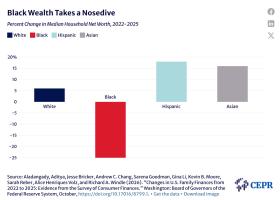 The Center for Economic and Policy Research (CEPR) recently reported on Federal Reserve data indicating that Black people in the U.S. have lost 25% of their wealth between 2022 and 2025. Whites,…
 Bouna Mbaye is an activist, writer, and a member of the Pan-African League-Umoja, the Pan-African Brigade for Palestine, and the US Out of Africa Network. He joins us from Paris to discuss the…
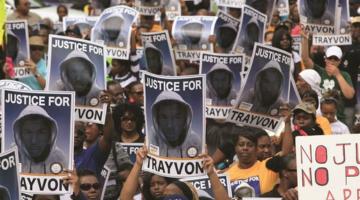 As Black Agenda Report is poised to celebrate its 20th anniversary, we reprint Glen Ford's commentary on the killing of Trayvon Martin and the impunity provided to his killer in a criminal justice…
 The Democratic Party is terrified of even small liberal reforms and will not abide left leaning democrats thwarting their plans for austerity and neoliberal orthodoxy.


