by BAR editor Ajamu Baraka
The 2008 campaign t-shirts depicted Barack Obama clasping hands with MLK, as if the two men were politically joined. Yet, one was a radical opponent of militarism and the rule of the rich, while the other served Wall Street, the Pentagon and American Exceptionalism. Dr. King loved humanity, and died in its service. In contrast, “for Obama, there is a hierarchy of humanity where a peoples’ worth is directly related to their value to the empire.”
Celebrating Dr. King with the Departure of Barack Obama
by BAR editor Ajamu Baraka
“King argued that the U.S. needed to get on the right side of the world revolution and that required a revolution of values in U.S. society.”
With the establishment of the period when the nation would celebrate the birthday of Dr. Martin Luther King Jr, no one could have anticipated the possibility that one day that period would converge with the date when a “first black president” would be turning over executive power after serving two terms. But in just a few days Barack Hussein Obama will conclude an ironic but historic chapter in the ongoing story of this strange and dangerous place called the United States of America.
The overlap of Dr. Martin Luther King Jr. Day and the constitutionally mandated turnover of power by the nation’s first black president serves as an analogy for the contradictory politics of race, representation, and power in the first white supremacist nation-state in human history.
Dr. King contributed to the creation of the black mass-movement for democratic and human rights that were presumably granted after the end of the Civil War and then denied for another hundred years. Barack Obama, on the other hand, cynically manipulated the perception that his presidency was the natural and logical result of the black movements of the 60s and 70s, while in actuality they represented two different and competing narratives of black existence in the U.S.
“King condemned the U.S. as ‘the greatest purveyor of violence in the world.’”
For me, nothing symbolizes the gulf between the meaning and politics of Dr. King and Barack Obama more than an incident in Atlanta that I wrote about a few years ago. Valerie Jarrett, Obama’s special advisor and personal friend, paid a visit to Ebenezer Baptist Church in Atlanta, the church of Dr. Martin Luther King. As members of the King family looked on, Ms. Jarrett received a standing ovation from the assembled congregation when she shared the story of how President Obama was responsible for the killing of an unarmed Osama bin Laden. I share this strange and surreal scene from Ebenezer Church, where the largely African American congregation endorsed the killing of another human being -- while in church -- because I think it captures the vast historical and moral distance between the two distinct periods. During the late 1950s and early 1960s, Dr. King emerged as the symbolic leader of the civil rights wing of the ongoing Black liberation movement and received the Nobel Peace Prize in 1964. On the other hand, Barack Obama launched with his ascendancy to the highest political office in the country and the winning of the Nobel Prize in 2008.
Not only did Dr. King and Barack Obama exist in two distinct but interrelated periods, they represented two distinct moral trajectories. By 1967 King condemned the U.S. as “the greatest purveyor of violence in the world.” He said that he could not morally square calling for non-violent resistance in the U.S. and remain silent in the face of the massive destruction and death being unleashed by the U.S. military against the people of Vietnam.
“Barack Obama, on the other hand, cynically manipulated the perception that his presidency was the natural and logical result of the black movements of the 60s and 70s.”
However -- for Obama -- U.S. violence presented no such qualms because his loyalties are not with the peoples of the world but with the American empire.
During his 2009 Nobel Prize acceptance speech, the newly elected President Obama presented an argument for the concept of a “just war.” Startling many in the Oslo audience, Obama forcefully asserted in what would become known as the “Obama doctrine” that: “We will not eradicate violent conflict in our lifetimes. There will be times when nations — acting individually or in concert — will find the use of force not only necessary but morally justified.”
For Obama, like liberal thought in general, there is a hierarchy of humanity where a peoples’ worth is directly related to their value to the empire. If they are the objects to be “saved” from some “dictator” and they reside in a national territory that empire has decided to seize in order to plunder its resources or for other geopolitical objectives, those peoples will occupy a higher status and will be recognized as humans – at least temporarily. But it is another story for the human beings who may be resisting the interests of empire. Those people have been assigned to what Fanon referred to as the “zone of non-being” and are, therefore, killable without any remorse and with impunity -- take, for example, the Native Americans, the Vietnamese, Libyan and Syrian nationalists, Palestinians, Eric Garner and Walter Scott, and the list goes on throughout the bloody history of this white supremacist, settler state.
The Obama period is over and hopefully its moral relativity will also pass. However, we know that moral relativity is inevitable in a society that has not come to terms with the contradictions of its defining philosophical tradition: liberalism. Liberalism represents the original sin of hierarchizing human societies and peoples and provides arrogant justifications for committing the most horrific crimes against “others” in the name of humanitarianism. This is the essence of the white supremacist doctrine of American exceptionalism.
While Dr. King condemned the lawless violence, warmongering and colonialism of the U.S., historically and in Vietnam specifically, Obama clearly states that he believes “in American exceptionalism with every fiber of [his] being.”
“Liberalism provides arrogant justifications for committing the most horrific crimes against “others” in the name of humanitarianism.”
So on the occasion of the departure of Barack Obama and the acknowledgement of Dr. King’s birthday, let us recommit to a vision -- not a dream -- but a life-affirming vision of a society and world in which the fundamental human rights and dignity of all peoples is respected.
It is not too late, even with the election of Donald Trump, but it will take courage and clear thinking in order to shake ourselves free from the strange, hypnotic trance that has gripped liberals and progressives of all stripes. Dr. King pointed us in the right direction just before he was assassinated when he reminded us that we were living in revolutionary times. King argued that the U.S. needed to get on the right side of the world revolution and that required a revolution of values in U.S. society. With the U.S. gripped in an unsolvable capitalist economic crisis that has deepened poverty, exacerbated racism and xenophobia, intensified class contradictions and struggle, and produced a Donald Trump, the liberated knowledge and experience of the black liberation movement in the U.S. is actively creating new ways of living and seeing the world that will liberate all of us.
This is the reality of a new world that Dr. King could see from the mountaintop -- and that is a world that a visionless, opportunist technocrat like Obama and a moribund liberalism could never imagine.
This article was adapted from The Descent: From Dr. King to Barack Obama that was published in Counterpunch and Black Agenda Report in January 2013
Ajamu Baraka was the 2016 candidate for vice president on the Green Party ticket. He is an editor and contributing columnist for the Black Agenda Report and contributing columnist for Counterpunch magazine. His latest publications include contributions to Killing Trayvons: An Anthology of American Violence (Counterpunch Books, 2014), Imagine: Living in a Socialist USA (HarperCollins, 2014) and Claim No Easy Victories: The Legacy of Amilcar Cabral ( CODESRIA, 2013). He can be reached at www.AjamuBaraka.com

 On March 8,1971 a brave group of people revealed the extent of FBI spying, harassment and even the killings of US citizens. More than 50 years later we would do well to remember the significance of…
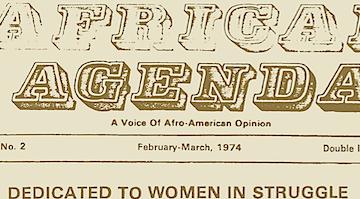 Revisiting a 1974 editorial on Black women and the international struggle against patriarchy, racism, imperialism, and capitalism on International Women’s Day.
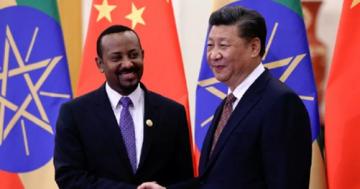 In Africa as in the rest of the world, US machinations undermine its goals and bring other nations together as they seek to protect themselves from a desperate empire.
 …
…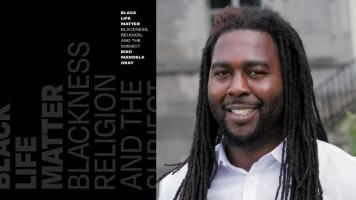 This week’s featured author is Biko Mandela Gray. Gray is Assistant Professor of Religion at Syracuse University. His book is Black Life Matter: Blackness, Religion, and the Subject.


