Caribbean governments are betraying Cuba through silence and compliance with U.S. empire. The only way to challenge this failure of leadership is for the people to build an anti-imperialist movement.
Introduction
What we are seeing across the Caribbean in 2025-2026 is a total absence of political and moral leadership, specifically in regards to the failure of elected officials and prominent regional organizations like the Caribbean Community (CARICOM), to speak out against the criminal blockade and embargo of Cuba, and the imperialist attacks against Venezuela – which includes the violation of Venezuela’s sovereignty that resulted in the kidnapping of the Venezuelan President, Nicolás Maduro, and First Lady, Cilia Flores by the United States (US).
We heed Tennyson Joseph’s (2025) warning:
Given the apparent weaknesses of Caribbean leaders in the face of US power, it is necessary for the Caribbean people, academia, civil society organizations to put pressure on their governments to resist the isolation of Cuba, or to themselves directly amplify their voices and their actions in direct support of Cuba and its people. The Caribbean simply cannot allow Cuba to fall. If Cuba fails, Caribbean sovereignty will come to an end.[1]
We also echo Norman Girvan’s (2008) statement that the debt owed to Cuba is unpayable (“la deuda es impagable”)[2] and, as Horace Campbell (2025) writes, this debt is “not quantified in monetary terms.”[3] Instead, the debt owed to Cuba – by Caribbean people especially – is in real solidaristic terms. It is our duty to uplift regional unity against imperialist visions for domination in our region, given the sacrifices and solidarity of Cuba and its people to us. Cuba’s solidarity to the Caribbean region has brought progressive developments – including independence. Without the Cuban Revolution of 1959, the colonial pretense that island states could not be self governing – unless neocolonial governors were installed – was shattered. While anti-colonial movements shifted to neocolonial governments in the Caribbean, which garnered many of them US support (such as the US-supported dictatorship of François “Papa Doc” Duvalier), Cuba’s Revolution rejected that shift.
The US imperialist vision for our region includes the denial of state sovereignties, and directing our external and internal policies so that foreign capital and the global capitalist system continue to sustain our underdevelopment. The US imperialist attacks on Cuba have only been emboldened by the lack of regional response to the imperialist attacks against Haiti and Venezuela. Going beyond the issue of solidarity, as we will explain, the Cuban and Venezuelan Revolution have arguably been the biggest contributors of progressive development to the region – in terms of material support – for the past 60 and 20 years respectively. The silence amidst the imperialist attacks on Haiti and Venezuela cannot be allowed against Cuba. On this question of the unpayable debt of real solidarity, it “belongs to those who have benefited from Cuban solidarity and have yet to respond in kind” (Pambuzaka News Editors, 2025). While our focus here is on Caribbean states that have benefitted from Cuban (and Venezuelan) solidarity, Cuban internationalism has been global.
Though imperial narratives often frame Cuban aid and development assistance in a negative light, convincing large swaths of people internationally that Cuba’s extension of development assistance is “harmful,” we provide facts to correct this record. The new articulation of the “Monroe Doctrine,” which includes the “Trump corollary,” demonstrates the continuation of US imperialist strategy in the Western Hemisphere that directly forces compliance from the states in the region.
A Brief Note on the Importance of Revolution for the Caribbean
As far as the Caribbean is concerned, there are three countries that notably structurally transformed the region and regional dynamics in the 18th and 19th centuries. Those countries are Haiti, Cuba, and Grenada – in that order. The Haitian Revolution (1791-1804) rendered slavery structurally untenable in the Caribbean – forcing the first permanent abolition of slavery and rendered direct colonial control untenable.[4] The Cuban Revolution (1953-1959) continued the project of making US direct colonial (and legal) control structurally untenable, and asserted the Caribbean region's anti-imperialist right to sovereignty and self- determination. In real terms, the Cuban Revolution’s example provided Caribbean independence fighters and leaders with a model, or a small state being able to self-govern without territorial status or “association” designation, which had almost been “pre-determined” for the Caribbean, based on colonial histories.”[5] Nevertheless, numerous US regimes (and their proxies) denied Cuba’s revolutionary transformation, claiming instead that the island was simply a geopolitical proxy of the Union of Soviet Socialist Republics (USSR).
The same could not be said for Grenada. The Grenada Revolution (1979-1983), picking up on this understanding of the Caribbean state’s anti-imperialist right to sovereignty and self- determination successfully took popular power. The Cuban example and its revolutionary aid to Grenada created the first regional project not tied to – or seriously supported by – the USSR, which was always a longstanding critique against the Cuban model. Previously led by dictator Eric Gairy, who was regarded as “democratic” given his ability to please the foreign capitalists and Western imperialists,[6] revolutionary Grenada was able to pursue a Caribbean oriented, non-aligned path of development that challenged foreign control over a Caribbean economy. For the first time in the Caribbean region, an English-speaking Caribbean state was able to advocate ideas of ideological and developmental paths that did not align with imperialism, worker exploitation, or foreign ownership and exploitation of one’s economy and resources.[7]
The World Bank was even forced to admit in its 1982 report that despite inheriting a deteriorating economy from the former dictator Eric Gairy, the policies and platform of the PRG were turning Grenada’s economy around. Grenada was one of the few countries in the Western hemisphere to see sustained, multi-year growth during a global economic downturn.[8] By 1983, 37% of the national budget was being spent on education and health, unemployment dropped to 14%, and the percentage of food imports dropped from over 40% to 28% at a time when market prices for agricultural products were collapsing worldwide. The short lived example of the Grenada Revolution proves that the people of the Caribbean have a material interest in being anti-imperialists.
Cuban Internationalism, Net Benefit to the Caribbean (and The World)
On January 29th, 2026 the US President, Donald Trump, issued Executive Order 14380 escalating US imperialist strategy and economic warfare against Cuba and those that trade with the island – by threatening to tariff all of Cuba’s trading partners that directly or indirectly provide the island with oil.[9] The executive order (EO) went on to state that the US President had the power to modify the order in the event that Cuba and its trading partners found ways to sidestep US “national security and foreign policy objectives,”[10] directly signaling the intent of the EO to control states behavior and external relations. Paired alongside statements made by the US President that the US had effectively “taken control of Venezuelan oil”[11] and now had the power to “starve Cuba of oil”[12] – while threatening Mexico for sending oil to Cuba[13] – the new US attempt to destabilize Cuba for the purpose of eradicating the political institutions in Cuba and further undermining the Cuban government – to destroy the Revolution – was (and is) in full effect. The outcry against the EO by organizations and civil society in the Caribbean, and globally, was swift – even as many of the governments in the region, and abroad, that have benefitted from Cuban internationalism and anti-imperialist politics, were quiet.
Many argue that leaders of Caribbean states are afraid of the overwhelming strength of the US military and the threats by the US Trump regime, to enact unilateral sanctions and tariffs. Nevertheless, this is no excuse for cowardice and complicity. We need only point to its unilateral actions against Cuba for 60+ years or the 1915 occupation of Haiti. And yet still, history shows courage – not cowardice – at opposing this US bully intent on directing the internal and external affairs of our Caribbean states. This is true even during the founding of the CARICOM by the leading independent states – Barbados, Guyana, Jamaica, and Trinidad and Tobago – in 1972, who opposed imperialist attempts to isolate Cuba in the Caribbean region. CARICOM rejected the isolation of Cuba by establishing formal diplomatic ties with the nation, paving the way for solidarity projects in technical cooperation, health, and education.[14]
Across the Caribbean today, various states' current and former Prime Ministers and Presidents partially owe their political successes to the infrastructure, social services and programs that directly come from, or received assistance from, states like Cuba. For instance, Venezuela’s PetroCaribe initiative and program – which provided discounted oil to the region to aid regional economic development – kept the Caribbean region afloat during a time of massive debt and declined investments. We need only see the dire consequences of the forced ending of projects such as PetroCaribe – through US sanctions and insistence – wherein it led to the fall in the standards of living for Caribbean people and increased regional debt and dependence. It is not a big leap, therefore, to suggest that abolishing medical and educational programs that Caribbean governments have with Cuba – again given US pressures and threats of sanctions or tariffs – will also have dire consequences for Caribbean peoples.
These destabilization campaigns by the US are not new to the Caribbean region. For instance, unable to paint the Grenada Revolution as a USSR proxy, US destabilization propaganda painted all positive developments in Grenada as nefariously planned “Cuban expansionism” into the country. Given that the Grenada Revolution highlighted that Caribbean people had a material interest in being anti-imperialists, public opinion was consistently constructed through US and Western propaganda with two purposes: (1) garner Caribbean support for Western models of development, and/or (2) make populations more amenable via fear – through the prospect of use of force or sanction – to support Western imperialism and development models.
This, the Grenada Revolutionaries themselves pointed out, was a successful strategy, given:
the substantial influence, and in some cases, control, which US imperialism and its allies in the industrial developed world, still exercise[d] over events in the Caribbean and in particular over some of the region's leaders.” [This was buttressed] “by threats of naval blockades, US military maneuvers in Caribbean waters, increased US military presence in Florida, Guantanamo Bay [, today in Puerto Rico and Haiti as well], the involvement of American ships in murderous plots to overthrow [revolutionary and/or progressive leaders], and the refusal of [US allied] countries” to sell revolutionary/progressive governments necessary military equipments to defend their sovereignty. Though these same countries sell to “fascist governments in South Africa [today, Israel and the UAE] to kill [Palestinian and African] black people.”[15]
Today, we see these same tactics in play: imperialist propaganda framing Cuban aid and development assistance to countries – in the form of education and or medical aid – as “terroristic” and “human trafficking,” alongside wider condemnations, by leaders, of communism. This is supported, however implicitly– by a wider turn of cowardice and complicity by Caribbean governments. This is why it is imperative that we correct the record on Cuban internationalism.
Cuban Medical and Education Support in the Caribbean
Today, imperialist counter-narratives are working hard to obscure Cuban internationalism. For us, it is important that we not assume that these counter-narratives by US imperialism will be outright rejected – given the current climate of cowardice and fear. The truth is, that since the 1970s, Cuba has offered life changing opportunities in the form of scholarships to train tens of thousands of Caribbean nationals to be doctors, nurses, technicians, engineers, agronomists, teachers and other professions, at no cost. For example, a total of 14 Cuban doctors, nurses and technicians came to Jamaica in 1976 to support the staff and community served by the Savannah-la-Mar Public General Hospital.[16] This was extremely important at the time, given structural adjustment policies in the Caribbean, including Jamaica, which cut the social services that could be accessed by Caribbean populations. Fast forward 30+ years later, and in 2025, the Jamaican government announced that 88 Cuban doctors, 199 nurses and another 100 technicians were working across the country in the Cuban Medical Cooperation Program.[17] For countries across the region still grappling with the consequences of IMF structural adjustment and a host of underdeveloped public service sectors that it produced, we cannot underestimate how important Cuban assistance has been to Caribbean health and education sectors.
Jamaica as an example is instructive, because it has one of the harshest austerity budgets in the world – mandated to run a budget surplus of 7.5%.[18] This program necessitated drastic cuts to government spending in order to pay down debt, resulting from following US/IMF led budgets over the past 40+ years. It is within this context, where Cuban medical assistance has acted as a safety valve, helping to offset personnel shortages and service gaps that are magnified by the systemic brain drain as underpaid and overworked healthcare workers have been under a wage freeze and thus seek higher salaries elsewhere, often in the US. This is why during the initial push for states to rid themselves of medical cooperation with Cuba, Caribbean leaders had such a strong reaction towards the US efforts to undermine these programs and label them as human trafficking. On top of the personnel, Cuba has also helped to establish long running programs to refurbish medical equipment, and the Jamaica/Cuba Eye Care Programme has undertaken thousands of sight-saving surgeries across Jamaica for free.[19] In fact, between 2004 and 2019 the Cuba-Venezuela program, Operación Milagro, restored the vision of 4 million people across 34 countries in the Caribbean and Latin America, for free, by providing eye surgeries to low-income communities and people.[20]
Though the economic contribution of Cuba’s medical assistance to the Caribbean has not been broken down by individual countries, it can be reliably valued in the billions of dollars. Contrast this with the fact that a country like Jamaica has paid more than $19 billion to the IMF and World Bank during the decades of structural adjustment, money that could have gone to help build and maintain a public healthcare system, Cuba’s medical solidarity is truly unmatched.[21] Cuba’s internationalism is only threatened by US and Western imperialism, seeking to cut communities off from healthcare given their vision of Caribbean lives as disposable. Jamaica, like other Caribbean governments, must reject this from happening.
PetroCaribe
PetroCaribe was a preferential energy alliance started by Venezuela in 2005 with Cuba also a founding member of the oil initiative. It offered countries in the region the ability to purchase oil at preferential terms, paid for below market rates (of 1 - 2 percent), with due dates ranging between 15 - 20 years. This stood in stark contrast to traditional oil purchases which required full payments in 90 days, and typically required states in the Caribbean and Latin America to borrow money (at 5 -15 percent) to pay the oil companies directly. The preferential terms of PetroCaribe allowed cash strapped governments from across the Caribbean to redirect money that would have otherwise gone towards oil related debt payments, into infrastructure and social service provisions. It has been estimated that PetroCaribe cost the Venezuelan government between 6 - 8 billion USD per year until it ended in 2019.
For Caribbean countries like Guyana that benefitted from PetroCaribe, it paid up to $3 billion of its oil debt in the form of goods – like rice exports to Venezuela.[22] This is important to highlight given that PetroCaribe repayments by Caribbean countries did not necessarily happen on monetary terms, but in this spirit of regional solidarity. Through separate agreements with embargoed Cuba, Venezuela – again in this spirit of solidarity – sent Cuba about 100,000 barrels of oil per day.[23]
What this means is that Cuba and Venezuela were, at the VERY LEAST, larger donors to the Caribbean over the past 20 years far surpassing that of the US and its Western allies. Yet, today, both Cuba and Venezuela are being discarded in favor of the US who engages with the region through threats of military intervention, economic blackmail, and travel bans. This is important, as it turns the argument that Caribbean governments must maintain – not just friendly relations with the US, but to take a downright subservient position vis a vis the US given development and monetary ties, all the more ludicrous. It is true that the US is the richest country on the planet, and it is also true that the US has instead been the biggest saboteur of Caribbean development projects and progressive programming – given its ideological disdain of solidarity, whether it be from Cuba, Venezuela, (and today, China).
To put Cuban and Venezuelan support in context, reports from the Congressional Research Service, USAID and ForeignAssistance.gov have highlighted that from 2010 to 2024, the US has contributed between $7.5 - 9 billion to the Caribbean IN TOTAL, with the majority of that funding going to the ongoing occupation and failed “reconstruction” of Haiti – enriching US institutions, NGOs, and military contractors.[24] This is also not conjecture. Forensic reporting by the Centre for Economic and Policy Research (CEPR) broke this down further, revealing that Haitian reconstruction efforts were largely a money laundering exercise, with 92 percent of USAID funding going to DC area firms, and less than 1 percent to Haitians and the government.[25] In contrast to US thievery, after the 2010 earthquake, Venezuela cancelled Haiti’s outstanding PetroCaribe debt, with Hugo Chavez stating “Haiti has no debt with Venezuela…on the contrary, it is Venezuela that is historically indebted to that nation.”[26]
At the same time as Venezuela announced the debt forgiveness, the puppet government of Michel Martelly would be installed by Hillary Clinton in a rigged election, and would eventually be accused of stealing an estimated $3.8 billion in PetroCaribe funds. Because that stolen money came from Venezuela, and not US oil companies, Martelly was able to live the high life in Florida, rather than face justice for his crimes which led to ongoing collapse of both the Haitian state and later assisted in the bankrupting of the PetroCaribe program given large losses amidst US sanctions on Venezuela.
None of this had to happen, but was made to happen. Dumbfoundedly, Caribbean leaders are consistent in their position that they cannot afford to alienate the US government – who they claim is their largest patron, customer, investor and supporter. We must be clear that US foreign investment has yet to build a hospital or train doctors – but has fractured regional unity while siphoning billions out of the region through the treadmill of debt repayment and economic policies which discriminate against domestic production and regional trade.
“Donroe Doctrine,” Down with Sovereignty: An Imperialist Tool of Forced Compliance
Only anti-imperialist solidarity can push back US bullyism in our region. After invading, bombing, and violating Venezuela's sovereignty – Trump proclaimed US “dominance in the Western Hemisphere will never be questioned again,” noting that “they call this the “Donroe Doctrine.””[27]
Under US President Trump’s tenure, the “Donroe Doctrine” is only the recent iteration of US imperialist strategy to downplay state sovereignty through economic warfare, psychological warfare, and violent military violations of sovereignty via bombings, invasions, kidnappings, assassinations, extrajudicial murders, and weapons testing.
The forced policy compliance of states thus far, in this new “Donroe Doctrine,” have been specifically done in ways that help to enrich individual members of the Trump regime, his friends, and the US military industrial complex seeking new ways to accrue profit outside of West Asia (commonly referred to as the “Middle East”). These blatant violations and conflicts of interests, while manifested through the Trump regime, is tolerated amongst a large swath of US government officials and the US state apparatus given an overall agreement with the Trump regime’s attempt to (re)assert US hegemony in the Western Hemisphere amidst perceived challenges posed by China, Russia, Iran, Hezbollah, and Hamas (all states and names that the administration has thrown around).
As various Prime Ministers talk about pressures from the US government to cut medical and educational ties with Cuba, as well as pressures from the US government to install various kinds of military equipment to surveil states like Cuba and Venezuela, as well as US threats of sanctions and travel and visa bans for not complying with US policy – we must be very clear about US imperialism being the primary contradiction and the destabilizing force in the region.
It is not by accident that the US has extrajudicially murdered 140+ Caribbean and Latin American nationals in our countries territorial waters. It is not by accident that after kidnapping the President and First Lady of Venezuela, the US claimed to own and control Venezuelan oil and land. It is not by accident that the US has threatened to sanction Mexico, Cuba’s largest oil trading partner as of 2024 given the sanctions against Venezuela, if it sends oil to Cuba. It is not by accident that Cambridge Analytica helped to usher in, in Trinidad and Tobago one of the most hostile Prime Ministers seeking to actively undermine Caribbean unity in favor of US Trumpism. It is not by accident that US President Trump talked about new technologies used to invade and bomb Venezuela, resulting in the deaths and injuries of hundreds, only to then brag about similar technologies being used in Gaza. It is not by accident that US mercenaries are now freely operating drones in Haiti, yet again contributing to the overwhelming death toll by US weapons in the region.
In 2025, three out of four of the leading CARICOM states – Guyana, Jamaica, and Trinidad and Tobago – refused to align with the Community of Latin American and Caribbean States (CELAC) to oppose growing US militarism in the region.[28] These states consented and complied with US militarism, and have been notably silent on US war crimes committed in the region and against Caribbean people – except for Trinidad and Tobago, which has done nothing but extol and grant numerous praises on the US capacity, intent, ability, and actions of killing Caribbean and Latin America people.[29] Amidst this fact, Guyana’s silence has been accompanied by increased security collaborations with the US[30]; Jamaica’s silence has been accompanied by quiet dismissals of Cuba’s medical programs[31] – it does not take a genius to surmise where those two governments also stand in relation to the “Donroe Doctrine.”
Conclusion
The collapse of the Grenada Revolution and the role that Caribbean leaders played in undermining it continues to traumatize the region to this day. Given these facts, the concern regarding Caribbean collaborators enabling the destruction of the Bolivarian Revolution in Venezuela, and the Cuban Revolution in Cuba, is concerning for all Caribbean people who care about justice, fairness, progressive development, and the sovereignty of our sisters and brothers in the region.
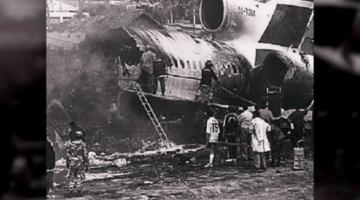
Today, Cuba’s humanitarian crisis is sparked by direct imperialist aggression against it and its revolution faces a critical point given US military might amassed in the region – that has already been deployed against Venezuela. US imperial hubris has long targeted Cuba via assassination attempts, biological, chemical, commercial, financial, medical and agricultural warfare – as well as the wider Caribbean region by committing one of the deadliest terrorist attacks in 1976 against Cubana Airlines Flight 455.[32] This is only surpassed by the ongoing US terror campaign of extrajudicial murder in our region targeting boats of fisherpeople – whose death toll of 145+ has yet to stop, and at the time of this writing, rises weekly. The January 3rd, 2026 attack on Venezuela has only emboldened US violence in our Caribbean region, and Isaac Saney (2026) provides us with some insight, as to what an attack on Cuba and its Revolution would mean:
“The crushing of the Cuban Revolution would embolden imperial aggression everywhere. It would reinforce the doctrine that no country, however principled its aspirations, can defy the dictates of global capital and survive. It would deepen cynicism and despair among oppressed peoples and movements struggling for emancipation, sending a chilling message that resistance is futile and alternatives are illusions.”[33]
In other words, just as we have yet to address where the Grenadian Revolution left off – that is building up anti-imperialist movements and states that can weaken the dictatorship of foreign capital in our region not determined, or capped, by US and Western foreign interests – a blow to the Cuban Revolution would mean erasing those gains that it made for us, namely: making US direct colonial and legal control of Caribbean states untenable. If we acknowledge that the “Donroe Doctrine” seeks to undermine sovereignty in favor of states being forced to comply with the policy interests of the US in ways that enrich the Trump regime, its allies, and the US military industrial complex – then not engaging in struggle with Cuba against US imperialist aggression means throwing out the red carpet for US direct control over Caribbean people and resources.
We believe that it is our duty to be in real solidarity with Cuba by opposing imperialism in our region and fighting alongside them in their struggle against continued US imperialist aggression in the Caribbean and elsewhere. It is our duty to remind the world that the Caribbean people have a material interest in being anti-imperialist and it is for this reason that the US has targeted Cuba for decades, as they shine as a bright beacon reminding us of that fact.
[1] Tennyson S.D., Joseph. ”Cuba and Caribbean Sovereignty: An Unpayable Debt.” February 20, 2026, Pambuzaka, https://www.pambazuka.org/Cuba-and-Caribbean-Sovereignty
[2] Norman, Girvan. 2008. ”The Debt is Unpayable, La Deuda es Impagable.” February 20, 2026, Pambuzaka, https://www.pambazuka.org/Debt-is-Unpayable
[3] Campbell, Horace. ”Quito Cuanavale and the break from Western Capitalist and Racist Domination: Africa’s Debt to Cuba” February 20, 2026, Pambuzaka, https://www.pambazuka.org/Cuito-Cuanavale-Africa-Debt-to-Cuba
[4] Knox, Robert. 2016. ”Valuing Race? Stretched Marxism and the Logic of Imperialism.” London Review of International Law 4(1), 81-126
https://law.unimelb.edu.au/__data/assets/pdf_file/0007/2356018/Knox,-Valuing-Race-Stretched-Marxism-and-the-logic-of-imperialism.pdf
[5] Ibid.
[6] Bishop, Maurice. [post humous]. “Appendix 1: Fascism: A Caribbean Reality?” in In Nobody's Backyard: Maurice Bishop's Speeches, 1979–1983. Pgs. 243-250, https://static1.squarespace.com/static/5c48e799d274cb651051c404/t/698b90a208a1855ff6424e8d/1770754210401/In+Nobodys+Backyard.pdf
[7] Bishop, Maurice. [post humous]. “Appendix 2: We have the Right to Build Our Own Country in Our Own Likeness ” in In Nobody's Backyard: Maurice Bishop's Speeches, 1979–1983. Pgs. 243-250, https://static1.squarespace.com/static/5c48e799d274cb651051c404/t/698b90a208a1855ff6424e8d/1770754210401/In+Nobodys+Backyard.pdf
[8] World Bank Country Study. 1985. Grenada Economic Report https://documents1.worldbank.org/curated/en/771531468030608851/text/759380PUB0Box30nada0Economic0Report.txt
[9] White House. “Addressing Threats to the United States by the Government of Cuba.” January 29, 2026 https://www.whitehouse.gov/presidential-actions/2026/01/addressing-threats-to-the-united-states-by-the-government-of-cuba/
[10] Ibid.
[11] Donald J. Trump. “I am pleased to announce that…” January 6, 2026, Truth Social
https://truthsocial.com/@realDonaldTrump/posts/115850817778602689
[12] Donald J. Trump. “Cuba lived, for many years, on large amounts of OIL and MONEY from Venezuela…” January 11, 2026, Truth Social
https://truthsocial.com/@realDonaldTrump/posts/115876460615555838
[13] Barrera, Jorge and Tania Miranda Perez. “”Trump Blindsided Mexico with Cuba Oil Export Tariff Threat, says Mexican President.” January 30, 2026 CBC News https://www.cbc.ca/news/world/mexico-cuba-trump-oil-tariff-9.7069046
[14] Antillean Media Group. “1972: How Four Caribbean Countries Led the Collapse of the Cuban Embargo in the Americas.” AMG, https://www.antillean.org/1972-caribbean-leaders-led-collapse-cuban-embargo-americas/#:~:text=The%20decision%20these%20leaders%20took,diplomatic%20relations%20with%20160%20countries%E2%80%9D.
[15] Free WestIndian Editorial. “Of Yard Fowls, Uncle Toms and Political Crapouds of Hypocrisy, Spite and Intimidation.” December 8, 1979.
[16] Lewis, Anthony. “Cuba Marks 60 Years of Medical Mission — 47 Years Service to Jamaica.” May 28, 2023, Jamaica Observer https://www.jamaicaobserver.com/2023/05/28/cuba-marks-60-years-of-medical-mission-47-years-service-to-jamaica/
[17] Linton, Latonya. “Partnership with Cuba Will Continue — Health Minister.” June 11, 2025, Jamaica Information Service (JIS) https://jis.gov.jm/partnership-with-cuba-will-continue-health-minister/
[18] Johnston, Jake. Partners in austerity: Jamaica, the United States and the international monetary fund. No. 2015-09. Center for Economic and Policy Research (CEPR), 2015. https://cepr.net/publications/partners-in-austerity-jamaica-the-united-states-and-the-international-monetary-fund/
[19] Ministry of Health and Wellness. “The Jamaica-Cuba Eye Care Programme.” October 22, 2023, Jamaica Information Service (JIS) https://jis.gov.jm/information/get-the-facts/the-jamaica-cuba-eye-care-programme/
[20] Gorry, Conner. 2019. “Six Decades of Cuban Global Health Cooperation.” MEDICC Review 21 (4): 83-92
https://mediccreview.org/wp-content/uploads/2019/09/MediccReview-October2019.pdf
[21] Johnston, Jake, and Juan A. Montecino. 2012. Update on the Jamaican economy. Washington DC: Center for Economic and Policy Research. https://cepr.net/publications/update-on-the-jamaican-economy/
[22] Thomas, Clive. “PetroCaribe and the Affliction of ‘Pathological Altruism’.” March 15, 2015, Stabroek News, https://www.stabroeknews.com/2015/03/15/features/petrocaribe-and-the-affliction-of-pathological-altruism/#google_vignette
[23] Ibid.
[24] Meyer, Peter J. 2023. U.S. Foreign Assistance to Latin America and the Caribbean: FY2023 Appropriations. CRS Report No. R47344. Washington, DC: Congressional Research Service. https://www.congress.gov/crs-product/R47331;
U.S. Agency for International Development and U.S. Department of State. "Foreign Assistance Data Dashboard: Caribbean Region (2010–2025)." ForeignAssistance.gov.;
U.S. Agency for International Development. "U.S. Overseas Loans and Grants: Greenbook." USAID Explorer. https://explorer.usaid.gov/aid-trends.
[25] Johnson, Jake. 2018. “Where Does the Money Go? Eight Years of USAID Funding in Haiti.” Center for Economic and Policy Research (CEPR), https://cepr.net/publications/where-does-the-money-go-eight-years-of-usaid-funding-in-haiti/
[26] Schepers, Emile. 2010. “Venezuela Cancels Haiti’s Debt.” People’s World, https://www.peoplesworld.org/article/venezuela-cancels-haiti-s-debt/
[27] Este, Johnathan. 2026. “Greenland, Venezuela and the ‘Donroe Doctrine’.” The Conversation, https://theconversation.com/greenland-venezuela-and-the-donroe-doctrine-273041
[28] Watts, Jay. “CELAC Unity Shattered by Minority Siding with US Imperialism.” Mexico Solidarity Media September 4, 2025, https://mexicosolidarity.com/celac-unity-shattered-by-minority-siding-with-us-imperialism/
[29] Associated Press. “Trinidad and Tobago Leader Praises Strike and Says US Should Kill All Drug Traffickers ‘Violently’.” CNN, September 3, 2025, https://www.cnn.com/2025/09/03/americas/trinidad-tobago-caribbean-us-venezuela-strike-intl-latam
[30] News Room Guyana. “”Guyana Supports Democratic Transition in Venezuela and Maintenance of Region as Zone of Peace - President Ali.” NewsRoomGY, January 3, 2026, https://newsroom.gy/2026/01/03/guyana-supports-democratic-transition-in-venezuela-and-maintenance-of-region-as-zone-of-peace-president-ali/
[31] Ciber Cuba Editorial Team. “Jamaica’s Minister says they are Renegotiating the Medical Program with Cuba under Pressure from the United States.” February 17, 2026, CiberCuba, https://en.cibercuba.com/noticias/2026-02-17-u1-e208933-s27061-nid321094-ministro-jamaica-dice-renegocian-programa-medico#google_vignette
[32] Pambuzaka News Editors. 2026. “The Debt is Ours: Cuba, Solidarity, and the Obligation of the World.” Pambuzaka, https://www.pambazuka.org/Debt-is-Ours-Cuba-Solidarity
[33] Saney, I. “Cuba Must Not Fall - Its Revolution Matters to the Whole World.” Morning Star February 13, 2026. https://www.morningstaronline.co.uk/article/cuba-must-not-fall-its-revolution-matters-whole-world
Tamanisha John is an Assistant Professor at York University. She is a member of the Black Alliance for Peace (BAP), Caribbean Solidarity Network (CSN), and the Anti-Imperialist Scholars Collective (AISC). @tamanishajohn (Twitter and Instagram)
Kevin Edmonds (@kevin_edmonds) is a member of the Toronto-based Caribbean Solidarity Network (CSN), an organization committed to the principles of Caribbean Liberation and Unity across the region as well as throughout the Diaspora. He is also an assistant professor in the Caribbean Studies Program at the University of Toronto.

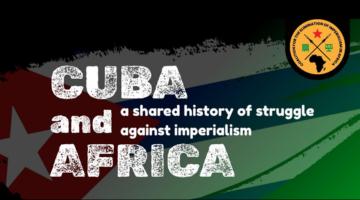 A coalition of Pan-African and socialist organizations has launched an international campaign to defend Cuba, arguing that African peoples must remember the sacrifices Cuban internationalists made…
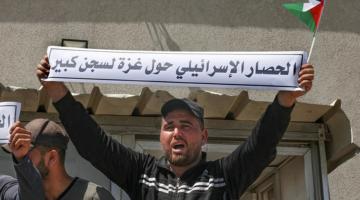 Three years into Israel's genocide in Gaza, the consequences of a decision driven by siege, settlement expansion, and assaults on Al-Aqsa are still unfolding.
 In this week’s segment we hear about the right-wing politics of the anti-migrant movement in South Africa, ANC failures, and upcoming elections in that country. But we begin with the first and only…
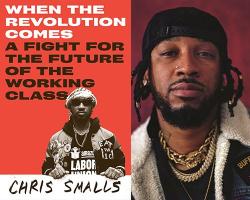 Chris Smalls discusses his memoir, "When the Revolution Comes: A Fight for the Future of the Working Class," published by Penguin Random House. He is the first and only union leader to successfully…


