VIDEO
by The Real News Network Bernie Sanders is about to hit a wall. Polls show that the black vote in South Carolina, and across Black America is heavily skewed against him. The fearful lesser-evilism that pervades black politics will doom the Sanders candidacy long before the Democratic convention in July.
by The Real News Network JARED BALL, TRNN: Welcome, everyone, back to the Real News Network. I'm Jared Ball here in Baltimore.
Executive editor and founder of BlackAgendaReport.com Glen Ford returns for another segment of the Ford Report. Welcome back to the Real News, Glen.
GLEN FORD, EXEC. EDITOR, BLACK AGENDA REPORT: Thanks for having me.
BALL: Glen, you've written recently that not only is Bernie Sanders not transformative, and that when it comes to developing radical social or electoral movements the Democratic party is dead weight, but that Sanders' eventual loss of the Democratic nomination to the, quote, corporate mercenary and pathological warlord Hillary Clinton, as you call her, will be due to black people. Will this loss you predict really be the fault of black America?
FORD: Well, yes, if you're just looking at the numbers and seeing where the numbers go. And those numbers among black folks are going three to one for Hillary Clinton nationally. In Nevada she swept all of the black precincts. We're going to have a Super Tuesday on March 1. There will be 11 states having primaries. Lots of them are in the South, where the black vote is important. And Hillary will be performing the same way in those black precincts. In South Carolina, blacks younger than 45 years of age are going for Sanders at, I believe, 35 percent. But 52 percent say they are for Hillary. And remember that Sanders, among young-ish white voters, is leaps and bounds ahead of Hillary Clinton. In South Carolina black folks who are 50 years old and older are going 78 percent to 12 percent for Hillary Clinton.
So this is a brick wall that Sanders is running into. It spells doom for his plans for the Democratic presidential nomination. It's really over, and it's because of the black vote's solid support for Clinton. And this really does spell doom, I think, for Sanders' effort to, as he puts it, transform the Democratic party from below, because the below of the Democratic party is black folks. We're about 25 percent of that party. And if our presence was going to transform the party, we'd be seeing a very different kind of party politically. Black folks are the most left-leaning constituency in the United States, that's been shown generation after generation. But we don't behave that way in national elections. And this year, much as in previous years, what we're seeing is that the black vote acts as the bulwark of the most reactionary wing of the Democratic party, the right wing of the Democratic party, and its standard-bearer this time around, Hillary Clinton.
BALL: You know, you talk about, as you've said, that black America is the most left-leaning constituency of the Democratic party, but part of this brick wall you've mentioned is the black misleadership class that continues to represent the ideals or politics of the black community that it claims to represent, and part of that, we think, was represented most recently by Congressman John Lewis in his defense of Hillary Clinton and Bill Clinton and their relationship to the civil rights struggle. Let's take a look at what he said.
JOHN LEWIS: I was chair of the Student Nonviolent Coordinating Committee for three years, from 1963-1966. I was involved in a sit-in, the freedom rally, the march on Washington, the march from Selma to Montgomery, and directed the Board of Education project for six years. Then I met Hillary Clinton. I met President Clinton.
BALL: Glen, could you respond a little bit to what is represented in these comments by John Lewis, that he saw Bill and Hillary Clinton in the struggle for civil rights, but not Bernie Sanders?
FORD: A huge dishonesty, and it's almost funny. On that day in 1963 there were 200,000, maybe a quarter of a million people on the Washington Mall, a very young 20-something Bernie Sanders was out there in the crowd. But John Lewis, who was one of the big six speakers at the March on Washington, says he didn't see him, but somehow he saw Hillary Clinton, while Hillary Clinton at that time was a Goldwater girl. That is, she was campaigning and organizing for Barry Goldwater, a presidential candidate so far to the right that this was the last election in the United States in which a majority of white voters voted for a Democrat. Hillary Clinton was, and her family, was not among them.
BALL: You know, Glen, just finally, could you say a word or two about what you think, or what are your hopes, for what the Bernie Sanders campaign might mean in terms of progressive politics within the Democratic party, and maybe why what we talked about here represents a response, or again a brick wall, against that?
FORD: Well, we've been saying that the best thing that could come out of Bernie Sanders' challenge to Hillary Clinton, and to the establishment of more corporate democrats would be a split in the Democratic party. That certainly cannot happen as effectively as it might without the black vote. Blacks make up a quarter of the party.
But it does have some precedence, precedent, in U.S. history that the two-party duopoly was basically the Democrats and the Whig party in the United States before the Civil War. But in the struggle, the political, ideological struggle over slavery, a new party, the Republicans, emerged, and they did so because of a split within the Whig party. The Whig party passed away from the scene, the Republican party agitated against slavery. To make a very long, complex story short, the Civil War happened and black emancipation--a split in the Democratic party would be a very good thing, it would create the space not just for possibly a new, broad-based more left social democratic party in the United States, but more space for all kinds of left, public--excuse me, political activities.
But that clearly, if that's going to happen, is going to happen because of militancy and great frustration on the part of those new, young, white voters who are so excited about Bernie Sanders and will be very, very frustrated and maybe angry when his candidacy finally does dissolve.
BALL: Well, Glen Ford, again, as always, thanks for joining us here at the Real News for your Ford Report.
FORD: Thank you.
BALL : And thanks to all of you for watching, wherever you are. For all involved, again, I'm Jared Ball here at the Real News in Baltimore saying, as Fred Hampton used to say, to you we say peace if you're willing to fight for it. So peace, everybody, and we'll catch you in the whirlwind.
Glen Ford is a distinguished radio-show host and commentator. In 1977, Ford co-launched, produced and hosted America's Black Forum, the first nationally syndicated Black news interview program on commercial television. In 1987, Ford launched Rap It Up, the first nationally syndicated Hip Hop music show, broadcast on 65 radio stations. Ford co-founded the Black Commentator in 2002 and in 2006 he launched the Black Agenda Report. Ford is also the author of The Big Lie: An Analysis of U.S. Media Coverage of the Grenada Invasion. 
 Jacqueline Luqman was a panelist on the February 16, 2023 webinar Why and How to End the War in Ukraine, which was sponsored by Chicago Area Peace Action. These were her remarks.
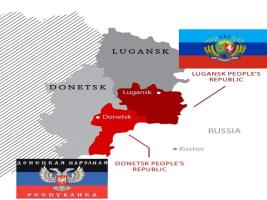 Ajamu Baraka argued that the Ukrainian crisis was a “manufactured crisis” primarily created by the miscalculations of policy-makers in the U.S. and Western Europe who were blinded by the prospect of…
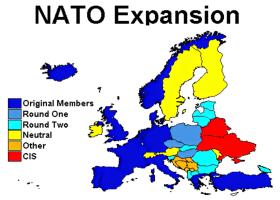 According to Dr. Gerald Horne, greed and shortsightedness convinced the U.S. that it could achieve the strategic objectives of undermining German economic power by controlling the European market,…
 February is the designated month to honor presidents, but Black people should know better than to believe what they are told about any benevolence on the part of George Washington, Abraham…
 The president of Eritrea gives a wide ranging interview on the U.S. regime change effort against neighboring nation Ethiopia using the TPLF, and long-standing U.S. hostility towards his country.


