In this series, we ask acclaimed authors to answer five questions about their book. This week’s featured author is Lucas de Lima. de Lima is a Visiting Lecturer in English at Mount Holyoke College. His book is Tropical Sacrifice.
Roberto Sirvent: How can your book help BAR readers understand the current political and social climate?
Lucas de Lima: In the poems that make up Tropical Sacrifice, Brazil and the US mirror each other as the two largest modern slaveholding societies and most populous settler states of the Americas. These parallels are evident not just in recent headlines—i.e., the whiteness of the fascists who stormed both seats of government—but also in ways that have been rendered invisible to US audiences, from Rudy Giuliani's role in training Brazilian police (as part of a long history of collaboration between US and Latin American police forces) to the thousands of Indigenous people murdered under a US-backed dictatorship.
Through the expansiveness of poetry and its ability to move across space and time, Tropical Sacrifice shows how North/South geographies of race are interwoven. While doing so, the book elevates Black and Indigenous voices from Brazil such as Carolina Maria de Jesus, Madame Satã, and Davi Kopenawa. This hemispheric perspective is rooted in my life experiences as a racialized immigrant in the US who is white in Brazil. The book's scope is likewise shaped by my dissertation, which explores the relationship between race and religion in the Americas by examining the criminalization of Afro-diasporic religions.
There's also the connection between race, colonialism, and ecology. I become a chicken in the narrative as a way of finding my body. An invasive species, I am both colonizer and colonized. Writing as a chicken, I created myth to make sense of race across borders, finding a language that did not exist for me in theory, social media, or latinidad. At the same time, the chicken's perspective made it possible to write from more than one peripheral place. The periphery in my poems is not just Brazil and the global south but also the Amazon, the industrial farm, the favela, and the blood-red sky where I learn to fly, half-winged.
What do you hope activists and community organizers will take away from reading your book?
There is an urgency to the book's channeling of violence that confronts the catastrophic present. This cry comes out of love for my birthplace. Brazil has the largest Black population outside of Africa. It is a majority-nonwhite country where police kill civilians at 6x the rate in the US and where the murder of Indigenous people at the hands of miners, loggers, and farmers is commonplace. It is consistently the country with the highest number of trans and queer people killed.
Brazil is also a deeply spiritual place. Despite the spread of Evangelicalism—another export of the US right—it is the spirit worlds of the poor and the marginalized that continue to nurture survival, resistance, and critical vision. Tropical Sacrifice places the chicken and the reader inside Afro-Brazilian, Native, Catholic, and mixed cosmologies while working through colonialism. If the need to separate and classify is part of what drove the western inventions of race and the gender binary, the spiritualities of the oppressed demand that we use our imaginations and relate not just to each other but also with more-than-human worlds. The book takes up this call not through extraction but by forging its own healing, queer pleasure, and ecological transformation. In the face of planetary death, I wanted to make space for grief, dreaming, ritual, and prophecy.
We know readers will learn a lot from your book, but what do you hope readers will un-learn? In other words, is there a particular ideology you’re hoping to dismantle?
I hope to offer an ancestral counternarrative to latinidad and the idealization of race mixture.
Race mixture in Latin America is a product of colonial violence and rape. This history alone makes an ancestral demand on those of us who are neither Native nor Black. We are called upon to betray whiteness.
In the book, to betray whiteness is to reject transcendence, innocence, and boundedness in favor of kinship as a practice and way of moving relationally in the world toward other worlds.
In other words, I don’t contain multitudes. It is Brazil's multitudes that contain and release me.
I also hope to challenge nationalism and tokenism. Tropical Sacrifice doesn't focus on race in the US or US imperialism abroad, unlike the poetry titles celebrated here. It's not by a writer based in the global south, meaning it won't benefit from recent interest in translation and the tokenization of “the Third-World poet who is always imagined as a singular voice against the savage masses”(Mona Kareem). And neither does the book resort to the signposts of a US or European canon. Even so, it is an attempt to translate ‘o Brasil profundo.’ At a time when the culture is all about checking boxes and making one's identity legible, I wrote a book that asks to be reread because it immerses the reader in poetry as ritual into the unknown or partially known.
Which intellectuals and/or intellectual movements most inspire your work?
I'm inspired by thinkers like Kelly Brown Douglas, Ana Mendieta, Adão Ventura, and Davi Kopenawa because they intervene in spiritual warfare. They show how spirituality is fundamental to politics no matter how secular we think we may be.
For instance, the notion of sacrifice that I draw on in the book comes from Douglas's What's Faith Got to Do with It?: Black Bodies/Christian Souls. According to Douglas, the logic of crucifixion rationalizes the suffering of the oppressed when it cannot hold together Jesus’s divinity and humanity, his spirit and flesh. Once the body and soul are severed on the cross, the oppressed are reduced to the body and its sins. The idea that the sinful are controlled by their bodies (and not governed by their souls) effectively marks them for violence. The act of sacrificing Black people in particular becomes a way to exorcize flesh from the world—a ritual to purify white souls.
In Brazil, we can trace Douglas's concept of "retributive suffering" back to the 17th-century Portuguese priest Antônio Vieira. Like Bartolomé de las Casas before him, Vieira advocated for the enslavement of Africans even as he denounced Indigenous slavery. Vieira told enslaved Africans to express gratitude to God for having transplanted and saved them from their prior ‘heathen’ existence. According to Vieira, this “miracle” put the enslaved in an enviable position as “imitators of crucified Christ."
Which two books published in the last five years would you recommend to BAR readers? How do you envision engaging these titles in your future work?
I love Jennif(f)er Tamayo's bruise/bruise/break and tatiana nascimento's lunduzinho, translated by Natália Affonso. These poets move me in their refusal to give up on desire and the fullness of experience. They push me toward the thrill of the body/spirit.
It’s this sense of thrill that I've been trying to bring to my readings and performances lately. The most recent of these was held at Cuchifritos Gallery in NYC and was based on the manuscript I'm currently working on, Cosmic Bottom. After collaborating with the artist Levani on an installation inspired by my poems, I read them while wearing a very flamboyant and otherworldly costume/sculpture designed by Uta Bekaia. To bookend the poems, I danced and enacted a ritual to the acapella whistling of Mariah Carey. The ritual involved two beautiful objects used by Levani in their own work—the turquoise cast of a coconut and the crib they slept in as an infant.
The acts of wearing Uta’s costume, integrating Levani’s objects, and moving my body as much as possible activated something for me, and made me excited for future collaborations. What I want is to keep giving flesh to my words, hopefully providing a bridge between the audience and my dreams and fantasies.
Roberto Sirvent is editor of the Black Agenda Report Book Forum.





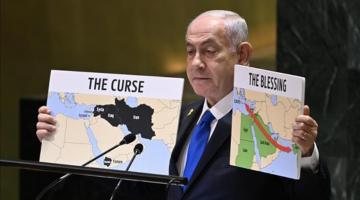
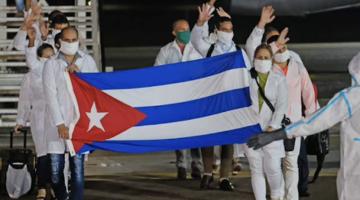
 In this week’s segment, we see through supposed disagreements between the US and Canada and recognize their partnership in settler colonialism, enslavement, and imperialism. But we begin with a…
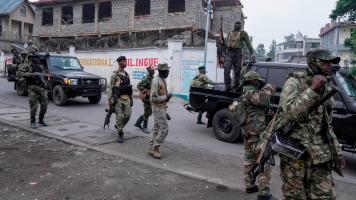 Joseph Kabila, former president of the Democratic Republic of Congo, named himself president of the Front for the Rebuilding of the Nation. He is now formally allied with M23, the Rwanda-backed…
 Isaac Saney is a Cuba and Black Studies specialist and historian at Dalhousie University in Halifax, Nova Scotia, Canada. He discusses the U.S./Canadian partnership in settler colonialism,…
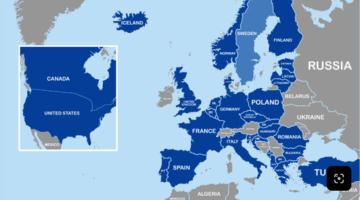 European puppet states have undermined themselves and their peoples' needs at the behest of the U.S. Now, that subservience may lead to war.
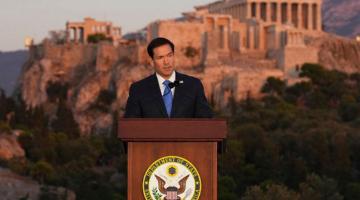 Marco Rubio's appeals to Western civilization, Christian heritage, and the defense of Western dominance are fundamental to the consolidating global fascist project, functioning to transform a crisis…


