“It is impossible to understand, or even fully appreciate, how black women have shaped national and global politics today without knowing the larger history.”
In this series, we ask acclaimed authors to answer five questions about their book. Today’s featured author is Keisha N. Blain. Blain is Assistant Professor of History at the University of Pittsburgh. Her book is Set the World on Fire: Black Nationalist Women and the Global Struggle for Freedom.
Roberto Sirvent: How can your book help BAR readers understand the current political and social climate?
Keisha Blain: My book highlights the crucial role that black nationalist women played in shaping national and global politics during the twentieth century. These women’s ideas and activism laid the groundwork for contemporary social and political movements in the United States and abroad. The Black Lives Matter movement, for example, draws on many of the core tenets of black nationalist thought, including the emphasis on community control and political power. The fact that black women founded the movement is not surprising and one can certainly make the case that these women’s organizing and mobilizing efforts mirror black women’s activism in the twentieth century. Even as circumstances and historical developments change, black women continue to be at the forefront of political movements. To be sure, they are not always fully embraced by the public and black women encounter a lot of resistance when they stand up to injustice and demand a more just and equal society. Yet they remain unwavering in the fight for social change—as they did in the decades and centuries prior. It is impossible to understand, or even fully appreciate, how black women have shaped national and global politics today without knowing the larger history and the various traditions on which these women are building.
What do you hope activists and community organizers will take away from reading your book?
I hope activists and community organizers find inspiration in the women’s stories that I tell in the book. The women in Set the World on Fire worked tirelessly for many years to advance their political goals with few material resources. This was a world before email and Twitter so these activists needed to hit the streets (and write a lot of letters!) to get the word out. They employed a range of strategies and tactics and they formed all kinds of political alliances. There is certainly a lesson to be learned about persistence even in the face of resistance and repression. I would add too that it’s important to remember that movements, like organizations, go through ebbs and flows. It’s easy to grow discouraged when that happens but as my book reveals, movements are simply conduits for ideas, and ideas persist long after movements die. The seeds we plant today will yield fruit—perhaps not immediately but the work is certainly not in vain.
We know readers will learn a lot from your book, but what do you hope readers will un-learn? In other words, is there a particular ideology you’re hoping to dismantle?
My hope is that my book helps to dismantle the masculinist framing of narratives about black nationalism and internationalism. While not discounting the crucial contributions of individuals like Marcus Garvey, Robert F. Williams, Malcolm X and others, I think it’s unfortunate that women are generally sidelined in popular narratives on black nationalism. As my book reveals, black women were critical to shaping black nationalist movements. They helped to sustain black nationalist politics in the decades between the Garvey movement of the 1920s and the emergence of Black Power. This is important to acknowledge because black nationalism would have all but disappeared were it not for women. Significantly, these women were also at the forefront of black internationalist movements of the period. They were committed to the cause of human rights and they wanted to improve the lives of people of color globally. In mainstream narratives on black internationalism of the twentieth century, figures like W.E.B. Du Bois and Paul Robeson take center stage. My work disrupts these male-dominated accounts and not only centers black women but also foregrounds the ideas and activism of working-poor black women who were thinking transnationally.
Who are the intellectual heroes that inspire your work?
I dedicated Set the World on Fire to my mother because she is one of the intellectual heroes who inspires my work. She is a very hard-working black woman who grew up with limited financial resources and limited access to formal education. But she is creative and resourceful and perhaps more importantly, she is passionate about helping others and refuses to sit idly by in the face of injustice. In some ways, I think my interest in writing about black women’s politics has been driven by a desire to center the ideas and activities of women who remind me of my mother. I would add too that my thinking about black women’s history has also been shaped by historian Tera Hunter (who I affectionately describe as my academic mother because of her mentorship over the years). Her scholarship has taught me how to think carefully and critically about centering the ideas and activities of black working-class (and working-poor) women. And I have learned so much from her extraordinary ability to creatively and rigorously analyze sources in order to bring characters and stories to life.
In what way does your book help us imagine new worlds?
I think readers will find in Set the World on Fire an array of women’s writings, including poems, songs, and newspaper articles, that help us imagine new worlds. I will emphasize one, in particular, that left a lasting impression on me. In 1942, Josephine Moody, a black nationalist from Cleveland, Ohio, wrote an impassioned article, which appeared in the New Negro World newspaper. “The bleeding wound of Africa is wide open,” Moody argued, “and the nations of the world keep the wound from healing, and we, the Negro must be our own physician to effect a healing of that wound.” “We want to set the world on fire,” she continued, “we want freedom and justice and a chance to build for ourselves. And if we must set the world on fire…we will, like other men, die for the realization of our dreams.” The title of my book comes from this article, which powerfully captures the new world these women imagined—one in which black people the world over would have complete freedom, justice, and equal rights. So many years later, Moody’s words still ring true.
Roberto Sirvent is Professor of Political and Social Ethics at Hope International University in Fullerton, CA. He also serves as the Outreach and Mentoring Coordinator for the Political Theology Network. He’s currently writing a book with fellow BAR contributor Danny Haiphong called American Exceptionalism and American Innocence: Essays on Race, Empire, and Historical Memory.




 In August 2020 the late Glen Ford spoke to former political prisoner Jihad Abdulmumit of the Jericho Movement about the origins and importance of Black August.
 Wilmer Leon and Margaret discussed the true reasons for antipathy towards Niger, and why other African nations are used as proxies for western interests.
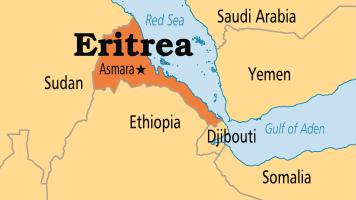 Eritrea is an example of an independent and self-determining African state. Its people are rightly proud of their history.
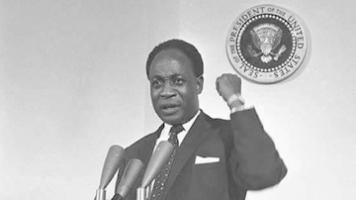 Sixty years ago, Nkrumah told us why it was important that Africa unite. Today, his message and roadmap for Pan-African unity is needed more than ever.
 The war against Africans intensifies, the puppets and stooges do as they are ordered, while others are satisfied with empty gestures. But the revolutionary path is unchanged, as Ajamu Baraka…


