BAR Book Forum: Brandon R. Byrd’s “The Black Republic”
We should see Haiti as a bellwether for what is occurring throughout the Americas and the world.
“The Black Republic encourages us to treat African Americans as political actors and thinkers capable of deep engagement with Haiti’s political realities.”
In this series, we ask acclaimed authors to answer five questions about their book. This week’s featured author is Brandon R. Byrd. Byrd is Assistant Professor of History at Vanderbilt University. His book is The Black Republic: African Americans and the Fate of Haiti.
Roberto Sirvent: How can your book help BAR readers understand the current political and social climate?
Brandon R. Byrd: The eras studied in The Black Republic were, generally speaking, characterized by social and political upheaval. In the decades following Emancipation, African Americans articulated rising, even revolutionary, expectations, which were often met with violent repression. Their struggles for self-determination, for an existence free from white supremacy, paralleled the anti-colonial and anti-imperialist struggles unfolding on a global stage.
There are parallels today. The rising expectations that accompanied the inauguration of Barack Obama, an event that, for many African Americans, signaled the culmination of a long Black freedom struggle, have collapsed under the weight of recession and rising income inequality, the climate crisis, anti-Black state violence, and the rise of xenophobia and right-wing governance. Now, as then, the struggle for Black liberation or, in today’s parlance, Black lives, is intimately connected to global struggles against the intertwined oppressions of racism, fascism, capitalism, and (neo)colonialism.
While The Black Republic might help readers see these parallels, it more directly encourages them to think with Haiti in order to see how the past structures and informs our present. The Black Republic covers a period in which Haiti moved to the center of the United States’ imperial ambitions. It ends in the U.S. occupation of Haiti, which lasted from 1915-1934 and whose legacies endure today. Accordingly, just as a number of the Black political actors and thinkers analyzed in The Black Republic came to understand the occupation as emblematic of the problems afflicting the entire colored and colonized world, we can and should see Haiti not as exceptional but, in the recent words of Cécile Accilien and Randal Maurice Jelks, as a bellwether for what is occurring throughout the Americas and the world. There are broader, important lessons in Haitians’ ongoing struggles for sovereignty and democracy.
What do you hope activists and community organizers will take away from reading your book?
I, like many, maybe most, historians who write about African American History, cannot help but be impressed by activists and community organizers. These are folks who are motivated by deep and sustained thinking about social change, leadership, and power—who, in putting their ideas into practice, risk personal safety, political rights, and financial security. So I approach this question with great humility and respect!
The Black Republic certainly shows the utility, even urgency, of internationalism—of thinking and building political solidarities across borders. Many of the Black thinkers and activists in my book went beyond mere interest in the Haitian Revolution or Haiti’s symbolism as a Black state and assigned real value to understanding Haiti’s political realities. Some sharpened their critique of U.S. racism and identified its symbiotic relationship with U.S. capitalism and imperialism by thinking with Haiti.
At the same time, The Black Republic does not romanticize Black internationalism or treat it as an uncomplicated politics. My book’s subjects include African Americans who were influenced by the Victorian ideals of their day and shaped by their positionality as Black people and citizens of a rising industrial, imperial, and supposedly exceptional power. It points to the promises and challenges of thinking and working across national and ethnic boundaries. The Black Republic treats unity as an aspiration and solidarity as a process. In problematizing these fundamental traits of Black internationalism, it asks what a truly liberatory politics, one strengthened by its attention to and appreciation of similarity and difference, looks like.
We know readers will learn a lot from your book, but what do you hope readers will un-learn? In other words, is there a particular ideology you’re hoping to dismantle?
I hope that readers will be willing to re-think some received wisdom about African Americans’ historical engagement with Haiti. Our histories, both academic and popular, often stress African Americans’ celebration of Toussaint Louverture and the Haitian Revolution. There is truth in those histories; African Americans did honor Louverture as a representative of Black military and political genius and consider the Haitian Revolution as a singular moment in the global Black freedom struggle. But we have to go beyond that. In conversation with some recent and forthcoming studies, including the work of Millery Polyné and Leslie M. Alexander, The Black Republic encourages us to see more nuance in African Americans’ historical relationship with Haiti—to treat African Americans as political actors and thinkers capable of deep engagement with Haiti’s political realities in addition to its symbolism and discursive meanings.
In exploring a greater depth and breadth of African American engagement with Haiti, The Black Republic necessarily addresses the timely subject of nationalism. My book demonstrates the complexities of nationalism. Some of its African American subjects espoused black nationalist ideologies that reflected an ambivalent feeling of constituting a nation within a nation; others joined Haitians in articulating an anti-colonial Haitian nationalism and identifying the imperial ambitions of U.S. and European nationalisms.
Accordingly, The Black Republic certainly joins a growing body of scholarship on Black internationalism, which collectively raises timely questions about nationalism and the nation-state. Scholarly work exploring transnational and even global visions of Black freedom has a particular salience in this age of resurgent ethnonationalism, which is particularly evident in the xenophobic and genocidal policies of the U.S., Chinese, and Indian governments. It encourages us to understand the various iterations, effects, and meanings of nationalism and explore, as countless Black thinkers have, alternatives to a world defined by borders and divided by walls.
Who are the intellectual heroes that inspire your work?
This might be cliché but I’m not sure that I have intellectual heroes per se. Historians have to be attune to the complexities of their subjects. Glorifying people, even the ones with the least discernable or objectionable faults, can make us inattentive to their humanity.
With that said, W.E.B. Du Bois is a central figure in The Black Republic and someone who I admire a great deal. Du Bois took an interdisciplinary approach to the study of a wide-range of subjects, including race, nation, democracy, and class. He not only produced pioneering work in History and Sociology and laid the foundations of Black Studies but also mastered a wide-range of literary genres. As a public intellectual, as a thinker in the most meaningful sense, Du Bois tried to make sense of the world around him while also trying to change it for the better. He was never afraid to revise earlier positions in light of new evidence and intellectual influences.
Of course, there are a number of my contemporaries who also inspire me. For instance, one cannot look at the work of Ibram X. Kendi and not be impressed by his own penchant for critical self-reflection, commitment to rigorous public scholarship, and mastery of multiple genres of writing. He, to paraphrase the words of Du Bois in Black Reconstruction in America, inspires through his much-needed commitment to writing the type of history that will establish the truth on which a more just future can be built.
In what way does your book help us imagine new worlds?
In a way, The Black Republic is fundamentally about imagining new worlds and futures. It asks readers to think about and alongside African American political actors and thinkers who were unsatisfied with the limited version of Black freedom that afflicted their uncertain present. It encourages us to think about how Haiti influenced their visions of something different.
The most radical and fully-fleshed out ideas of that “something different” emerged during and as a consequence of the U.S. occupation of Haiti. In an era of radical, New Negro politics, Black people not only responded to the occupation of Haiti but also considered is implications. What did it mean for a Black state to lose its sovereignty at the hands of U.S. Marines who had been empowered by Washington to do the bidding of Wall Street? What would Haiti’s liberation mean for the world? Emancipation from racism, imperialism, and capitalism—the forces that had collapsed on Haiti?
These questions, as I’ve suggested here and in The Black Republic, matter today.
Roberto Sirvent is Professor of Political and Social Ethics at Hope International University in Fullerton, CA, and an Affiliate Scholar at Yale University’s Interdisciplinary Center for Bioethics, where he directs the Race, Bioethics, and Public Health Project. He is co-author, with fellow BAR contributor Danny Haiphong, of the book, American Exceptionalism and American Innocence: A People’s History of Fake News—From the Revolutionary War to the War on Terror.
COMMENTS?
Please join the conversation on Black Agenda Report's Facebook page at http://facebook.com/blackagendareport
Or, you can comment by emailing us at comments@blackagendareport.com




 If international law and justice are buried in the rubble of Gaza, the global community will ultimately be digging its own grave.
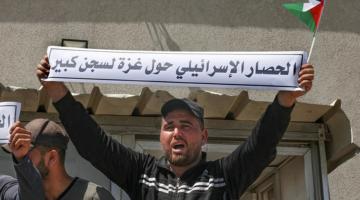 Three years into Israel's genocide in Gaza, the consequences of a decision driven by siege, settlement expansion, and assaults on Al-Aqsa are still unfolding.
 In this week’s segment we hear about the right-wing politics of the anti-migrant movement in South Africa, ANC failures, and upcoming elections in that country. But we begin with the first and only…
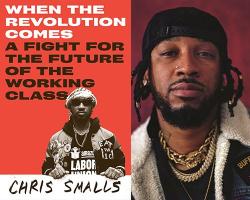 Chris Smalls discusses his memoir, "When the Revolution Comes: A Fight for the Future of the Working Class," published by Penguin Random House. He is the first and only union leader to successfully…
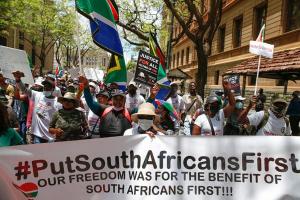 Our guest is Nairobi based political writer and strategist Clinton Nzala. He joins us to provide an update and an analysis of the South African anti-migrant March and March movement, which is…


