by Dale T. McKinley
The continuity of corporate capture, of corruption, of the arrogance of state and executive power, of the demobilization of the grassroots, is crucial to understanding what Zuma has done and will continue to do. And this rot did not start with the rise of Zuma to the throne. It is deeply rooted in the politics of the ruling ANC party post-apartheid.
Zuma and the Real Story of the Capture of the ANC and the State
by Dale T. McKinley
This article previous appeared in Pambazuka News.
“There is far more commonality than difference between Zuma’s crew and those that were in charge previously.”
President Jacob Zuma’s recent Cabinet reshuffle is nothing more and nothing less than the latest installment of a long-running story of the capture of the ANC and the post-1994 democratic state it has politically run. It is but a component consequence of a political, economic and social crisis that has been forged and fed by the ANC (and its Alliance partners) as a whole, in conjunction with capital. That crisis is not the result of actions taken by a small collection of conspirators, a select group of bad people or an individual.
If we want to understand the truths about the systemic foundations of the crisis, about how corruption has become embedded into the fabric of our state, the private sector and society as a whole and about who has been “selling” what to whom, then we must understand the entire “state of capture” story, the full content of South Africa’s crisis.
Here’s the brief version.
From the beginning of the democratic transition, the ANC has brought with it a macroliberation strategy that valorizes, and is embedded within, the foundational status quo of power. In other words, a strategic approach that sees power as residing in existent institutional forms of power (the state), existent forms of political representation and participation (the party/elections) and with those who have existent ownership of capital (the capitalist class).
“The ANC became the key political vehicle, both in party and state form/application, of corporate capital.”
In quick turn, the ANC became the key political vehicle, both in party and state form/application, of corporate capital; both domestic and international, both black and white, both local and national and constitutive of a range of different “factions.” Over the last 22 years it has been the fight on and over this terrain, which has produced different factions within the ANC and its alliance partners, that has principally defined the journey of the ANC and the state.
As a result, the ANC itself and the state it has politically controlled have become corporatized in both form and content, producing a major shift in the balance of forces away from the mass of workers and the poor. The party becomes the ultimate political vanguard for the (various) capitalist class interests that run it, and for capital itself; the state acts as the main vehicle for “implementation”; and, an elite-centric “Black Economic Empowerment” (BEE) is the main driver.
At a more internal-organizational level, power within the ANC has, over time, become increasingly concentrated around corrupted leadership and associated structures. This starts with the President and the NEC and then filters down to provincial, district and branch levels. Like the corporate set-up, ANC leaders (and here President Zuma is the prime contemporary example) know that they only need to have the support of a majority at the level of the various leaderships as well as from the main “stakeholders.”
“The ANC itself and the state it has politically controlled have become corporatized in both form and content.”
What this has ensured, and again regardless of which ANC faction/leader sits at the apex, is that power is not about, or in service to, the people but rather becomes the patronage “property” of the leadership in the key party structures. As a result, the leader(s) can effectively ignore or buy-off, intimidate and/or marginalize party members and the larger populace except at election time when the dominant approach shifts to one that is largely about political salesmanship, commodification and party loyalty.
All of this has been ongoing in varying degrees of intensity and application since 1994, whether during the Mandela, Mbeki or Zuma years. In parallel, those who have raised critical questions and/or engaged in dissent and opposition to any of this over the past two decades have been (and continue to be) labeled as either naïve or useful stooges for third forces of various kinds. Alternatively, they are dedicated political enemies of the ANC, its alliance partners and indeed of the “revolution” itself.
“Those who have raised critical questions have been labeled as either naïve or useful stooges for third forces of various kinds.”
The continuity of corporate capture, of corruption, of the arrogance of state and executive power, of the demobilization of the grassroots, is crucial to understanding what Zuma has done and will continue to do. It is something that many former and current ANC, SACP and Cosatu leaders, officials and state bureaucrats who are now finding their (selective) dissenting voices have conveniently forgotten; as if all of this only started with Zuma’s ascension to the political throne.
Yet, to fully answer the question as to why things have turned out the way they have, why the present crisis is not reducible to the actions of Zuma and his acolytes, we need to link the big picture to the smaller one, the political to the personal. Whatever the structural and strategic realities, the reality is that the vast majority of those who have occupied positions of leadership and power within the ANC, its alliance partners and the state over the last 20-plus years have changed themselves.
Right from the start, the ANC leadership made conscious political and personal choices that created a huge material and class gap between themselves and the mass they politically represented. In turn, this provided a wide range of opportunities for mutually reinforcing benefit among the new and old elite, opening further the doors to individual and organizational corruption.
“The ANC leadership made conscious political and personal choices that created a huge material and class gap between themselves and the mass they politically represented.”
This then laid the longer-term foundation for successive ANC “administrations” to deepen and widen a politics of accession and incorporation, at the center of which has been an attitudinal and practical shift in what it means to be a “public servant” and to be involved in politics itself. In this sense, the truth is that real “radical economic transformation” has been and continues to be an elite-captured, individualist and self-beneficial process. Here, there is far more commonality than difference between Zuma’s crew and those that were in charge previously.
The real storyline is not one of good (past) ANC leaders versus bad (present) ANC leaders; not one of selective and individualist memories of contribution or propagating conveniently revisionist histories of struggle and sacrifice. In this story there are no unsullied and incorruptible individual heroes, no personal saviors and no constructed vanguards of the workers and poor who are going to save the day.
Rather, the story has a simple yet profound framing: what the ANC and its alliance partners have truly forgotten is that how one lives (and leads) is much more meaningful and important than where one lives, how much power and money one has or what institutional and social position one holds in society.
Until and unless that life lesson is (re)learnt, by both the ANC and society as a whole, South Africa will continue to mistake consequence for cause.
Dale T. McKinley is an independent writer, lecturer and activist. His new book, South Africa’s Corporatised Liberation: A critical analysis of the ANC in power (Jacana Media, 2017), is now available. This article previously appeared in Daily Maverick.

 April Goggans is an organizer with Black Lives Matter in Washington DC. After years of FOIA requests she has been granted a hearing to determine if the Metropolitan Police Department are required to…
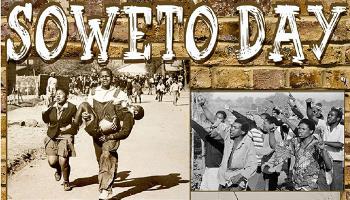 Worldwide outrage over the killing of Soweto youth protesting on June 16, 1976 was a turning point in South African history. But the end of apartheid was not the end of racist oppression or corporate…
 The U.S. excluded Cuba, Nicaragua and Venezuela from the recent Summit of the Americas held in Los Angeles. While there was widespread condemnation against the U.S., only six heads of state had the…
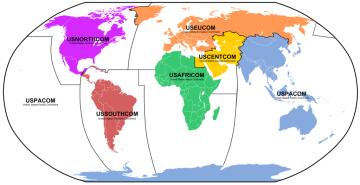 The latest Black Alliance for Peace AFRICOM Watch Bulletin provides analysis of the U.S. Southern Command and includes an interview with Ahjamu Uni, organizer with the All African People's…
 Democrats and republicans alike supported a bil to "counter malign Russian influence in Africa." Such legislation is reminiscent of the worst days of the cold war. Now a member of the Congressional…


