The memorial would be a stone monument with the names of those tortured by Burge and his officers and the dates they were tortured.
“Use of the term ‘reparations’ was important to capture the racism at work and that the compensation being offered was for violence by the state.”
In 2015, the Chicago City Council passed a reparations ordinance. That ordinance, the first of its kind in the country, was the city’s official acknowledgment that Jon Burge, a Chicago police commander, and detectives under his command, “systematically engaged in acts of torture, physical abuse and coercion of African American men and women at Area 2 and 3 Police Headquarters from 1972 through 1991.”
The ordinance spelled out the gruesome nature of that torture—electric shock boxes or cattle prods to genitals, lips, and ears; suffocation with plastic bags; mock executions with guns; beatings with telephone books and rubber hoses; and other physical and psychological abuse—and that the trauma and damage caused continued to affect survivors, their families, African American communities, and the city.
Many of those tortured by Burge and his officers gave false confessions and went to prison. Several spent years on death row before they were exonerated.
For years, lawyers, judges, and journalists had a rough idea of what went on at Area 2 but did nothing to confront it. When the news about it began to break, it was only slowly. And acknowledgment and accountability were slow to come.
“For years, lawyers, judges, and journalists had a rough idea of what went on at Area 2 but did nothing to confront it.”
The choice of the term “reparations”—a topic of debate in narrower circles then than it is today —was deliberate. In an interview with the Washington Post immediately after the passage of the ordinance, Mariame Kaba, one of the advocates who had pushed for the ordinance, said use of the term “reparations” was important to capture the racism at work and that the compensation being offered was for violence by the state.
“The racial component of this is an essential part of the torture itself,” Kaba said. “The whole box that was used to electrocute them was called the‘n*****’ box,” she added. “It was painted black.”
The compensation that the ordinance laid out was meant to address multiple harms. It included a $5.5 million fund from which torture survivors, or their descendants, could receive up to $100,000 each; a guarantee that torture survivors and their family members could enroll at Chicago City Colleges for free; and the creation of a center on Chicago’s South Side for psychological counseling, healthcare, and vocational training that would be available to the survivors, their family members, and anyone else affected by law enforcement torture and abuse.
It also included two measures to make sure that the torture cases were not forgotten. First, it mandated that the curriculum in all the city’s public schools include a history lesson about “about the Chicago Police torture cases and the struggles to hold those accountable and to seek reparations for the survivors and affected family members.”
Second, it included the city’s commitment to support the creation of a public memorial in honor of the Chicago Police torture survivors and their struggle for justice.
“It mandated that the curriculum in all the city’s public schools include a history lesson about ‘about the Chicago Police torture cases.’”
The memorial is the last part of the reparations plan to be implemented. The Chicago Torture Justice Memorials formed a decade ago to push for reparations and the memorial. This month the group selected the final design for a memorial and now they are pushing Mayor Lori Lightfoot to allocate money and land for it. According to the design, the memorial would be a stone monument with the names of those tortured by Burge and his officers and the dates they were tortured.The memorial would also include a public space where people would gather.
Joey Mogul of the People’s Law Office, who represented many of the torture survivors and was a co-founder of the Chicago Torture Justice Memorials, told the Chicago Tribune: “There is no better way in my opinion to name racism … than the city of Chicago building a memorial about these racially motivated police torture cases.” The group is calling for the memorial to be on the South Side, where the torture took place.
An advisory team to Mayor Lightfoot recommended, in a transition report, that she fund the memorial and other reparation initiatives from the ordinance, in her first 100 days in office.
Chicago’s acknowledgment and historic reparations ordinance may, in retrospect, seem the result of an especially heinous set of actions being brought to light, but survivors and advocates fought for acknowledgment and accountability for years. That activism had far-reaching consequences, including the moratorium on the death penalty declared in 2010, but there were few guarantees. As Peter C. Baker wrote last year, in an article about the teaching of the history of the torture in Chicago schools, the reparations ordinance is “a singular document in American history.Torture accountability—even basic torture honesty—has been a perennial nonstarter in U.S. politics.”
“The reparations ordinance is ‘a singular document in American history.’”
The cost of silence in Chicago was high. Years went by without police leadership, prosecutors, or Mayor Richard Daley acknowledging the torture. Burge was fired in 1993, but the statute of limitations on his crimes passed well before prosecutors were willing to take a close look. When federal prosecutors eventually brought charges against him, they were for lying to federal investigators rather than for his involvement in torture. He went to prison in 2010, and then returned to Florida after his release four years later. No one else was prosecuted. By the time Burge died last year, Chicago had spent $100 million on legal fees and settlements on the torture cases.
A public memorial is not a guarantee against forgetting or against future violence. But it is a reminder that the present is traceable to a past when people tortured by law enforcement in this country fought to make their experiences known and part of official history—and won.
Vaidya Gullapalli, senior legal counsel at The Justice Collaborative, spent several years as a human rights advocate, public defender, and journalist in the U.S. and India. She worked at the Bronx Defenders and Officer of the Appellate Defender in New York and has been a contributing writer for Solitary Watch.
This article previously appeared in The Appeal.
COMMENTS?
Please join the conversation on Black Agenda Report's Facebook page at http://facebook.com/blackagendareport
Or, you can comment by emailing us at comments@blackagendareport.com



 Johanna Fernandez left a powerful and revolutionary legacy through her scholarship and activism.
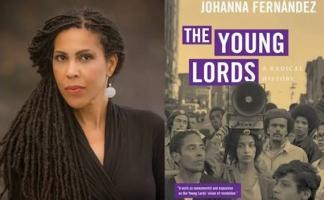 Johanna Fernandez touched many lives through her scholarship, activism, and belief that people themselves can change history and be "the ones we've been waiting for."
 "Unlike the Zionist claim that 'Israel has a right to exist,' my assertion is rooted in international law. Of course, given Israel’s propensity for violating such laws, it’s no surprise they’re still…
 The recent report by the U.S. fascist state attacking Cuba and its allies serves as a glaring call for urgent and strategic unity among the broadest sectors of the U.S. left, and all people of…
 Nicaraguan President Daniel Ortega stated that when the country's next elections take place, none who promoted a violent anti-government insurrection in 2018 will be allowed to stand for office.…


