by BAR editor and senior columnist Margaret Kimberley
If the purpose of Black electoral politics is to protect African American interests, the Black political class has been a colossal failure. “The disasters of mass incarceration, police murder, gentrification, privatized public schools, and austerity have all taken place on their watch.” Worse than useless, most Black elected officials are collaborators in an oppressive system.
Freedom Rider: When a Black Mayor Killed Black People
by BAR editor and senior columnist Margaret Kimberley
“Black politicians are as much for sale as their white counterparts.”
On May 13, 1985, Wilson Goode, the first black mayor of Philadelphia, Pennsylvania, burned down a neighborhood occupied by other black people. As mayor he had the power to start or stop actions undertaken by any city agency. He had the power to scuttle the police decision to bomb the house occupied by members of MOVE. He had the power to order the fire department to extinguish the flames. He had the power to order police to save lives that night.
The event may seem like a singular one, sparked by a series of police assaults on MOVE, one of which resulted in the death of one of their own officers. The desire of some in the community to have MOVE members leave their neighborhood also played a part in the chain of events. But one important issue can never be forgotten about this horrific episode.
The presence of a black face in a high place still provokes an almost hypnotic response from the masses of people. The deeply felt feelings of pride are based on the history of enslavement, Jim Crow humiliation and terror. While the sentiments have an historical basis and are understandable, they can also be very dangerous and create support for events just as dreadful as the destruction of Osage Avenue in Philadelphia.
Black Americans have moved from being the most consistently left wing constituency in this country to supporting actions they would otherwise oppose if a black person is elected to public office. Wilson Goode’s political career should have ended that day. Instead a group of black ministers publicly expressed their support for Goode while the fire still smoldered on the incinerated street. He was re-elected two years later and again won a majority of the black vote.
Black Americans have precious little to show for the thousands of black mayors, congress people, and city and state legislators elected to office since the 1960s. The disasters of mass incarceration, police murder, gentrification, privatized public schools, and austerity have all taken place on their watch.
“A group of black ministers publicly expressed their support for Goode while the fire still smoldered on the incinerated street.”
The list of failure and dubious decision making is a long one indeed. In Detroit, Kwame Kilpatrick gave the green light to the derivatives schemes which pushed that city into bankruptcy. Maynard Jackson, the first black mayor of Atlanta, fired striking city workers within months of gaining office. The Congressional Black Caucus was once the “conscience of the congress” but now acts only in support of Barack Obama, no matter how terrible the policy decisions in question.
Obama’s election was the nightmare scenario for black politics. Already teetering due to multiple treacheries from the misleadership class, black politics flat lined after the 2008 presidential campaign. When Barack Obama called for war against Syria in 2013, support was tepid at best, except in the black community. A group known for being vehemently anti-war and anti-empire suddenly turned into the largest cohort supporting a misadventure that no one else wanted.
Wilson Goode may be the only black politician responsible for killing his own people and destroying their property, but his actions have been seen in miniature across the country. Black politicians are as much for sale as their white counterparts and they will turn over public money for sports stadiums or anything else that wealthy, powerful people may demand. When developers decide to put big money back into the cities, black neighborhoods disappear and their residents are disbursed. If hedge fund captains want to destroy public schools in favor of privately funded charter schools, then black politicians will sing the praises of privatized education.
“The Congressional Black Caucus now acts only in support of Barack Obama, no matter how terrible the policy decisions in question.”
The saddest part of this tale is that the masses of black people will put aside their long history of struggle against oppression if one of their own suddenly becomes the public face of bad policy. Black mayors will join in the chorus demanding more police for already over-policed communities. None of them demanded federal prosecution of the murders of Trayvon Martin, Eric Garner, Rekia Boyd, Timothy Russell, Malissa Williams, Michael Brown or Freddie Gray.
Goode should not be seen as the lone killer among the political class. The others should not be let off the hook so easily. Hundreds of lives taken by police violence might have been saved if black politicians established true community control or demanded that the black president who gets so much love actually did something to earn it.
Mass incarceration is also a killer. Mumia Abu Jamal's medical crisis is not unique. Prison kills otherwise healthy people and the end of this awful system should be at the top of every black politician’s agenda.
Wilson Goode’s victims should be remembered in Philadelphia. But it would be a mistake if the night of terror in 1985 was regarded as a unique event and not as part of a larger and continuing problem. The mayors and congress people and, yes, the president owe their positions to the black liberation movement. One wouldn’t know that by looking at the state of black life today. We are all Osage Avenue.
Margaret Kimberley's Freedom Rider column appears weekly in BAR, and is widely reprinted elsewhere. She maintains a frequently updated blog as well as at http://freedomrider.blogspot.com. Ms. Kimberley lives in New York City, and can be reached via e-Mail at Margaret.Kimberley(at)BlackAgendaReport.com.

 The police department’s PR team has more than doubled in size in the past two years. Some of its recent hires have histories of dishonesty and misconduct.
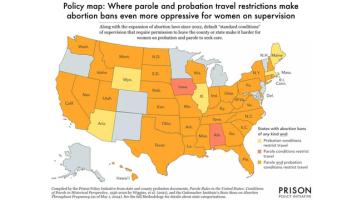 More than half of the 800,000 women under community supervision live in states with abortion restrictions, making the path to access more difficult — or impossible.
 The arrest and deportation of several prominent Kanak leaders have reignited widespread protests in New Caledonia.
 Julian Assange accepted a plea deal in exchange for his freedom from the bipartisan effort to keep him imprisoned and to charge him with a crime for publishing material the state wants to keep a…
 This week, we learn about a lawsuit by Black and Latino residents over the redrawing of an electoral district map that leaves them without representation. We discuss New York State's…


