The U.S. is once again using sanctions as a means to prevent the economic development of Zimbabwe, a long used tactic in the neoliberal imperialist playbook.
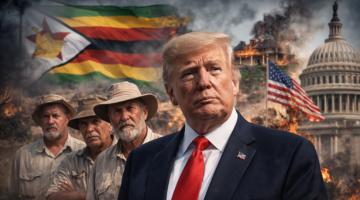
Despite its waning muscle and corroded facade, the U.S. insists on behaving as an entitled and malicious force in the world. So when the Zimbabwe government, in February, exercised its sovereign right to expel U.S. Agency for International Development (USAID) agents from their country, the U.S. response was one of paternalistic and racist indignation befitting a bonafide settler colonial state.
USAID Administrator Samantha Power screamed that Zimbabwe’s move was “unacceptable, inappropriate, and aggressive.” A more reasonable and diplomatic response would be to, at most, consider the move “unfortunate” while publicly acknowledging respect for the decision of a sovereign Zimbabwe government. The U.S. State Department also released a press statement asserting that the deported USAID officials and contractors were conducting an “assessment of the development and governance” in Zimbabwe, a scenario in which the inverse is considered unthinkable.
There is a backdrop to Zimbabwean government’s detaining and deporting of the USAID officials last week. The government argues that the officials’ intentions were to meddle in the internal affairs of Zimbabwe, a charge that the U.S. does not deny.
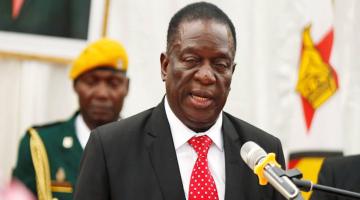
Nevertheless, the U.S. responded by issuing sanctions against high officials in Zimbabwe’s leading ZANU-PF party, including President Emmerson Mnangagwa and several other high ranking officials and private sector associates. The U.S. Department of the Treasury’s Office of Foreign Assets Control (OFAC) designated these officials as being involved “in corruption or serious human rights abuse.”
At the same time, President Joe Biden signed an Executive Order that ostensibly terminated the Zimbabwe Democracy and Economic Recovery Act (ZIDERA). Crippling sanctions have been a centerpiece of U.S. policy toward Zimbabwe since they were passed through ZIDERA in 2001. This Act, infringing on the sovereignty of Zimbabwe, was part of broader Western European retaliation for this nation of southern Africa embarking on land reforms reclaiming its stolen land from a White settler minority. ZIDERA not only restricted the terms for Zimbabwe’s access to international financial institutions such as the IMF and World Bank, it also contained provisions for the U.S. to provide funds and “technical support” to opposition “media” and “human rights” groups.
By seeming to terminate ZIDERA, the U.S. can pretend that it is engaging in a shift in policy that also supposedly reflects an act of benevolence; it argued that sanctions are not meant “to target the people of Zimbabwe.” But the reality is that the U.S. just refocused ZIDERA to punish the government of Zimbabwe for daring to challenge the illegal presence of U.S. agents in the country.
On what moral grounds is the U.S. to adjudicate and enforce any form of penalties against any individuals or nation? Right now, the U.S.is actually supporting genocide against the Palestinian people. Right now, the U.S. is the central culprit maintaining its occupation of Haiti while orchestrating an impending military intervention into Haiti, an intervention that the people oppose. Across the U.S., so-called “crime bills” are targeting and criminalizing Black and Brown youth in reactionary response to street level crime born from the deteriorating conditions of capitalist neoliberal policies.
There is a plot within this backdrop, which explains the deportation of U.S. agents from Zimbabwe that the Western news media and official U.S. government statements won’t disclose: the deported officials were spying.
Zimbabwe has what might be Africa’s most sophisticated intelligence apparatus, led by their Central Intelligence Organization (CIO). Zimbabwe CIO discovered that four operatives of the Navanti Group commissioned by USAID, sneaked into the country without prior communication with the Ministry of Foreign Affairs and International Trade, as required by protocol. The Navanti Group is a private consulting firm that provides clients, like the U.S. imperialist state, with “real-time insight into the economic, political, and security trends” across Africa, Europe, Asia and the Middle East. Their operatives in Zimbabwe held secret meetings with European counterparts stationed in the country and with political opposition groups. Once the U.S. realized their people were being tracked, the U.S. Embassy attempted to retrospectively register two of the agents with the Zimbabwe government but withheld information about the other two. Finally, the Zimbabwe officials made the move to detain and deport them all, but not before doing what is customary for any country to do: inspect their belongings and question them.
Of course the U.S. depicts the incident as though their people were brutalized and imprisoned in a dungeon. And U.S. media obscures the details of what precipitated the capture and deportation of these agents. It is important to point out U.S. hypocrisy here. The U.S. demands that foreigners on official government business on its settler occupied soil register as foreign agents. In fact, it enforces that U.S. citizens working within the U.S. for another government also register as agents of a foreign government. In fact, the U.S. government sometimes goes as far as to falsely accuse and prosecute some citizens as a means to repress dissent. Yet they demand exceptional treatment in other countries.
As the Global South becomes more determined than ever to throw off the shackles of Western European domination, the U.S. seems to become more insistent on retaining the position for itself. This is no less evident in Zimbabwe than any other country where the U.S. settler regime throws its weight around.
As the inheritor of Western Europe’s racist colonial power and sitting today as the top neo-colonizer of the world, the U.S. seems unable to accept that the days of total unilateral domination in Zimbabwe, in Africa, and across the globe are gone.
Netfa Freeman is an organizer in Pan-African Community Action (PACA) and Co-Coordinator of the Black Alliance for Peace’s Africa Team. He is also co-host/producer of the WPFW radio show and podcast Voices With Vision.



 The current political turbulence in France’s former colonies in Africa can perhaps be understood as the continuation of an unfinished project of decolonization.
 No one better exemplifies the Democratic Party’s overarching identity politics than California Governor Gavin Newsom.
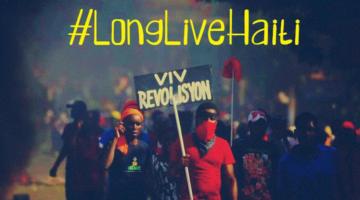 For the tenth time in the last 30 years, the United Nations vote to authorize an occupation of Haiti.
 Millions of people voted for Green Party presidential candidate Ralph Nader in 2000 but now he has denounced them and himself by proclaiming his support for Joe Biden’s re-election.
 Kenya's decision to join a US led occupation of Haiti is an example of imperialism in Black face. According to a former Chief Justice the act is also a violation of Kenya's…


