Doors, left to right: Afghanistan, Iraq, Syria.
Dan Kovalik and Jeremy Kuzmarov’s Syria: Anatomy of Regime Change was published on September 1, 2025. What can it teach us now that the empire has pulled the trigger on three more nations resisting its drive to dominate?
In his introduction to Syria: Anatomy of Regime Change, filmmaker Oliver Stone calls it a warning against what regime change means for the people living in the nations targeted, and a call to organize to prevent future regime-change wars, but we haven’t been doing well at that, to say the least. Barely more than a year after Bashar al-Assad’s government fell in December 2024, the US military’s elite Delta Force swept into Venezuela to kidnap President Nicolás Maduro and his wife, Cilia Flores, President of the National Assembly of Venezuela. Then, according to the State Department, the US government began “marketing Venezuelan crude oil in the global marketplace for the benefit of the United States, Venezuela, and our allies.” On a particularly humiliating note, 200,000 barrels of crude oil that would have gone to Cuba were shipped to Israel. Americans had long been conditioned to accept this by the media drone about Maduro being a dictator and a narco-trafficker, an accusation made up out of whole cloth.
Trump then imposed a harsher blockade than ever on Cuba and even threatened “a friendly takeover” if that didn’t bring the Cuban people to their knees. Next, he followed Israel into war with Iran, which eminent MIT weapons expert Theodore Postol says could easily go nuclear and spread beyond the Middle East. This goes well past “what regime change means for the people living in the nations targeted.”
Many elements of the story of Syria’s fall have been repeated over and over again. Chapter 7, “Shades of the Gulf of Tonkin: Chemical Weapons as False Flag” describes the chemical weapons fraud, echoing the Tonkin Gulf fraud used to justify the US entry into the Vietnam War and the weapons of mass destruction fraud used to justify the Iraq War. Obama had tried other arguments to justify “intervention” in Syria, but chemical weapons was the story that finally stuck, convincing many Westerners that US air strikes were necessary. Kovalik and Kuzmarov quote Obama, who asked, “What message will we send if a dictator can gas hundreds of children to death in plain sight and pay no price?”
The chemical weapons story, which anguished so many Western leftists, defied logic. Even if Assad were that indifferent to the pain of his own people, why would he do that which would most certainly give foreign aggressors an excuse to attack? As Kovalik and Kuzmarov explain, this appealed to Orientalist stereotypes of despotism and savagery regurgitated by all the corporate media, helping our ruling class and misleaders take us into yet another imperialist war.
Who would gas their own people? Non-white people of course, which includes Arabs, no matter the actual color of their skin. This argument was strangely persuasive to the liberal intelligentsia even though anti-racism and identity politics are at the heart of their concerns.
Chapter 8, “A War by Other Means: Sanctions and the U.S. Regime Change Operations,” tells the story of trade strangulation imposed by the overwhelming economic power of the US, who not only deny even basic medicines to sanctioned countries but also restrict trade so as to suppress economic development, causing widespread hardship and unemployment. US sanctions typically frighten less powerful nations into “overcompliance,” causing them to refuse to trade with sanctioned countries for fear of falling afoul of the US and, for example, losing their own access to US markets.
“In 2023,” Kovalik and Kuzmarov write, “more than 609,000 Syrian children under the age of five were reportedly stunted from chronic malnutrition, 12 million Syrians lacked enough food to meet daily dietary needs, and 90% of Syrians were said to be living in poverty.” The same liberal intelligentsia who fell for the chemical weapons fraud also tend to know little about how sanctions strangle a people and are therefore easy to convince that the suffering of Syrians, Venezuelans, Cubans, or Iranians are due to the incompetence, callousness, or greed of their leaders.
What do Syria, Venezuela, Cuba, and Iran share in common that makes them subject to sanctions’ strangulation, false flags, and military force?
“The targets of regime change,” Kovalik and Kuzmarov write, “are inevitably leaders who are independent nationalists intent on resisting U.S. corporate penetration of their countries and challenging U.S. global hegemony. Bashar al-Assad fit the bill for the latter because he backed Palestinian resistance groups and stood up to Israel, aligned closely with Iran and Russia, and adopted nationalistic economic policies. Assad was also growing economic relations with China and refused to construct the Trans-Arabian Qatari pipeline through Syria, endorsing instead a Russian approved ‘Islamic’ pipeline running from Iran’s side of the gas field through Syria and to the ports of Lebanon.”
The details and the pipelines vary, and there does seem to be a pipeline involved more often than not. However, as the late great Glen Ford said, any nation that tries to raise an independent head against the empire becomes “geostrategic.” That’s why the US had to do away with the socialist New Jewel Movement on the tiny Caribbean island nation of Grenada in 1983. Grenada’s population is 115,000 and its only export is nutmeg, but even that couldn’t become the people’s property.
Syria, Venezuela, Cuba, and Iran all share fierce resistance to Israel, the last settler colonial state, and to the Zionist expansionism that now has us all wondering what the boundaries of “Greater Israel” are.
Kovalik and Kuzmarov tell us that Syria’s new ruler, Ahmed al-Sharaa claims to “love Israel” and wants to build a Trump tower in Damascus and open up Syria’s oil and gas industry to US corporations. Prior to his ascension to the presidency, al-Jolani headed an Al Qaeda affiliate, Tahrir al-Sham, backed by Turkey, Qatar, Saudi Arabia, the UK, France, Canada, the US, and Israel.
"The president of Syria,” Trump said, “who I essentially put there, is doing a phenomenal job."
Ann Garrison is a Black Agenda Report Contributing Editor based in the San Francisco Bay Area. In 2014, she received the Victoire Ingabire Umuhoza Democracy and Peace Prize for her reporting on conflict in the African Great Lakes region. She can be reached at ann@anngarrison.com. You can help support her work on Patreon.

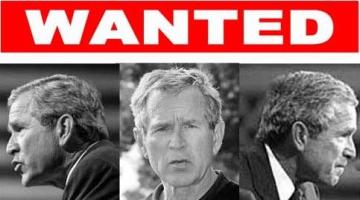 Iraq and Libya were both targeted by the U.S. in the month of March. The anniversaries of these war crimes must be commemorated, and the nature of the US/EU/NATO war machine must be understood.
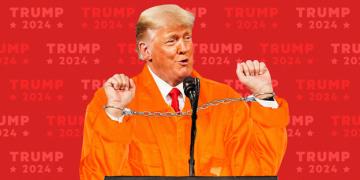 Liberals and the media give great attention to Donald Trump's legal problems that are related to his personal life, but they cover up for the war crimes he and other presidents committed.
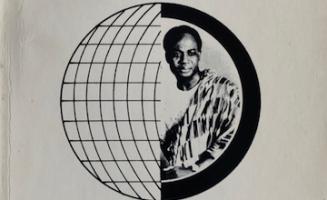 A 1965 article from Kwame Nkrumah’s journal The Spark highlights the role of monetary policy – and the US dollar – as an instrument of imperialism and neocolonial rule.
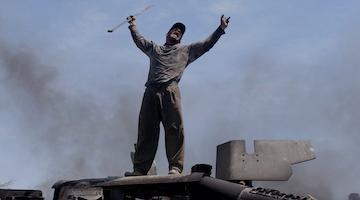 The U.S. reserves for itself the right to commit crimes all over the world with impunity. It even passed a law giving itself the right to invade the Netherlands to rescue any US citizen or ally ever…
 …
…


