by BAR editor and columnist Dr. Marsha Coleman-Adebayo
Under colonialism and apartheid, South African miners have died by the tens of thousands from silicosis, an incurable lung disease. The rates of affliction “haven't got any better since apartheid ended more than twenty years ago.” However, a High Court is allowing miners to sue for relief as a class. “Up to a half-a million miners may be eligible to seek damages, a decision that could cost the mining industry millions.”
A Glimpse of Justice for South Africa’s Gold Miners: High Court Allows Largest Class Action Suit in History
by BAR editor and columnist Dr. Marsha Coleman-Adebayo
“The claims involve not just South Africans but also thousands of former miners from neighboring countries such as Lesotho, Malawi and Swaziland.”
A South African High Court has paved the way for injured South African mine workers and families of those killed by illegal and brutal mining practices to file a class action suit against multinational mining concerns. This will be the largest class action suit in the history of South Africa.
The gold miners suffer from silicosis and tuberculosis. Up to a half-a million miners may be eligible to seek damages for potentially fatal lung diseases, a decision that could cost the mining industry millions. This represents a substantial victory for South African mine workers who were the economic engine of the apartheid and post-apartheid South African economy. It is hoped that other mine workers, such as vanadium or platinum will be able to join the class action suit.
Judge Phineas Mojapelo’s courageous decision has financial analysts estimating that the lawsuit could cost the gold industry hundreds of millions of dollars.
Mojapelo’s ruling indicates that miners who died of diseases including silicosis and tuberculosis could be included in the suits – with any damages paid to their family members – and that each mining company should be held liable separately for any damages. This represents a small glimpse of justice for a beleaguered community that literally endured gruesome death to provide the West with minerals that fueled its economy. Judge Mojapelo wrote: “We hold the view that in the context of this case, class action is the only realistic option through which most mine workers can assert their claims effectively against the mining companies.”
Silicosis is an incurable occupational lung disease caused by inhaling silica dust from gold-bearing rocks. It causes inflammation of scarring in the form of nodular lesions in the upper lobes of the lungs thus causing shortness of breath, a persistent cough, chest pains and makes people highly susceptible to tuberculosis.
“This represents a small glimpse of justice for a beleaguered community that literally endured gruesome death to provide the West with minerals that fueled its economy.”
The class action suits, which have little precedent in South African law, have their roots in a landmark 2011 ruling by the Constitutional Court that for the first time allowed lung-diseased miners to sue employers for damages. The claims, which stretch back decades, involve not just South Africans but also thousands of former miners from neighboring countries such as Lesotho, Malawi and Swaziland.
The defendants in the case include some of the world’s biggest extractive producers, such as: Anglo American, Africa’s top bullion producer AngloGold Ashanti, Gold Fields, Harmony Gold, Sibanye Gold and African Rainbow Minerals (ARM), all of which have together formed the Occupational Lung Disease (OLD) Working Group to deal with such issues.
Shamefully but predictably, the OLD issued a statement that the gold firms were studying the judgment and would decide at a later date whether to appeal the verdict.
For many of the miners who contracted fatal silicosis and tuberculosis in South Africa’s gold mines, this is a bitter -sweet victory.
Since 2012, 13 of the 68 mineworkers who brought this court case against the mining industry have died.
One case in point, “Matela Hlabathe and Vuyani Elliot Dwadube listen to the judgment in court. Hlabathe got sick with TB three times while working underground for 36 years. He received R39,000 which is equivalent to US $2,942.62 compensation. Dwadube worked for Harmony Gold for 16 years before being retrenched [fired] in 1995. He has TB but has never received compensation.”
“Since 2012, 13 of the 68 mineworkers who brought this court case against the mining industry have died.”
As of 2007, the South African mining industry employs 493,000 workers. The industry represents 18% of South Africa's $588 billion USD Gross Domestic Product.
Gold was found in the Witwatersrand in the late 1800s and sparked a gold rush that transformed South Africa’s largely agricultural economy into a powerhouse that fueled the industrial revolution in the West. During the 20th century, the mining sector represented over 20 percent of South Africa's GDP, including gold. The foundation of South Africa's wealth was built on the backs of black miners and their families. South African apartheid was undergirded by the suffering of black miners who worked in the mines as cheap labor.
Racial segregation in the mining industry was a crucial element in the racist policies that culminated in decades of apartheid rule. Despite the risks, millions of black migrant workers from rural South Africa and neighboring states flooded the mines as cheap labor.
Until 1993, white miners were paid higher compensation for silicosis-related illnesses. According to Jock McCulloch, a researcher on silicosis-related illness “silicosis rates were vastly underestimated among black miners for decades.” Further, he offers “the rates haven't got any better since apartheid ended more than twenty years ago.
South African physician advocate Dr. Rhett Kahn says companies were "motivated by greed" to underplay the impact of silicosis. "It's as bad as it was during apartheid," says Kahn.
Marcus Low, head of policy at Treatment Action Campaign (TAC), expressed the horror of the situation: “Over the past five decades gold mining companies in South Africa sent hundreds of thousands of men into mines without taking the required steps to protect those men from inhaling dangerous levels of silicosis-causing dust… This case is about whether or not we accept a society in which such cruelties are perpetrated. It is about whether we will continue to turn a blind eye to this ugly scar that runs through our history. It is about whether there will be justice for the hundreds of thousands of men who died of silicosis or who got sick with silicosis because of the indifference of mining companies.”
Dr. Marsha Coleman-Adebayo is the author of the Pulitzer Prize nominated: No FEAR: A Whistleblowers Triumph over Corruption and Retaliation at the EPA. She worked at the EPA for 18 years and blew the whistle on a US multinational corporation that endangered South African vanadium mine workers. Marsha's successful lawsuit led to the introduction and passage of the first civil rights and whistleblower law of the 21st century: the Notification of Federal Employees Anti-discrimination and Retaliation Act of 2002 (No FEAR Act). She is Director of Transparency and Accountability for the Green Shadow Cabinet, serves on the Advisory Board of ExposeFacts.com and coordinates the Hands Up Coalition, DC.

 This week’s featured scholar is Sara-Maria Sorentino. Sorentino is an Assistant Professor in the Department of Gender and Race Studies at the University of Alabama. Her article is “Mistresses as…
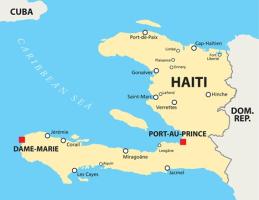 As the white rulers of Haiti push for illegitimate elections, can the “Montana Accord”- an agreement among some civil society groups to return democracy to Haiti - offer a way out of the country’s…
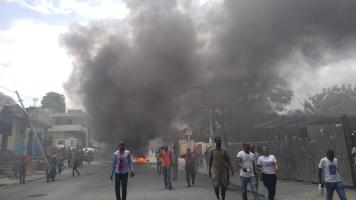 March 29, 2022 - Haitian community activists are out in the streets to commemorate the 35th anniversary of the Haitian constitution, drafted after the fall of the Duvalier dictatorship, and to…
 March 31 has been designated as the deadline for Wayne County residents to pay back property taxes from 2019 and before despite the failure to provide adequate assistance to working and impoverished…
 Colombian Vice Presidential candidate Francia Marquez is again threatened by right wing groups in that country. She demands that president Ivan Duque protect her and others leaders as well.


