by Benjamin Woods
The emergent Black Lives Matter mobilization is nearing the juncture where it will grow into a true mass movement for liberation, or take some other fork in the road. BlackLivesMatter# should study the practice and writings of Amilcar Cabral, the great African revolutionary. “Cabral understood the new national culture would primarily be built through a process of protracted struggle and have what he called a “mass character.”
Six Lessons #BlackLivesMatter Can Learn From Amilcar Cabral
by Benjamin Woods
“Diplomatic relations can be established with the African Union to, at least, make a statement about the ongoing police violence against Black people in the diaspora.”
Amilcar Cabral is widely recognized as one of the most creative and influential revolutionary theorists that the African World has ever produced. He was the co-founder and leader of a national liberation movement in West Africa called the African Party for the Independence of Guinea and Cape Verde (PAIGC). Founded in 1956, the PAIGC led an eleven year armed struggle against Portuguese colonialism, culminating in political independence in 1974.
Although an agent of the Portuguese political police assassinated Cabral before political independence was won, his ideas influenced the entire African world including the Black Liberation Movement in the United States. To an extent, his views have been appropriated by various ideological tendencies from Afrocentrists to post-modernists to Marxists. The objective of this essay is twofold 1) to properly situate Cabral in the tradition of Revolutionary Pan Africanism and Socialism and 2) to demonstrate the lessons he can provide the emergent #BlackLivesMatter Movement.
1) Revolutionary Political Party. #BlackLivesMatter has inspired and generated numerous mass mobilizations throughout the U.S. The current discussion among organizers concerns how to move from mobilization to organization. Mobilizations are based on mass assemblies and spontaneity but organization includes continuous political education, a unified political platform and clearly defined long-term objectives. Cabral chose a political party as the organizational form and #BlackLivesMatter can do the same. A party is composed of cadre or full-time organizers trained in revolutionary ideology that root themselves among the working-class. The party must have clear objectives of self-determination and the elimination of the capitalism system.
2) Revolutionary Democracy. The PAIGC had two primary components: a) democratic centralism and b) village committees (VC). The objective of democratic centralism is "democracy in discussion, centralism in action." In his book Unity & Struggle Cabral writes "It means that each decision concerning a new question must be taken after a full and free discussion within the bodies affected by it or from the base to the top, if the matter is one which affects the whole life of the party. After this discussion and in accordance with what emerges from it, the central bodies take a decision which must immediately be carried out at all levels concerned." And at this point discussion ceases and there is unity in action. This method has been used in successful revolutionary movements in Zimbabwe, Cuba, China, Mozambique, Angola, and many more.
The purpose of the VC system was to ensure the democratic participation of the majority of the population. They were responsible along with party cadres for administering social services like education, local defense, health etc. in liberated areas. The VC’s were headed by five elected representatives from the local community. To guarantee gender equality two of the elected reps. were required to be women. Even if the VC made a decision that was in contradiction with the party, the VC’s choice was upheld and respected. In the US context, popular assemblies that include a set number of neighborhoods can operate in the same capacity as Village Committees did in Guinea-Bissau. Venezuela’s communal councils and Cooperation Jackson offer excellent contemporary examples.
3) Pan Africanism. Cabral was a staunch supporter of African unity and Pan Africanism. In his own country he was able to organize the PAIGC across ethnic and religious lines. For example, the PAIGC was a secular organization that included Christians, Muslims, and traditional religions but Cabral was agnostic, stating: “I don’t believe there is a life after death.” He was also a co-founder and spokesperson for the national liberation organizations in Mozambique and Angola. In a speech in 1972 titled “Connecting the Struggles: An Informal talk with Black Americans,” Cabral states: “It is also a contribution for you to never forget that you are Africans.” The important lesson in this instance is for people of African descent to make practical connections across national borders in their struggles for self-determination. Diplomatic relations can be established with the African Union, currently chaired by the revered Pan Africanist Robert Mugabe to, at least, make a statement about the ongoing police violence against Black people in the diaspora.
4) Culture & Ideology. Cabral is most often cited for his contributions in explaining the relationship of culture and ideology to social movements and society in general. Unlike some sectors of the American Left that promote a form of economic determinism, Cabral understood that there must be self-conscious effort on the part of the masses and the party to transform the individual and society. Culture and ideas can be instruments of domination or liberation. Today, individualism, consumerism, American meritocracy, and the “illusion of inclusion” are all instruments of social control that must be challenged at the organizational and mass level in order for #BlackLivesMatter to become a broad based social movement.
5) Class Suicide. A central component of Cabral’s scientific worldview was the concept of class suicide or a rejection of the values, status, and privileges of the dominant society and identification with the working masses. This is especially relevant for the group he called the “petty bourgeoisie” (i.e. senior civil servants, intellectuals, etc.) who generally are the most indoctrinated into colonial values. He argued for a “Re-Africanization” which, as he asserted, “is only completed during the course of the struggle, through daily contact with the mass of the people and communion of sacrifices which the struggle demands.” He warned against uncritically accepting tradition and cultural determinism. Cabral understood the new national culture would primarily be built through a process of protracted struggle and have what he called a “mass character.”
6) Scientific Socialism. Arguably his most important lesson was in the speech “The Weapon the Theory,” given in 1966 at the Tri-continental Conference in Havana, Cuba. He boldly proclaimed “nobody has yet successfully practiced Revolution without a revolutionary theory.” This is extremely relevant today due to the aversion to theory and ideological deficiencies so prevalent in the US. Although he didn’t adhere to any particular tendency (Marxism-Leninism, Trotskyism, Maoism, etc.), Cabral began his analysis by applying the method of dialectical and historical materialism or scientific socialism to Guinea’s objective socio-economic conditions. In fact, this is perhaps of one his greatest strengths: his ability to be non-dogmatic and flexible. Similar to Cabral, #BlackLivesMatter should understand that theory emerges from practice and be sure to balance the essential role of political economy and culture. Cabral claimed that the ultimate objective of the movement was “the liberation of the process of development of the national productive forces (i.e. land, labor, tools of production, natural resources).” A master teacher, indeed.
Cabral’s life offers lessons in several other areas such as agronomy, women’s liberation, armed struggle, internationalism, the nature of the state, revolutionary ethics and more. Unfortunately, far too often, he and other Pan-Africanists are reduced to icons or symbols and their actual life and work are sidelined. As the next generation of revolutionary organizers step to the front of the line, it is important we know the contributions and lessons of those who came before us.
A Luta Continua (The Struggle Continues)!!!
Benjamin Woods is a PhD candidate at Howard University and co-founder of Students Against Mass Incarceration. He can be contacted at benjaminwoods1@yahoo.com, or through his website FreeTheLand.
Notes:
Cabral, Amilcar (1973) Return to the Source: Selected Speeches by Amilcar Cabral, edited by Africa Information Service, Monthly Review Press, New York, New York.
Cabral, Amilcar (1969) Revolution in Guinea: An African People’s Struggle, Stage 1, London, England.
Cabral, Amilcar (1979) Unity and Struggle: Speeches and Writings of Amilcar Cabral, Monthly Review Press, New York, New York.
Chabal, Patrick (2003) Amilcar Cabral: Revolutionary Leadership and People’s War, Africa World Press, Trenton, New Jersey.
Ed. Firoze Manji & Bill Felcther (2013), Claim No Easy Victories: The Legacy of Amilcar Cabral, Council for the Development of Social Science Research in Africa.
Gleijeses, Piero (2003) Conflicting Missions: Havana, Washington, and Africa, 1959-1976. Chapel Hill, The University of North Carolina Press.

 …
… This week’s featured author is Hugo ka Canham. Canham is Associate Professor of Psychology at the University of South Africa and coeditor of Black Academic Voices: The South African Experience. His…
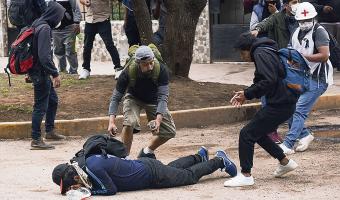 Rosalino Flores is just one of the Peruvians who died in the struggle against the coup government. Clau O'Brien Moscoso continues her dispatches from Peru. A Spanish translation follows.
 The UN Permanent Forum on People of African Descent must uphold the 2001 Durban Declaration and Programme of Action (DDPA). A recently written mandate affirms the importance of DDPA and the need to…
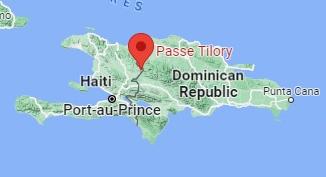 The Dominican Republic does not restrict its assaults on Haitians and its Haitian descended citizens. Its military feels free to enter Haiti itself and to commit killings there.


