“Many of the detainees had been held in custody for years without access to a lawyer or ever having appeared before a judge.”
More than 2,300 suspected Islamist militants are expected to appear in court in Nigeria in an unprecedented series of mass trials that local authorities hope will be seen as evidence of progress in the fight against Boko Haram, one of Africa’s most resilient insurgencies.
All the defendants have been detained since Boko Haram, which means “no to western education,” launched its campaign eight years ago.
The conflict has left at least 20,000 dead in the country’s remote northeast and destabilized a swath of West Africa, displacing millions of people.
But analysts say the trials -- which will be held in secret and will see four judges deal with hundreds of cases each -- raise serious concerns and could undermine the fight against the group.
“Does the judiciary have the capacity to give so many people charged with very serious offenses a fair trial? Have the authorities really captured a quarter of their combat strength? Are they taking into account the fact that a lot of those who committed violence for Boko Haram did so under duress? All these are red flags and very concerning in terms of the broader strategy,” said Ryan Cummings, a South Africa-based expert.
No media reporting of the hearings, which will be held in military facilities, is to be allowed. Umar Ado, a defence lawyer based in Kano, Nigeria’s largest northern city, said that was “as good as denying the public the right to know how the trial is carried out.” He added: “It sends the wrong signal that justice is not served or the process is compromised.”
“A lot of those who committed violence for Boko Haram did so under duress.”
Nigeria’s justice ministry announced the start of the trials at the end of last month, saying judges had been assigned and that defendants would have legal representation.
About 1,670 detainees held at a military base in Kainji, in the central state of Niger, will be tried first followed by 651 others held at the Giwa barracks in Maiduguri, capital of the northeastern state of Borno.
Matthew Page, a former US state department analyst and a specialist on Nigeria, said the process was positive but only a “very small step,” as many of the detainees had been held in custody for years without access to a lawyer or ever having appeared before a judge.
To what extent those on trial are actually connected to the group is also unclear. “There are good reasons to believe that large numbers of the detainees have very little or no connection at all to the group,” said Page.
Amnesty International said in a damning June 2015 report that more than 20,000 people had been arbitrarily arrested as part of the fight against Boko Haram.
Intelligence agencies estimate the group’s fighting strength at about 6,000.
To date, only 13 suspected Boko Haram militants have been put on trial, with nine convicted for their links to the Islamist insurgency, according to official figures.
The most high-profile current case is that of Khalid al-Barnawi, a leader of the Boko Haram offshoot Ansaru, who is charged with the abduction and murder of 10 foreign nationals.
“At least 1,200 people had been summarily killed and 7,000 died in military custody since 2011.
Boko Haram is nominally aligned with the so-called Islamic State in Iraq and Syria, but the exact loyalty of its various factions and leaders is often unclear.
The group provoked international outrage by kidnapping more than 200 schoolgirls, known as the Chibok girls, in April 2014.
Nigeria’s military last year wrested back large swaths of territory from the group. But since April Boko Haram has killed nearly 400 people in a spate of suicide bombings, often using women and children – double the figure of the previous five months.
There have been questions about the ability of Nigeria’s justice system to handle so many cases at once and even of simple procedural details such as whether defendants will be tried on their own or together.
Last week a spokesman blamed delays in prosecution on poor investigation techniques such as lack of forensic evidence, over-reliance on confessions and logistical problems.
In recent years thousands of people detained by the military in sweeps through areas hit by the insurgency have been released without charge.
On Saturday the Nigerian army handed over 750 Boko Haram suspects arrested by soldiers to the Borno state government for “rehabilitation and reintegration.” Officials said the men were “cleared of suspicion after being interrogated”.
Amnesty also highlighted appalling conditions at military detention facilities and claimed at least 1,200 people had been summarily killed and 7,000 died in custody since 2011.
A recent UN report into recruitment to violent extremist organisations in Africa, including Boko Haram, concluded that “state security-actor conduct is … a prominent accelerator of recruitment, rather than the reverse.”
This article previously appeared in The Guardian and The Dawn News.

 “Conflicts over colonies constitute the major source of war in the modern world.”
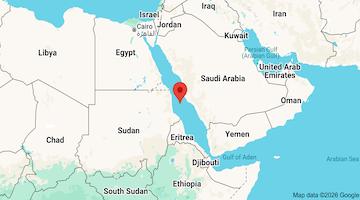 Saudi Arabia has formed a 14-state coalition to stop Ansar Allah, which has threatened to blockade its oil tankers in the Red Sea.
 “...when I talk about our political institutions, there is no reason for any American to continue to be victimized by what we still refer to as the Republican and Democratic parties…We don’t have to…
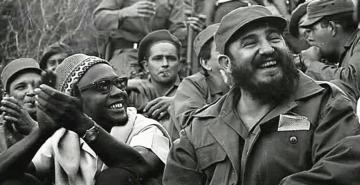 In commemoration of the Fidel Castro centenary on August 13, 2026, we present remarks given by Djibo Sobukwe at The Symposium on Fidel Castro and the Cuban Revolution on January 21, 2017,…
 Former Black Panther Deputy Minister of Defense Byron Booth's journey from Compton to Cuba, Algiers to Lagos, reveals the global reach of Black radicalism in a 2016 interview.


