by Dale T. McKinley
The African National Congress has morphed from its earlier transition days as a “modern” bourgeois political party designed to consolidate a class-based system of power overlaid with narrow racial interests to an inveterately factionalized, patronage-centered, corrupt, rent seeking and increasingly undemocratic ex-liberation movement.
It’s All About Power and Money: The Present State of the ANC
by Dale T. McKinley
This article previously appeared in Pambuzuka News.
“Patronage and clientism, which have become the dominant forms of political and organizational direction and leadership under Zuma.”
One of the favorite sayings of ANC leaders over the years, and most often directed at those of its members who have departed the organization for various reasons, is that “it is cold outside the ANC.” It doesn’t take a political analyst or life-long movement activist to figure out the metaphorical meaning.
Simply put, the ‘warmth’ inside the party is defined by being part of the ANC’s unequalled access to and use of institutional power – whether as applied to the ANC or the state it largely controls – and the accompanying material benefits (read: money) derived. Twenty years into ANC rule, it is that ‘warmth’ that has, in turn, come to define the party itself.
None other than the ANC number one himself confirmed this, even if for very different reasons, not long after he had ascended to the presidential thrones of party and country. Speaking to the ANC Veterans League back in 2009, Jacob Zuma declared without a whiff of contradiction or irony that “money and positions have undermined the ANC [and changed its] character and values …”
He was quickly followed by ANC General-Secretary Gwede Mantashe who proclaimed that: “When selflessness, one of the principled characters of our movement, is being replaced by a newfound expression of selfishness, wherein personal accumulation becomes the main cause for divisions, we must know that the movement is in decline.”
No doubt, both Zuma and Mantashe were attempting to present themselves as the ‘new’ champions of some kind of moral regeneration campaign within the party. After all, they had succeeded in ousting former president Thabo Mbeki and his neoliberal technocrats, with COSATU and the SACP leading the way, by claiming that theirs was a politics of returning the ANC “to the people” through a principled, accountable and exemplary leadership.
As has most often been the case with the ANC since 1994, however, the reality is a far cry from the rhetoric. Even if present before at the individual level, under Zuma’s leadership the pursuit of money and power (position in the ANC and the state) has become the sine qua non of membership and more specifically, advancement. Closely tied to this organizationally bound accumulation path is an effective ‘requirement’ of an obsequious loyalty to Zuma himself, a willingness to defend and cover up for number one whatever the cost.
“Under Zuma’s leadership the pursuit of money and power has become the sine qua non of membership.”
Over the last several years the cumulative result at the macro-organizational level has been quite dramatic. The ANC has morphed from its earlier transition days as a ‘modern’ bourgeois political party designed to consolidate a class-based system of power overlaid with narrow racial interests to an inveterately factionalized, patronage-centered, corrupt, rent seeking and increasingly undemocratic ex-liberation movement.
In turn, this has framed more particular examples of the ANC’s inexorable political and organizational descent:
• the retreat into the political shadows of ever increasing numbers of the ‘older’ generation of members and leaders who have become disillusioned with the party’s trajectory and its present leadership;
• the marginalization, expulsion and, on occasion, murder of those in the ranks who have opposed, questioned and/or exposed the conduct of leaders at various levels of the party and the state who are, in one way or another, part of the Zuma battalion;
• the ascendance of a new breed of militarized, dumbed-down, ‘yes baas’ storm-troopers and securocrats whose core purpose is to police the masses and guard the party/state gates against unwanted questioners and intruders;
• the embracing and catalyzing of a politicized ethnic identity alongside xenophobic, homophobic and misogynist attitudes and behavior that potentially foreshadows an inward turn towards a pseudo-‘traditionalist,’ social proto fascism;
• the widespread disintegration of the ANC’s grassroots structures into mostly corrupt, localized factional vanguards ‘servicing’ various party dons;
• the sustained socio-political rebellion of its ‘natural’ constituencies amongst the poor and working class, the general response to which is a dismissive arrogance combined with heavy doses of repression;
• the spectacle of professed ‘communists’ and ‘radical’ unionists enthusiastically espousing a politically and socially reactionary politics, defending and covering up corruption as well as engaging in the gradual balkanization (and in some cases, liquidation) of organized working class forces.
Such ANC characteristics have not, however, as might be expected, led to a parallel decline in the number of ANC members. Indeed, if ideological and organizational coherence, actual job performance and delivery of mandates (whether as party or state leader and/or official), respect for rights enshrined in the constitution or adherence to the general letter of the law were the main criteria for prospective members, then the ANC would surely be an unpopular choice.
Instead, over the last decade or so there has been a considerable increase in membership growth. What this clearly shows is that more and more people are being drawn to join the ANC not out of political/ideological belief or because they think the party is the best vehicle for sustaining democracy, advancing political cohesion or contributing to effective public service.
Rather, and as several recent research contributions to a special issue on the ANC at sub-national level of the journal Transformation reveal, the key draw card of ANC membership is the pursuit of power and material advantage (most often in the form of money). This is directly tied to patronage and clientism, which have become the dominant forms of political and organizational direction and leadership under Zuma.
“The key draw card of ANC membership is the pursuit of power and material advantage.”
Flowing from the top downwards, these forms have ensured that each successive level of leadership and structure (within the party and the state) is umbilically linked to a particular faction competing for political control and position in order to access resources. In the process, internal democracy and lines of accountability become little more than irritants, pushed to the margins of rhetorical spin.
Not surprisingly, the cumulative result is that the line between party and state, at whatever level, has become more and more blurred. ANC structures, from top to bottom, graft on to the parallel state structures like parasites feeding off the bounty. The two ‘bodies’ become progressively intertwined, the trajectory of one dependent on the other. Where there is mutual benefit to be had, the various ‘bodies’ will cooperate but it is just as likely that they will enter into (factional) conflict where there is competition.
Add in the conditions of a generalized social and economic crisis and membership in the ANC has turned into the promise of a means of material survival for those on the bottom of the pile. For those already ensconced and/or higher up in the party food chain, membership is the best ticket around to continued positional advancement and material largesse.
Besides the sorry organizational and political state of the various ANC ‘Leagues,’ the ANC’s own core structures are in trouble. By all accounts, a majority of ANC branches are either largely dysfunctional or wracked with factional battles. The party itself has acknowledged that the majority of its provincial executives and parallel provincial structures are ‘unstable.’ The ‘best practice’ example of this is to be found in none other than number one’s backyard, with the conference of the ANC’s largest region – eThekwini – having to be postponed indefinitely due to infighting and allegations of cash for votes.
With crass accumulation as well as open and often violent factional conflict combined with regular exposures of massive fraud and manipulation of meeting and election procedures, the general state of things in the ANC looks more like a mass drunken fight in a casino than a 100 year-old party governing a country.
Dale T. McKinley is an independent writer, researcher, lecturer and political activist.

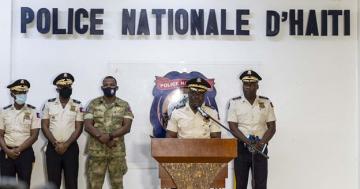 Kenya has chosen its side. That nation has agreed to give cover for the next occupation of Haiti by providing a Black face for imperialism.
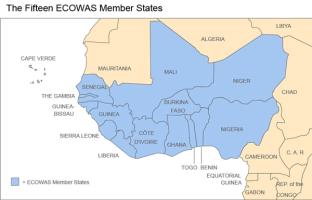 U.S. and African puppet regime threats against Niger and all African states must be condemned.
 As the U.S. and France move to interfere in the Sahel region of West Africa, Niger, Guinea and Mali have spoken up to defend their sovereign rights and declare their determination to be free from…
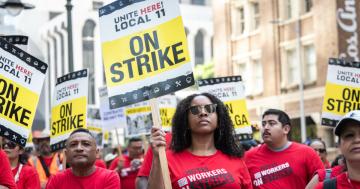 A hotel workers strike in California exposes anti-Black hiring practices, and the predation of the "gig" economy.
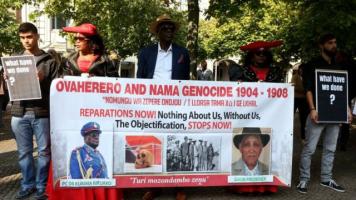 European nations refuse to acknowledge their crimes committed against colonized people. Germany's genocide against the Namibian people is just one such example of unconvincing apologies and refusals…


