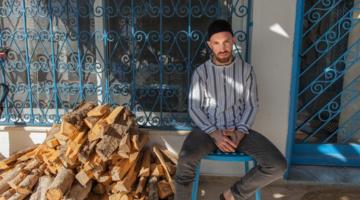
Palestinian poet Refaat Alareer, a martyr of zionist state genocidal violence, has left us with a tale of resistance and hope.
Claude McKay’s radical poem “If we Must Die” was written in response to the race war declared on African Americans during the bloody summer of 1919, the notorious “Red Summer” that saw dozens of white attacks on Black communities across the United States. First published in the socialist journal Liberator and later reprinted in both Cyril Brigg’s The Crusader and A. Philip Randoloph’s The Messenger, McKay’s poem was among the most famous and most militant texts of the Harlem Renaissance, and among the sharpest representations of the New Negro.
The poem adopted the form of a Shakespearean sonnet, with its fourteen lines broken up into three quatrains and a concluding rhyming couplet, all carried by a taut iambic pentameter beat. But if the poem’s form was classically European, the content was not; “If we Must Die” represented a simmering Black rage directed against an obscene white violence. Mckay’s final verses are a fatalistic call to arms, death be damned:
O kinsmen! we must meet the common foe!
Though far outnumbered let us show us brave,
And for their thousand blows deal one death-blow!
What though before us lies the open grave?
Like men we’ll face the murderous, cowardly pack,
Pressed to the wall, dying, but fighting back!
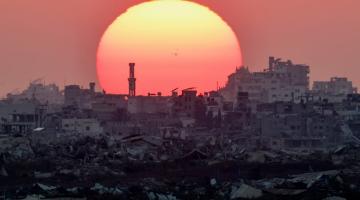
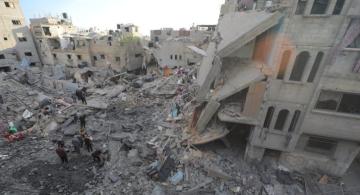
More than a century after the Red Summer, more than a century after McKay wrote “If We Must Die,” we are witnessing another race war, another pogrom - a genocide. This time it’s by the white supremacist zionist terror entity bent on annihilating the totality of Palestinian existence. Once again, a poet has captured both the terrible violence of the age, and the indomitable spirit of survival, resistance, and revolt. The poet is Refaat Alareer. A Palestinian writer, activist, and professor of English literature, who taught at the Islamic University of Gaza, Alareer (along with six members of his family) was coldly, cruelly, cynically, and deliberately assassinated on December 6, 2023 when his apartment was hit by a zionist terror airstrike. He was targeted, some say, because he made a morbid joke that offended the Israeli death machine. Alareer’s poem “If I must die,” riffs on McKay. In “If we Must Die,” McKay evokes the Black militant before death; in “If I must die,” Alareer anticipates the Palestinian martyr after dying — and the passing of the flame of resistance to the next generation. “If I must die,” Alareer writes, “…let it be a tale.”
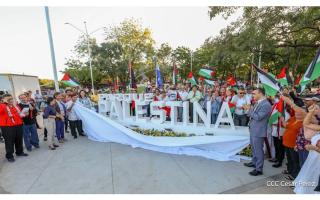
Alareer’s heroic tale of resistance has rallied the world to the Palestinian cause. Over one hundred translations of “If I must Die” have appeared since his murder. We reprint it below, alongside its translation by Dady Chery into Haitian Kreyol. “If I must Die.” “Si se pou m mouri.” Long Live the Palestinian Resistance!
If I Must Die
Refaat Alareer
If I must die,
you must live
to tell my story
to sell my things
to buy a piece of cloth
and some strings,
(make it white with a long tail)
so that a child, somewhere in Gaza
while looking heaven in the eye
awaiting his dad who left in a blaze –
and bid no one farewell
not even to his flesh
not even to himself –
sees the kite, my kite you made, flying up
above
and thinks for a moment an angel is there
bringing back love
If I must die
let it bring hope
let it be a tale.
Si se pou m mouri
[Haitian] Kreyòl translation of Refaat Alareer’s “If I Must Die”
@DadyChery
Si se pou m mouri
Ou do viv
Pou bay kont sou mwen
Pou vann zafè m yo
Pou w achte oun mòso twal
Ak fisèl
(Fè l blan ak oun gwo ke)
Konsa youn timoun ninpòt ki bò nan Gaza
K ap gade syèl lan nan zye li
K ap tann papa li ki te pati nan dife –
San li pa di pesonn adye
Pa menm kò li
Pa menm tèt li –
Ap wè sa, kap mwen an ke w te fè, k ap vole anlè
Ap panse pou oun moman ke se oun zanj kila
K ap pote lanmou
Si se pou m mouri
Kite l pote lespwa
Kite li vin oun kont