Strong condemnations from the NAACP and Black Congressional Caucus of Amazon’s treatment of its workers might have made a difference in the strike vote,
It took decades before unions successfully organized in the textile industry in the South,”
OXFORD, Miss. - The woman’s face still haunts me. Lined from many years of work on the farm and then in the cotton mills, she is nameless in my memory, just another “linthead” in the eyes of the mill owners, “white trash” others might say, someone off the cow patch and now in a factory in some Southern backwater working 12-hour days.
In her eyes, however, was a spark of something, a flicker of hope, and it came from the union she and countless other cotton mill workers were desperate to join back in the 1930s. “We began to feel we could be a part of a great movement,” she said in filmmakers George Stoney, Judith Helfland, and Susanne Rostock’s landmark 1995 documentary The Uprising of ’34.
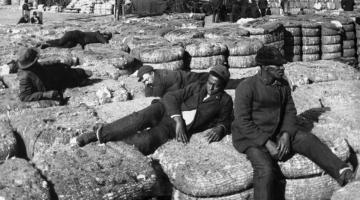
The film details the massive uprising of textile workers in the South against the medieval work conditions imposed on them by the mills that had lured them off the farms in the hope for a better life. They first struck in the late 1920s and then again in the 1930s, only to be brutally beaten down by gun thugs doing the will of the mill owners and their investors up North.
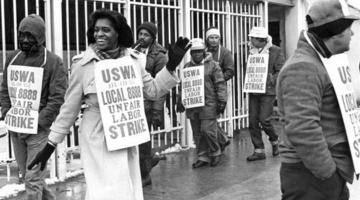
It would take decades and Crystal Lee “Norma Rae” Sutton before unions successfully organized in the textile industry in the South, forcing giants like J.P. Stevens finally to recognize workers’ legal rights to join together in a united voice in seeking a fair wage and decent working conditions.
It’s a lesson in history worth remembering now that the workers at Amazon’s giant Bessemer, Alabama, warehouse have voted down a union by a 2-to-1 margin. Organizing in the South requires a commitment for the long haul. It needs homegrown warriors like Sutton and back in the 1920s and 1930s like Ella Mae Wiggins, Howard Kester, and Lucy Randolph Mason.
The South has a long and tortured labor history, something not taught in the classroom, not preached from the pulpit, not discussed in legislative halls, news pages, or in the coffee shops. It’s a hidden history because that’s the way the phalanx of Southern anti-labor forces—the politicians, businessmen, preachers, and publishers—want it.
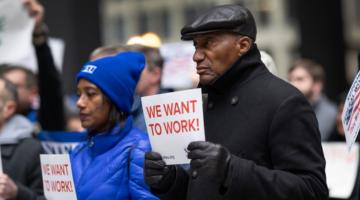
The effort by the Retail, Wholesale and Department Store Union (RWDSU) to organize the Bessemer workers only began last June. Amazon responded with the virulent anti-union campaign one expects from any company. Only this is a $1.7 trillion giant that is the veritable symbol of modern-day capitalism. What followed were forced anti-union sessions with workers, anti-union placards everywhere, online spying to see which workers are supporting the union, the hiring of Morgan Lewis & Bockius, one of those piranha-like law firms that specialize in destroying organizing campaigns.
The pandemic created a ton of stress on Amazon workers with sharp demands to deliver and deliver faster growing daily while safety conditions deteriorated. Amazon is organized in other parts of the world but like the foreign auto companies that dot the South tolerates no union in Dixie.
As in the United Auto Workers campaign at the giant Nissan plant in Canton, Mississippi, that failed by a wide margin in 2017, the workforce at the Bessemer warehouse is mostly black. President Joe Biden, prominent black Georgia Democrat Stacey Abrams and Black Lives Matter came out with strong support for the Bessemer workers’ effort, but precious little was heard from the NAACP. Perhaps Amazon’s largesse to their pet projects played a role in that silence. Amazon has boasted of contributing some $27 million to the NAACP and other organizations fighting racism.
Some strong condemnations from the NAACP and Black Congressional Caucus of Amazon’s treatment of its workers might have made a difference. Big corporations today are every bit as brazenly anti-union as J.P. Stevens was, but they’re scared to death of being called racist. That’s the kind of bad press that shakes them to their foundations.
I mean, my gosh, the NAACP is silent when even troglodyte Republican Senator Marco Rubio of Florida came out in support of the Bessemer workers?
Amazon head honcho Jeff Bezos is a kind of corporate hero these days, but his company recently got slapped with a $62 million fine for stealing tips from Amazon delivery drivers over a two-year period. Yes, that’s the kind of company Amazon is.
Some speculate that the union loss in Bessemer may give momentum to efforts to pass the so-called PRO (Protecting the Right to Organize) Act in Congress, a piece of legislation that would undo a lot of the damaging effects of the Republican-spawned Taft-Hartley Act of 1947, ending things like right-to-work laws and forced corporate anti-union sessions. The U.S. House of Representatives has already passed the bill, but at this point a small handful of Democratic senators, including West Virginia’s Joe Manchin, have yet to sign on. Ending the filibuster is key to its passage, since Republicans are bound to use the filibuster to try to kill it.
The Bessemer workers, by and large, bought Amazon’s line that they don’t need a union, that the company will look out for their best interests, that things will get better. They may for a while, then it’s back to what works best for the bottom line.
That’s why organizers need to stick around, not give up, keep their eyes on the prize, even if it looks like a distant phantom that may never become real. Workers need that flicker of hope in their eyes that I saw in that woman in The Uprising of ’34. Without hope, what is life?
Joseph B. Atkins is a veteran journalist and writer on labor issues who teaches journalism at the University of Mississippi. He is the author of Harry Dean Stanton: Hollywood’s Zen Rebel (University Press of Kentucky, 2020), Covering for the Bosses: Labor and the Southern Press (University Press of Mississippi, 2008), and the novel Casey’s Last Chance (Sartoris Literary Group, 2015). His blog is http://www.laborsouth.blogspot.com and he can be reached at jbatkins3@gmail.com.
This article previously appeared in Portside.
COMMENTS?
Please join the conversation on Black Agenda Report's Facebook page at http://facebook.com/blackagendareport
Or, you can comment by emailing us at comments@blackagendareport.com





 On May 30, 2026, a Celebration of the Life and Legacy of Assata Shakur was held at the Riverside Church in New York City. Dhoruba Bin Wahad, co-founder of the Black Liberation Army, wrote these words…
 Trinidad and Tobago's Prime Minister says she backs Trump's conservatism and capitalism, and the criminal case against a hairdresser paralyzed in a police shooting shows exactly what that partnership…
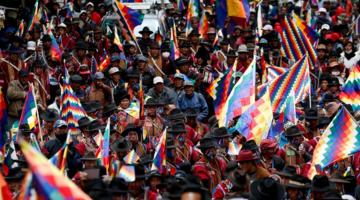 Former Bolivian president Evo Morales Ayma spoke with Black Agenda Report correspondent Clau O’Brien Moscoso.
 The World Cup is meant to be a celebration of global unity, not a propaganda shield for a superpower waging genocide abroad and running detention gulags on its own soil.
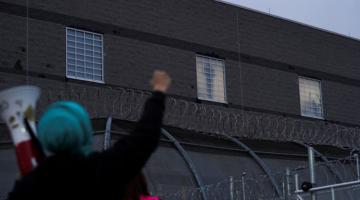 The immigrants who revolted inside the Delaney Hall immigration jail are not criminals but prisoners of war, and their actions are those of resistance against a fascist detention system.


