Washington's economic war has left Cuba with few good options. The recently announced reforms require a very thorough analysis.
Originally published by Isaac Saney on his Facebook page.
The announcement of Cuba's new package of economic transformations has generated intense debate both within Cuba and among supporters of the Revolution internationally. Some have expressed concern that aspects of the reforms represent a retreat toward capitalism, a weakening of socialist principles, or even a concession to the relentless pressure of U.S. imperialism. Such concerns should not be dismissed. They arise from a genuine commitment to the principles that have defined the Cuban Revolution and an understandable apprehension about the dangers that accompany any expansion of market mechanisms.
Yet the starting point for any serious analysis must be reality. Cuba confronts one of the most severe economic crises in its contemporary history. This crisis is not the product of abstract policy failures alone, nor can it be understood apart from the unprecedented escalation of the U.S. economic war against the island. Washington's objective remains unchanged: to create such hardship, deprivation, and social dislocation that the Cuban people abandon their revolutionary project and surrender their sovereignty.
For more than six decades, successive U.S. administrations have sought to achieve through economic warfare what they could not accomplish through invasion, sabotage, terrorism, diplomatic isolation, or political subversion: the destruction of the Cuban Revolution. The current phase of that assault has reached extraordinary levels. Cuba faces financial persecution, restrictions on fuel imports, obstacles to international banking transactions, sanctions against foreign investors, and a campaign explicitly designed to suffocate the country's economy.
Under such circumstances, the Cuban revolutionary leadership could not simply stand still. To do nothing would itself have been a decision—a decision carrying potentially devastating consequences for the Cuban people and for the survival of the Revolution. As Cuban economists and policymakers have repeatedly noted, many of the measures now being implemented have been debated for decades. Indeed, part of the current crisis stems from reforms that were delayed, incompletely implemented, or obstructed by institutional inertia. The cost of inaction has been enormous.
The question therefore is not whether changes were necessary. They were. The real question is what kind of changes are being implemented, under whose authority, and for what purpose.
Some critics view measures such as expanded foreign investment, modifications to foreign trade arrangements, greater flexibility for state enterprises, and new forms of financing as evidence of capitalist restoration. Such conclusions are premature and often misunderstand the central issue confronting socialist societies.
Socialism has never been built under ideal conditions. Neither Marx nor Engels imagined that socialist construction would occur in a small developing country subjected to permanent siege by the world's most powerful imperial state. Every socialist revolution has been forced to navigate contradictions, shortages, external threats, and difficult compromises. The history of revolutionary movements is not the history of advancing under perfect conditions; it is the history of defending emancipatory projects under hostile conditions.
Lenin confronted precisely this reality in 1921. After years of civil war, foreign intervention, economic collapse, and devastation, Soviet Russia introduced the New Economic Policy (NEP). The NEP permitted limited private enterprise, market exchange, and concessions to foreign capital. It was fiercely debated within the revolutionary movement. Yet Lenin insisted that the decisive issue was not the existence of market mechanisms in isolation, but which class held political power and whether the socialist state retained command over the strategic direction of society.
The NEP was not viewed as a surrender. It was understood as a strategic retreat designed to preserve revolutionary power, rebuild productive capacity, and gain time under extremely unfavourable conditions.
History never repeats itself mechanically, and Cuba is not Soviet Russia. Nevertheless, the comparison is instructive. Revolutionary governments occasionally face circumstances in which tactical flexibility becomes necessary to preserve strategic objectives.
The fundamental question remains: who controls the state? The Cuban Revolution has not relinquished political power to domestic capitalists, foreign corporations, or international financial institutions. Cuba remains a sovereign state governed by institutions created through the revolutionary process. The Communist Party remains in leadership. The state retains control over the commanding heights of the economy. National independence remains non-negotiable. This distinction is crucial.
The issue is not whether market mechanisms exist. Markets exist in varying forms in virtually every society. The decisive question is for whom the social product is generated and how the social surplus is utilized.
Is wealth produced for private accumulation by a narrow elite? Or is it directed toward national development, social welfare, public health, education, scientific advancement, food security, and collective well-being?
That is the central dividing line between socialist-oriented development and capitalist restoration. Those worried about the weakening of the state monopoly on foreign trade raise legitimate concerns. History demonstrates that openings to market forces can generate inequalities and social pressures. Similarly, proposals involving greater participation of foreign investment and changes in enterprise structures deserve careful scrutiny.
There are real dangers. No serious revolutionary should deny them. There is the danger of growing inequalities. There is the danger of bureaucratic distortions. There is the danger of the emergence of privileged sectors. There is the danger that market incentives, if left unchecked, could gradually reshape social relations in ways inconsistent with socialist objectives.
But dangers alone cannot determine policy. The alternative to confronting these risks is not some idealized preservation of a previous status quo. The alternative may well be deepening economic collapse, worsening shortages, increased emigration, deterioration of public services, and the weakening of the material foundations upon which the Revolution rests. The challenge is therefore not to avoid all risk—a practical impossibility—but to manage those risks while preserving revolutionary power.
In this regard, an important aspect of the current debate concerns alternatives that deepen worker participation, cooperative development, community control, and democratic forms of economic management. These discussions deserve serious attention. Cuba's future need not be reduced to a choice between bureaucratic centralization and private capital accumulation. Expanding the role of workers, cooperatives, municipalities, and communities in economic decision-making remains an essential component of socialist renewal.
Indeed, the debate itself demonstrates an often-overlooked reality: Cuba continues to engage openly with fundamental questions about the direction of its development. The Revolution has never claimed infallibility. Cuban leaders have repeatedly acknowledged errors, shortcomings, delays, and bureaucratic obstacles. The current reforms emerge not from ideological conversion to capitalism but from a recognition that existing mechanisms have proven insufficient under present conditions.
Ultimately, however, the principal contradiction remains external. The greatest threat to Cuban socialism is not the ongoing debate among revolutionaries about economic policy. The greatest threat remains the unrelenting campaign by Washington – including the real possibility of military aggression – to force Cuba into submission. This is why international solidarity remains indispensable.
Those outside Cuba have every right—and indeed a responsibility—to discuss, debate, and critically evaluate developments on the island. But such discussions must begin from an unequivocal defence of Cuba's right to determine its own future free from imperial coercion.
The Cuban people alone have the right to decide how their society evolves. Not Washington. Not Wall Street. Not the architects of blockade and economic warfare.
The irony is that many of those demanding a return to capitalism for Cuba preside over capitalist societies increasingly incapable of delivering security, equality, or hope for future generations. Across the capitalist world, growing numbers of people face declining living standards, mounting insecurity, precarious employment, and diminishing prospects for their children. The promise and illusion that capitalism would provide prosperity for all has become increasingly difficult to sustain even in its historic centres.
Against this backdrop, Cuba's struggle remains what it has always been: the effort to preserve national sovereignty and social justice under extraordinarily hostile conditions. The current measures should therefore be understood neither as a capitulation nor as an abandonment of socialist aspirations. They are better understood as an attempt—whether ultimately successful or not—to navigate a perilous moment in defence of a revolutionary project that continues to face the concentrated hostility of the most powerful empire in history.
The debate over the reforms will continue. It should. But the first question must never be forgotten: what would happen if Cuba did nothing? The Revolution was never confronted with a choice between an ideal socialism and imperfect reforms. It was confronted with the challenge of defending socialist sovereignty amid economic siege.
That reality imposes urgent and necessary changes. The task now is to ensure that those changes strengthen rather than weaken the Revolution's foundational commitment: a sovereign nation in which the wealth produced by society serves the many rather than the few, national development rather than foreign domination, and human needs rather than private profit.
Isaac Saney is a Professor and Cuba and Black Studies Specialist in Black African Diaspora Studies and History, Dalhousie University, Halifax, Canada. He is also a member of the executive of the Canadian Network On Cuba.



 In this week’s segment, we hear about the ongoing uprising in France against neo-liberal austerity, colonialism, and white supremacy. But first, we discuss a new report that reveals a 25% decline in…
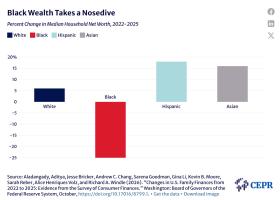 The Center for Economic and Policy Research (CEPR) recently reported on Federal Reserve data indicating that Black people in the U.S. have lost 25% of their wealth between 2022 and 2025. Whites,…
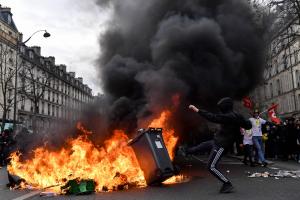 Bouna Mbaye is an activist, writer, and a member of the Pan-African League-Umoja, the Pan-African Brigade for Palestine, and the US Out of Africa Network. He joins us from Paris to discuss the…
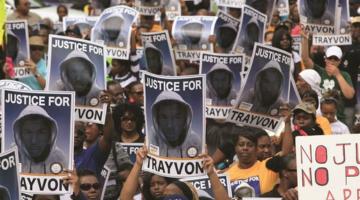 As Black Agenda Report is poised to celebrate its 20th anniversary, we reprint Glen Ford's commentary on the killing of Trayvon Martin and the impunity provided to his killer in a criminal justice…
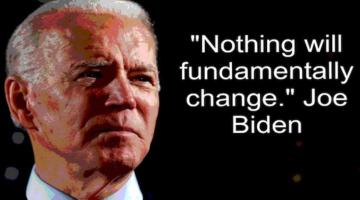 The Democratic Party is terrified of even small liberal reforms and will not abide left leaning democrats thwarting their plans for austerity and neoliberal orthodoxy.


