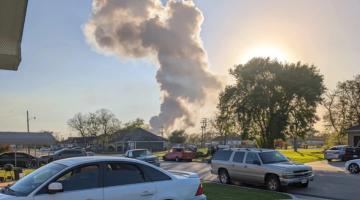
Flares and smoke released from fossil fuel and petrochemical plants in the wake of Hurricane Ida in August 2021 in Louisiana’s Cancer Alley © 2021 Julie Dermansky
True environmental liberation demands south-to-south solidarity against racial capitalism, linking the struggles of oppressed communities from Palestine to Louisiana under a shared framework of People(s)-Centered Human Rights.
The Global South is a Preposition and a Position
References to the so-called Global South too often primarily connotes the idea of Latin American and Caribbean nations to the geographic south of the United States, as well as African Union nations and a select few in the Middle East, including the Republic of Yemen. While this notion is a factual articulation of the “Global South” parlance, it also carries an Anglo-centric lens that doesn’t consider the fact that the “Global South” is both a preposition and a position in the larger social order of racial capitalism.
The Global South is a position in the sense that there are myriad examples that vindicate the assertion of author and scholar Robert L. Allen that Black America is a semi-colony or what he refers to as domestic colonialism. I would also add to Mr. Allen’s analysis that the idea of domestic colonialism can also be extended to working class and, especially, poor folk of all races and ethnicities who are also subjected to a denial of their People(s) Centered Human Rights (PCHR) and otherwise viewed by the bourgeois as a surplus population that is otherwise disposable. Environmental conditions of poor and working-class people, and, specifically, Black and Indigenous people, provide some of the more profound examples of the notion of domestic colonialism and the idea of the “Global South” as a position.
Take Flint, Michigan, where we witnessed a concerted, conscious, and intentional decision to taint the water of its majority Black and poor residents with a pollutant so poisonous that even Trump’s Environmental Protection Agency maintains that its maximum contaminant level (MCL) - that is, “The highest level of a contaminant that is allowed in drinking water” is zero. To be clear, there is no known cure for lead contamination, meaning that the estimated 99,000 residents of Flint who were afflicted by lead exposure will carry the associated deleterious health impacts for the rest of their lives. It was not until last year, nearly 10 years after the health impacts were first reported, that most of the lead pipes in Flint were replaced. This denial of PCHR resulted in no criminal charges against the culprits, including former Michigan Governor, Rick Snyder, who is now the CEO of a cybersecurity company and even sits on the Board of Directors for the Michigan Chapter of the environmental group, The Nature Conservancy. Democratic Attorney General Dana Nessel chose to drop any charges and Snyder and others went unpunished. It should be noted that former President Obama demonstrated similar disregard for Flint with his sip and dip event in which he speciously attempted to reassure residents that the water was safe to drink while they were still in the midst of the crisis.
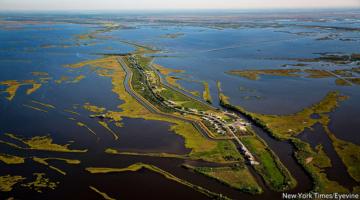
As egregious as the dehumanization of Flint residents remains, there perhaps is no better example of domestic colonialism and denial of PCHRs in the United States than the situation in Cancer Alley, a sobriquet for an 85-mile stretch of land between Baton Rouge and New Orleans, Louisiana. This majority Black and poor community of Louisiana is surrounded by nearly 200 fossil fuel and petrochemical plants. In fact, an estimated 25% of all petrochemical products in the United States are processed in Cancer Alley. The result of exposure to toxic air, land, and water is that residents of the area experience the highest risk of cancer from industrial air pollution in the U.S. and more than seven times the national average. Moreover, a recent report from Johns Hopkins University asserts that the risks to human health in Cancer Alley have actually been “significantly underestimated.” Compounding the denial of humanity and PCHRs of Cancer Alley residents, former President Biden’s EPA ended a civil rights investigation of two Louisiana state agencies believed to be actively exercising discrimination, and, more recently, Trump’s EPA dismissed a lawsuit against a Japanese-owned rubber company that was allegedly responsible for cancer risk rates in the area. Cancer Alley is particularly germane in the current moment as it’s believed that oil resources illegally stolen from the Bolivarian Republic of Venezuela would largely be refined and processed in Cancer Alley, as well as other majority-poor Black communities situated in the Gulf Coast of the United States.
The COVID pandemic offers another example of the conditions of domestic colonialism in the U.S. It’s well documented that Black, other people of color, and the poor were subjected to higher rates of morbidity at the height of the pandemic. For instance, according to the Brookings Institute:
- In Michigan, Blacks make up 15% of the state population but represented 35% of people diagnosed with COVID-19 and accounted for 40% of all deaths statewide;
- In Louisiana, Blacks represent about one-third of the state population but 70% of COVID-19 deaths; and
- Blacks in Milwaukee County, Wisconsin, represent roughly 45% of diagnoses and over 70% of deaths related to COVID-19
Among the reasons for the disproportionate morbidity rates, Brookings, in part, concluded, “Climate also creates challenges in the Black community. Predominately Black neighborhoods are more likely to be exposed to pollutants and toxins. A study conducted by the National Library of Medicine concurs with the Brookings analysis, noting, “In the United States, blacks are far more likely to experience adverse housing conditions, crowded living environments, diminished access to health-promoting resources (eg, health care and healthy food options), use of public transportation, be employed in sectors requiring close interactions with others (eg, food and service industries, sanitation, and public transportation), and also increased exposure to air pollution.”
Numerous examples of domestic colonialism also exist in Western Europe, according to a report released by European Network Against Racism entitled, THE CLIMATE CRISIS IS A (NEO)COLONIAL CAPITALIST CRISIS: Experiences, responses and steps towards decolonising climate action. The report specifically notes, “While impoverished communities in the Global South are undoubtedly hardest hit by the climate crisis as we have seen with droughts in Sudan and hurricanes in the Caribbean, racialised communities in Europe are also specifically and disproportionately impacted.” It adds, “From Roma communities across Europe, to the Indigenous Sámi in Northern Europe and refugees on the Greek islands, racialised communities are increasingly exposed to warming temperatures, changes in weather patterns, in biodiversity and other examples of climate disruption.”
Militarism Here, Militarism There, Militarism Everywhere
The confluence of the U.S. military’s recent invasion of the Bolivarian Republic of Venezuela with the recent invasion of federal agents representing Immigration Custom Enforcement (ICE), Customs and Border Protection (CBP), and others in cities including, but not limited to, Los Angeles, New Orleans, Memphis, Minneapolis, and Washington, D.C. also sheds light on the concept of domestic colonialism. And the more recent murder of Heather Good in Minneapolis at the hands of ICE offers more evidence that the U.S. empire will do everything it needs to maintain its hegemony over both the international and domestic iterations of the “Global South.”
Far too many environmental groups articulate militarism more as a function of emissions and profligate use of fossil fuels and less as a general affront on PCHRs. This has consequences, including a failure to comprehend that execrable environmental conditions of the Global South, internationally and domestically, like militarism, establish conditions for increased instances of genocide and ecocide. We need look no further than Palestine for proof of this assertion. At the same time, from Flint, to Cancer Alley, to the numerous cities and states subjected to inhumane environmental conditions and domestic militarism, vis-à-vis overpolicing, the same conditions of for genocide are profoundly apparent.
As discussed in the aforementioned European Network Against Racism report, environmental groups consistently miss the mark in making the connections of the value systems of Western colonial nations of Europe and North America, which is to say racial capitalism, and the conditions for the Global South as a position, “There is an increasing acceptance among more mainstream climate organisations and climate discourse that larger capitalist forces are to fault for the climate crisis, as large oil companies extract the earth’s oil reserves. This produces massive emissions to line the pockets of their executive suite, meanwhile the communities living near the reserves are left deprived of the wealth generated. However, the (neo) colonial, racist roots of capitalism have gone unnoticed, or are actively ignored.” Equally ignored is how militarism, domestically and internationally, is utilized to maintain domestic and global orders of racial capitalism through imperialism, fascism, and neocolonialism.
Breaking the Cycle with a Renaissance of Environmental Justice Principles
While the concept of PCHRs is newer to many people who purport to be active members of the global human rights network, it is an especially nascent concept for many in the environmental and climate justice network. This was not always the case - in fact, oppressed and subjugated communities in the United States grasped the concept of domestic colonialism and the need for PCHRs as a function of climate and environmental liberation in the early 1990s. The 1991 Principles of Environmental Justice (“the Principles”) confirm this. The preamble of the Principles includes a commitment, “to begin to build a national and international movement of all peoples of color to fight the destruction and taking of our lands and communities…” Further, the Principles reference, in part, the root causes of the environmental and climate crises, as well as the conditions that engender instances of genocide by calling on colonized and oppressed people domestically and globally, “to secure our political, economic and cultural liberation that has been denied for over 500 years of colonization and oppression, resulting in the poisoning of our communities and land and the genocide of our peoples…”
It can be argued that we have not seen an offering from the mainstream U.S. or global networks that articulates the intersection of colonialism, genocide, and exposure to the impacts of environmental degradation since the release of the Principles. Further, no offering from this network of so-called Civil Society Organizations has called for or implied the need for a PCHRs approach to the interlinked crises of climate change, rising fascism, genocide and ecocide. Consider the following elements of the Principles:
- Environmental justice affirms the fundamental right to political, economic, cultural and environmental self-determination of all peoples;
- Environmental justice demands the right to participate as equal partners at every level of decision-making, including needs assessment, planning, implementation, enforcement and evaluation;
- Environmental justice considers governmental acts of environmental injustice a violation of international law, the Universal Declaration On Human Rights, and the United Nations Convention on Genocide;
- Environmental justice opposes the destructive operations of multi-national corporations; and
- Environmental justice opposes military occupation, repression and exploitation of lands, peoples and cultures, and other life forms.
Here we see not only a firm understanding of the axiomatic nexus between racial capitalism, militarism, colonialism and the conditions that allow for the proliferation of genocide, but also the need for more south to south solidarity and collaboration as a function of self-determination through a lens of PCHRs. The most recent offering that demonstrates a comprehension of the need for climate and environmental internationalism as a function of South to South solidarity and collaboration, it would be the Declaration of the People’s Summit Towards COP 30 released last November.
For instance, the declaration affirms, “Our worldview is guided by popular internationalism, with exchanges of knowledge and wisdom that build bonds of solidarity, struggle and cooperation among our peoples. True solutions are strengthened by this exchange of experiences, developed in our territories and by many hands.” And the conclusion of the declaration demonstrates that the necessary renaissance of the Environmental Justice Principles is in motion. “Finally, we believe that it is time to unite our forces and face our common enemy. If the organisation is strong, the struggle is strong. For this reason, our main political task is to organise the peoples of all countries and continents. Let us root our internationalism in each territory and make each territory a trench in the international struggle. It is time to move forward in a more organised, independent and unified way, to increase our awareness, strength and combativeness. This is the way to resist and win.”
It is incumbent upon the masses to grasp the idea of domestic colonialism as part of the process of understanding how the global order operates while also resisting reactionary liberal and petit-bourgeois forces that attempt to discount the full material conditions of this moment in history, the forces who attempt to obfuscate the need for more exercises of dialectical materialism, and the forces who would have us believe that we need only reform and tinker with the current global order and racial capitalism to achieve collective liberation. Instead, we must embrace the analysis of those like Allen who remind us, “Peaceful coexistence is impossible if the contradictions are too great. It is precisely this possibility, nay, the profitability of conflict, and fear of its consequences, which motivate some to discount any talk of domestic colonialism and imperialism.”
We must reject those who discount the enormity of this moment, just as we must reject the agents of liberal humanitarianism through a collective south-to-south project through a lens of PCHRs, such that we can dispatch of enemies of and impediments to collective liberation of all poor, oppressed, and colonized people by any and all means necessary.
No Compromise
No Retreat
Anthony Karefa Rogers-Wright is an international climate and environmental liberation advocate, a racial justice practitioner, and a writer and policy expert residing in the United States with his family and their mischievous cat, “Evil” Ernie. He is a proud and active member of the Black Alliance for Peace and the Movement for Black Lives. His radio program, “Full Spectrum with Anthony Rogers-Wright,” airs on the Mighty WPFW network every Tuesday at 6:00 PM EST.






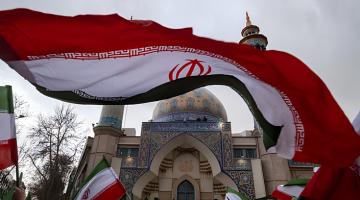 A People(s)-Centered Human Rights framework rejects the liberal abstraction that makes a false symmetry between Iranian authoritarianism and U.S. imperialism, which obscures the fact that one is a…
 “In the period since 1969, one can detect the same old close ties between right-wing U.S. academics, think tanks, foundations, and the U.S. Government…”
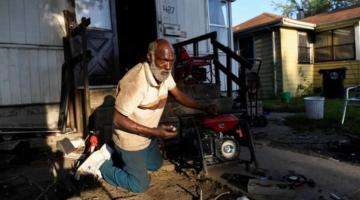 White supremacy works through institutions, and FEMA's formula for allocating disaster relief shows us how the state decides which neighborhoods are prioritized and which are left to suffer. Those in…
 The IMF and World Bank are not subjects the corporate media cover in any real sense. Instead, their role is treated as unquestionably immutable and beneficial.
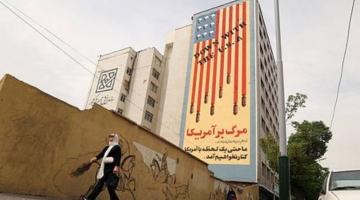 The Anti-Imperialist Scholars Collective (AISC) wrote this response to the open letter To Iran's political prisoners, 'trapped between two blades of a scissors' which appeared in The…


