Lester Johnson Jr., restaurant owner in Richmond, Virginia is concerned about rising insurance premiums. (Sarah L. Voisin/The Washington Post)
The federal government shutdown is a fight between Trump and democrats, but it is also emblematic of the tenuous nature of the welfare state in the U.S. The duopoly parties are both committed to carrying out austerity policies on behalf of the ruling class.
Anyone who ponders whether or not the United States is a failed state operating at the behest of the ruling class and their corrupt political system need only observe that the federal government ceased operations after the fiscal year ended on September 30. Immediately, more than 2 million federal workers were furloughed and have not been paid since, while some categories of employees, such as air traffic controllers, must work without pay.
Having two million people suddenly out of work is not the end of the economic devastation. The federal government cannot expend any money. On November 1 Supplemental Nutrition Assistance Program (SNAP) benefits will not be paid and the Trump administration refuses to use an available source of emergency funds. Some 42 million recipients are at risk of being unable to buy food. Funding for Affordable Care Act (ACA) subsidies will also end, with a record 24 million enrollees who rely on that program already receiving bills for November showing increases of 30% and more. The word “affordable” in the title of what is popularly known as Obamacare was always linguistic trickery with ACA monthly premiums averaging $888, which in some cases will double to $1,900 in 2026 unless subsidies are renewed.
Donald Trump is picking up where he left off in his first term, which included a 2019 shutdown that lasted for 34 days. Democrats have so far proven to be incapable of fighting the Trumpian onslaught against government spending and executive branch control of every lever of government. Ironically, he may have helped them to finally find some political relevance. If the Democratic Party can’t stand up to defend programs that feed poor people and pay for healthcare, then it literally has no reason to exist at all. Frustrated democratic voters can be relied upon to hold their noses and vote for the party that claims to act on their behalf while consistently failing to do so. Of course, when democrats pass the threshold of uselessness, millions of these voters simply stay home on Election Day, as they did in 2024.
But it would be a mistake to see Trump and the republicans as the only enemies of the welfare state. It was Bill Clinton whose “welfare reform” did away with 60 years of precedent, which had given every person in the country the right to seek public assistance. Now, states make up their own rules, with levels of generosity varying widely.
Demonizing low income people and advocating for the reduction of any public benefits they may receive are time tested means of achieving political success. In 2010, Barack Obama felt compelled to form the National Commission on Fiscal Responsibility and Reform, which came to be known colloquially as the “catfood commission” because it proposed cutting Medicare and Social Security so much that the elderly poor would have relied on catfood to survive. Congressman Emmanuel Cleaver, a member of the Congressional Black Caucus, called the proposals a “sugar coated satan sandwich.” Obama declared his desire for a “grand bargain” with republicans and famously said that he would put “everything on the table,” political parlance for austerity that impacts even formerly sacrosanct programs like Medicare and Social Security. The sandwich was never made because republicans preferred gridlock to helping the first Black president, even when he proposed doing what they do.
The welfare state in the U.S. is always at risk. A combination of racism, which equates government spending with Black “welfare queens,” ruling class control of politics and hostility towards all of humanity, misguided allegiance to notions of pulling oneself up by bootstraps, and blaming individuals for their life outcomes all play a role in creating a safety net that isn’t really worthy of the term.
Just as obstructionist republicans threw the people a lifeline during the Obama administration, Trump’s obstruction may yet rescue the democrats. That hapless party has been flummoxed ever since Trump came into his second term in office, hoping to do their usual deal-making with republicans, only to find that they were being cut out of the political process.
Trump’s grandiosely named “Big Beautiful Bill” would cause millions of people to lose their healthcare coverage through the expiration of ACA tax credits and reductions in medicaid funding. The need for healthcare coverage is one that brings people together who may disagree on other issues. No one wants to be ill and without healthcare. Even Trump voters who thought they wanted spending cuts are not in favor if they are personally affected.
The right-wing radical desire to drastically cut spending and “starve the beast” of government is not shared by many other people. But the lack of substantive difference between the duopoly parties, corporate media collusion with the right, and ignorance and racism always put the project at risk. It seems that people in this country must hope for political logjams to save them from disastrous policies.
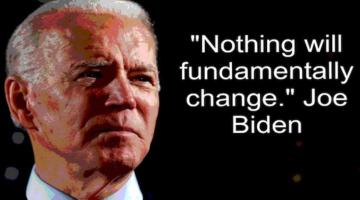
Democratic leaders like Joe Biden and Nancy Pelosi often spoke of the need for a strong Republican Party. The strange behavior is easy to understand if one realizes that the democrats don’t actually see themselves as an opposition party at all. Biden, Pelosi, and all their successors need a strong, that is to say, not too extreme and unpopular, Republican Party so that they can make deals with them and pretend to fight for the people when they are only engaging in smoke and mirrors performance.
Trump’s radical proscriptions have alienated many of his voters and made it necessary for democrats to stand firm lest they be forever discredited with their voters. U.S. politics is an upside-down world where democrats are able to get away with safety net evisceration, deregulation, and bailouts of financial services because they have marketed themselves as a “lesser evil.” Republicans have less latitude when they live up to their ideology because doing so allows democrats to temporarily pretend to be the friends of the working people they actually scorn.
The shutdown is causing pain across the country. Government workers are directly impacted, and millions of people are anxious about losing healthcare. Fortunately for democrats, polling indicates that republicans are being blamed for the impasse more than they are. One can imagine them hoping for SNAP benefits to expire and insurance bills to go up so that they can force negotiations with Trump. But U.S. politics doesn’t ensure an outcome that will help the people who are in jeopardy in various ways.
As long as the oligarchs rule and the people's needs are last on the agenda, if they make the list at all, there will be shutdown chicanery and other threats to the lives of millions. A Democratic Party victory in 2028 is not necessarily a guarantee of a positive outcome. The duopoly itself must be undone if there is to be any semblance of democracy.
Margaret Kimberley is the author of Prejudential: Black America and the Presidents. You can support her work on Patreon and also find it on the Twitter, Bluesky, and Telegram platforms. She can be reached via email at margaret.kimberley@blackagendareport.com.







 “So the calypso ceases to be entertainment on a trivial level and becomes a vehicle whereby the society is going back and searching for its soul.”
 The protests spreading across Spain, India, France, Chile, and other countries are responses to the global neoliberal order of austerity, privatization, and deregulation.
 Under the guise of a farcical “pilot zone” project to restore Lebanon’s sovereignty, Israel is pursuing a scorched-earth strategy while entrenching its occupation.
 Chile, Colombia, Bolivia, Honduras, Peru, and Costa Rica have all elected right-wing presidents in the past year, and most are open Trump allies. Brazil's runoff between Lula and Flávio Bolsonaro is…
 October 7, 2023, was not an isolated attack, but the culmination of generations of Palestinian imprisonment and resistance in Gaza, comparable to Nat Turner's rebellion. History will record the Al…


