From ICE courtroom ambushes to sheriffs' execution threats, America's domestic repression now openly wields the tools it honed in overthrowing foreign governments.
"I'm not picky so I'm giving you the options cause I have to take one. If not, I'll take all."
These are the words of an ICE agent speaking to an immigration attorney in San Diego California, outside of a courtroom hearing, from a video that began circulating on Friday. The words were bureaucratic language, publicly stated, and coldly calculated. Days later in Florida, Brevard County Sheriff Wayne Ivey delivered a televised warning to protestors: “If you throw a brick, a firebomb, or point a gun at one of our deputies, we will be notifying your family where to collect your remains, because we will kill you, graveyard dead.”
These statements reflect a political reality. The tactics the United States has long used to dominate, destabilize, and disappear communities across the Global South are now being turned inward. These are not new strategies. Family separation, legal manipulation, surveillance, and targeted disappearance were perfected through decades of foreign intervention. What is new is their use against communities within the United States is being done openly, encouraged publicly and without consequence.
The courthouse “choice” ICE presents, treating human lives as objects to be selected, is rooted in decades of military and political intervention abroad. U.S.-trained forces in Guatemala used similar language to identify Indigenous civilians for elimination. In Colombia, death squads trained by U.S. contractors made public lists of the next people to “disappear.” In El Salvador and Honduras, U.S. military advisors encouraged the use of fear as public theater. Threats were made loudly and carried out without consequence. Today’s threats from U.S. sheriffs echo this tradition word for word.
The dirty legacy of imperial policy is not only visible overseas, it is entrenched in domestic systems of incarceration and migration control. In Colombia, our research with Black women impacted by incarceration documents how systemic exclusion and racialized imprisonment operate in tandem. Afroresistance, through its Network of Black Previously Incarcerated Women, traces these patterns back to hemispheric strategies of racial control, refined through U.S. intervention that are mirrored in U.S. prisons and immigration systems. A methodology that centers lived experience and legal accountability makes clear that these are not policies gone wrong. This is the system functioning exactly as intended.
To many outside the U.S., what is happening now is deeply familiar. As people from the Global South, we understand the condescension it carries, and we recognize the playbook. Public officials issuing death threats. Legal spaces transformed into traps. Families disappeared into underground facilities. Senators dragged from press conferences. Military-grade policing deployed against unarmed civilians. These are scenes the U.S. once condemned while financing them elsewhere. Now they are scenes from ‘home’. This the successful transfer of imperial governance into the domestic sphere.
The infrastructure of violence has always been transferable. The ICE video is not just a record of cruelty. It is a mirror. A bureaucracy that talks about human lives in terms of “options” and “units” is operating on the same logic that drove wartime atrocities. The sheriff’s casual cruelty is not shocking when seen in the context of policy. It is a policy.
When law enforcement can threaten protesters with execution and face no consequence, it signals the erosion of democratic norms and the normalization of authoritarian tactics.
The transformation of immigration courts into ambush zones deepens this collapse. Legal forums, once viewed as spaces of protection, are now weaponized. ICE agents park themselves outside courtrooms, and families, fearing arrest, refuse to appear. Lawyers are forced into impossible ethical dilemmas, asked to betray one client to protect another. This is deliberate. It is a strategy designed to fracture solidarity and weaken resistance.
We have seen this before. In Latin America, regimes trained and backed by the U.S. consistently targeted lawyers and organizers who supported marginalized communities. The aim was to sever networks of protection and make people easier to control. That is now happening here.
Today, immigration attorneys face the same moral crises as human rights defenders under US backed regimes. How do you protect clients when representation itself makes them vulnerable? What does it mean to practice law when the law has been weaponized?
And yet, resistance grows. The same organizing traditions that have powered liberation across the world are alive in the U.S. In movement spaces led by Black women. In networks that uplift the previously incarcerated. In communities defending language justice and bodily autonomy.
What we are facing is not new and we are not without power. The same systems that taught domination also made us engineers on how to resist it.
The choice before us is stark and urgent. Dismantle the machinery of imperial violence or allow it to become the national norm.
Janvieve Williams Comrie, is a sociologist, a human rights strategist and a movement facilitator. She is the founder and current Executive Director of the international organization AfroResistance. A sought after consultant, speaker and certified personal coach, Janvieve has strategized, advised and worked with a myriad of people all over the world, including heads of states. www.janvieve.com.

 In this week’s segment, we hear about the ongoing uprising in France against neo-liberal austerity, colonialism, and white supremacy. But first, we discuss a new report that reveals a 25% decline in…
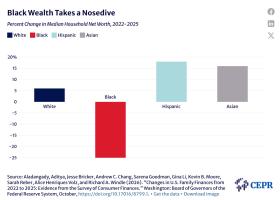 The Center for Economic and Policy Research (CEPR) recently reported on Federal Reserve data indicating that Black people in the U.S. have lost 25% of their wealth between 2022 and 2025. Whites,…
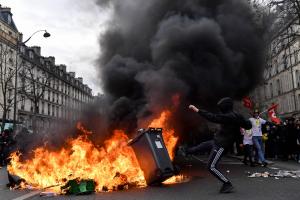 Bouna Mbaye is an activist, writer, and a member of the Pan-African League-Umoja, the Pan-African Brigade for Palestine, and the US Out of Africa Network. He joins us from Paris to discuss the…
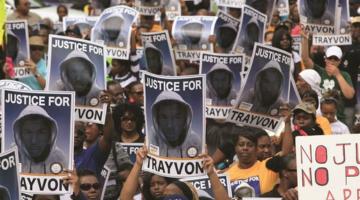 As Black Agenda Report is poised to celebrate its 20th anniversary, we reprint Glen Ford's commentary on the killing of Trayvon Martin and the impunity provided to his killer in a criminal justice…
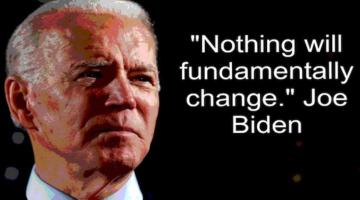 The Democratic Party is terrified of even small liberal reforms and will not abide left leaning democrats thwarting their plans for austerity and neoliberal orthodoxy.


