Ntozake Shange reminds us that whether we come from Haiti, Savannah, Luanda, or Palestine, we may not speak the same language, but “we fight the same old men.”
In Spanish, “Bocas,” means “mouths.” “Bocas” is also shorthand for a town and archipelago in Panama, Bocas del Toro (“Bull’s Mouths”), on the Caribbean edge of the Isthmus, where, at the beginning of the twentieth century, the US multinational corporation United Fruit Company acquired thousands of acres of indigenous land from Guaymi, Teribe and Bokota. They turned the land into lucrative banana plantations, importing thousands of West Indians as exploited and underpaid labor.
“Bocas” is also the title of a poem by writer Ntozoke Shange. Shange’s “Bocas: A Daughter’s Geography” is a poem about naming and space and resistance. In the poem, Shange connects supposedly distant and distinct places — “salvador & johannesburg” “santiago & brixton,” “capetown & palestine” — in a common cartography of solidarity and revolt. In so doing, in “Bocas,” Shange rebukes an imperialist capture of space and territory that would narcissistically rename the Gulf of Mexico the “Gulf of America,” or brazenly seize the Panama Canal, handing it over to US corporate interests and reverting the Republic to a colony.
And in “Bocas,” Shange reminds us that, although we, in Chicago or San Juan or Luanda or Palestine “cannot speak the same language… we fight the same old men.”
Ntozake Shange’s “Bocas: A Daughter’s Geography” is reprinted below.
Bocas: A Daughter's Geography
Ntozake Shange
i have a daughter/ mozambique
i have a son/ angola
our twins
salvador & johannesburg/ cannot speak
the same language
but we fight the same old men/ in the new world
we are so hungry for the morning
we’re trying to feed our children the sun
but a long time ago/ we boarded ships/ locked in
depths of seas our spirits/ kisst the earth
on the atlantic side of nicaragua costa rica
our lips traced the edges of cuba puerto rico
charleston & savannah/ in haiti
we embraced &
made children of the new world
but old men spit on us/ shackled our limbs
but for a minute
our cries are the panama canal/ the yucatan
we poured thru more sea/ more ships/ to manila
ah ha we’re back again
everybody in manila awready speaks spanish
the old men sent for the archbishop of canterbury
“can whole continents be excommunicated?”
“what wd happen to the children?”
“wd their allegiance slip over the edge?”
“don’t worry bout lumumba/ don’t even think bout
ho chi minh/ the dead cant procreate”
so say the old men
but I have a daughter/ la habana
I have a son/ guyana
our twins
santiago & brixton/ cannot speak
the same language
yet we fight the same old men
the ones who think helicopters rhyme with hunger
who think patrol boats can confiscate a people
the ones whose dreams are full of none of our
children
they see mae west & harlow in whittled white cafes
near managua/ listening to primitive rhythms in
jungles near pétionville
with bejeweled benign natives
ice skating in abidjan
unaware of the rest of us in chicago
all the dark urchins
rounding out the globe/ primitively whispering
the earth is not flat old men
there is no edge
no end to the new world
cuz I have a daughter/ trinidad
I have a son/ san juan
our twins
capetown & palestine/ cannot speak the same
language/ but we fight the same old men
the same men who thought the earth waz flat
go on over the edge/ go on over the edge old men
you’ll see us in luanda, or the rest of us
in chicago
rounding out the morning/
we are feeding our children the sun
Ntozake Shange, “Bocas: A Daughter's Geography,” from A Daughter’s Geography (St. Martin’s Press, 1983).

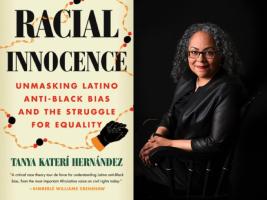 This week’s featured author is Tanya Katerí Hernández. Hernández is the Archibald R. Murray Professor of Law at Fordham University School of Law. Her book is Racial Innocence: Unmasking Latino Anti-…
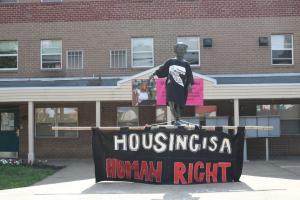 The traumatizing clearing of the University City Townhome encampment in West Philadelphia symbolizes the ongoing racial injustice of gentrification. One solution: The city should buy the…
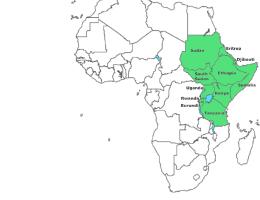 The U.S. and its European allies often determine who will govern African nations. Attendees at a recent conference discussed how to end this dynamic and create true sovereignty on the African…
 The CIA's Operation Paperclip brought Nazi scientists to the U.S. and MKULTRA mind control experimentation was one of its projects. Black prison inmates were targeted for these unethical procedures.
 The CIA has played a role in controlling South African media from the days of apartheid to the present.



