Jamaicans still remember their visionary leaders, Norman and Michael Manley, and the bloody general election of 1980.
I'm writing this from Jamaica while visiting an expat friend. I was here many years ago, in the late 70s, when Democratic Socialist Michael Manley was in power, Bob Marley was alive, and hope was palpable in the air. Marley's image is still everywhere and people’s eyes light up when I mention Manley. They tell me that his father Norman Manley was a visionary and that Michael followed in his footsteps. He was Prime Minister from 1970 to 1980 and then again from 1989 to 1992, but less ambitious upon his return to power. That’s hardly a surprise given the course of his first ten years.
I caught a taxi in the Montego Bay Airport, and when I told the driver that I remembered Manley, he said he was a member of the PNP and pulled over so I could jump into the front seat next to him and talk. He said he was alive when Manley was in power, but that whether they were alive at the time or not, Jamaicans remember the Prime Minister who made education free, built roads and health clinics, gave land to poor Jamaicans eager to farm it, and tried to use the country’s greatest natural resource—bauxite—to build an aluminum industry.
A walkway in the Montego Bay Airport is decorated with the images of Manley and Jamaica’s seven official national heroes: Alexander Bustamente, George William Gordon, Marcus Mosiah Garvey, Paul Bogle, Samuel Sharpe, Queen Nanny of the Maroons, and Norman Manley, Michael’s father. The elder Manley was a Rhodes scholar and lawyer who founded the People’s National Party (PNP) later led by his son, who attended the London School of Economics (LSE).
At LSE, Michael Manley was influenced by Fabian socialism, which aims to gradually transform society within constitutional democracies. After graduating, he became a columnist for the Jamaican newspaper Public Opinion, then a full-time negotiator and official of the National Workers Union.
The Manleys were mixed race and benefitted from elite education, but sided with Jamaica’s poor majority. In 1974, while Michael Manley was prime minister, the PNP formally embraced Democratic Socialism.
Michael Manley, Fidel Castro, Daniel Ortega, and Grenada’s Maurice Bishop were often seen together in the 70s and 80s, and in October 1977, Manley presented Castro with the Order of Jamaica in honor of Cuba’s contributions to building Jamaican infrastructure and training Jamaican tradesmen and professionals, including doctors and nurses. This of course enraged the US foreign policy establishment, leading to both covert and overt interference.
These are quotes from the documentary Jamaica 1980:
“It mattered little to Manley that in America his support of a communist state was like a declaration of war.” - American public broadcaster Robert McNeil
“Mr. Manley’s association with Fidel Castro may be one prime reason that many bankers have turned down his requests for the borrowing capacity of Jamaica, why their tourism industry is at a low ebb, why their economy is on the brink of disaster. These are the prices people sometimes have to pay for their association with the wrong people.” -Senator Edward Zorinsky of the Senate Foreign Relations Committee
“Manley is taking the road to Marxism.” -Edward Seaga, colloquially known as “CIAga,” leader of the misnamed Jamaican Labor Party (JVP)
“Jamaica should not fall within the Cuban orbit, which would indoctrinate peasant people and working class people.” -Edward Seaga
“Cuba is our closest neighbor and we’ve had a traditional friendship going back to the 19th century. Castro and I both share a deep commitment to the liberation process. We take a similar view of Nicaragua and South Africa. Our relationship has been a cause of strain with the US. About that there is no question, but it’s an absolute matter of principle. It’s not negotiable and never will be no matter what price is paid.” -Prime Minster Michael Manley
Manley was not assassinated, as Maurice Bishop was in 1983. Instead he lost the 1980 election, the most violent in Jamaica’s history, after more than 800 murders.
The loss is widely understood as a landslide amidst soaring unemployment and inflation. “The bloody general election that changed Jamaica,” a 2012 Jamaican Observer look back at 1980, reads, “the hardships that emanated from a borrowing agreement with the IMF in 1978 were becoming unbearable for the masses of the country.”
In Destabilization in the Caribbean, an article in the August 1980 issue of Covert Action Bulletin, Ellen Ray and Bill Schaap wrote:
“Before the last election in Jamaica the approach was different. The violence preceding the December 1976 vote was indiscriminate; arson, food poisonings, shootings, seeming to have little focus or pattern — sheer terrorism. The hand of the CIA from a large and active station in Kingston was evident. Following Henry Kissinger’s threats to Manley over his support for the MPLA in Angola, violence escalated dramatically. But the campaign was unsuccessful, and after Manley’s landslide victory [in 1976], economic penetration and destabilization were given a chance.”
However, in the same article, Ray and Schaap also describe a covert gun smuggling operation fueling the political violence, in which guns were ultimately delivered to none other than Edward Seaga.
The Jamaican Observer’s look back at 1980 also quotes PNP parliamentary candidate Dr. Winston Davidson:
“It was one of the wickedest elections — not only did they not open some polling stations, but [ballot] boxes were tampered with and even in areas where people did not vote, there was a full count in the boxes.
“From that I said I would never run again in another election and I have stuck to that, even after Michael Manley asked me to run again in 1989.
“A lot of people died — soldiers killed a lot of them, they ransacked my house saying they were looking for weapons, they threw away my campaign material in a gully and Herb Rose, my campaign manager, was locked up.
“It was an election in which the East/West tension played out in all forms.”
And an election that haunts Jamaica to this day.
Ann Garrison is a Black Agenda Report Contributing Editor based in the San Francisco Bay Area. In 2014, she received the Victoire Ingabire Umuhoza Democracy and Peace Prize for her reporting on conflict in the African Great Lakes region. She can be reached at ann@anngarrison.com. You can help support her work on Patreon.

 In this week’s segment, we hear about the ongoing uprising in France against neo-liberal austerity, colonialism, and white supremacy. But first, we discuss a new report that reveals a 25% decline in…
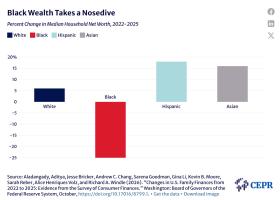 The Center for Economic and Policy Research (CEPR) recently reported on Federal Reserve data indicating that Black people in the U.S. have lost 25% of their wealth between 2022 and 2025. Whites,…
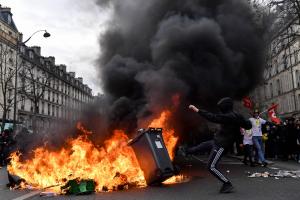 Bouna Mbaye is an activist, writer, and a member of the Pan-African League-Umoja, the Pan-African Brigade for Palestine, and the US Out of Africa Network. He joins us from Paris to discuss the…
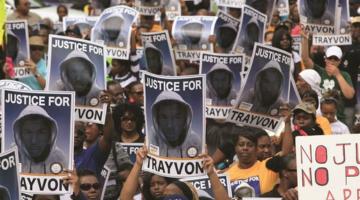 As Black Agenda Report is poised to celebrate its 20th anniversary, we reprint Glen Ford's commentary on the killing of Trayvon Martin and the impunity provided to his killer in a criminal justice…
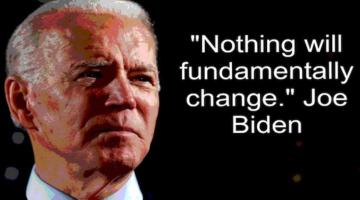 The Democratic Party is terrified of even small liberal reforms and will not abide left leaning democrats thwarting their plans for austerity and neoliberal orthodoxy.


