Rising prices and state repression prompt strikes and demonstrations.
The Caribbean Island of Martinique is classified as an overseas department of France but it is treated like a colony, lacking any voice in its own affairs. Social unrest has flared up again prompted by hyperinflation and the heavy-handed tactics utilized by security forces under the control of Paris.
Due to its colonial dependency, the rate of rising prices in Martinique far exceeds that of the colonial power in France.
During September, thousands of people took to the streets in response to the escalating prices for food and other consumer goods. Riot police from France were deployed to put down the unrest which involved industrial actions among the workers.
Nonetheless, despite the repressive atmosphere, people rose up at an even larger level starting on October 9 shutting down the airport. The center of the unrest in the latest outbreak took place in the two largest urban areas of Fort-de-France and Le Lamentin.
The French prefect Jean-Christophe Bouvier declared an emergency and imposed a curfew in the two cities. Between October 10-13, at least one person was killed while many others were wounded including twelve gendarmes.
There were reports of property damage and the taking of consumer goods. These actions illustrated the desperate conditions under which the population of approximately 350,000 people are forced to live.
A police station was set on fire along with several automobiles. Roadblocks were set up by the people to bring attention to the broad dissatisfaction that exists within the Island.
Food prices in Martinique are on average 40 percent higher than those in France. This is undoubtedly a result of the subordinate political situation in comparison to what has prevailed in France.
The latest round of demonstrations and civil unrest erupted on the day prior to the holding of a scheduled meeting between representatives of the struggle and the French colonial authorities. People in Martinique want policy changes and not more empty promises coming from the authorities who have nothing to offer except to maintain the status quo through coercion and state violence.
On October 10, rumors circulated that a new contingent of French police would be arriving at the airport in Fort-de-France. People marched to the area in efforts to halt their deployment aimed at suppressing the people protesting the rapidly deteriorating economic conditions.
French riot police units were deployed in September after the labor actions and mass demonstrations. It had been declared that these security forces would not be utilized in the uprising since they were banned after the suppression of similar unrest in 1959 when people were brutalized and killed.
In a report published by Euro News and the Associated Press on October 10, it emphasized that:
“On Thursday night, protesters overran the tarmac on the airport in the island’s capital, Fort-de-France, and tried to force their way into the main entrance, where hundreds of passengers had taken shelter, according to videos posted on social media. Police securing the entrance were seen fending off assaults from the demonstrators and firing what appears to be tear gas in their direction. The airport later said on Facebook that flights had been suspended. Three planes carrying some 1,000 passengers had to be diverted to the nearby island of Guadeloupe on Thursday, Martinique's local prefecture said in its statement. Another 500 passengers who were supposed to board those flights were stuck at the Fort-de-France airport, it said.”
These demonstrations were launched by the Assembly for the Protection of Afro-Caribbean Peoples and Resources. The organization has charged the French colonial state of racial and social discrimination against the population which is overwhelmingly of African descent.
People in French Colonies are Demanding Autonomy and Independence
The situation in Martinique is by no means isolated from developments in other territories controlled by Paris. In recent years there have been mass demonstrations, strikes and rebellions against the exploitative and oppressed conditions imposed by successive French governments.
President Emmanuel Macron has consistently opposed greater autonomy and national liberation in the colonies which are located in the Indian Ocean, the Caribbean, South America and the Pacific. New Caledonia, also known as Kanaky, was the scene of mass demonstrations during May when the French government sent in troops to put down a rebellion that resulted in the deaths of seven people.
The people of New Caledonia were protesting against a new law that would grant the right to vote to non-indigenous people in efforts to thwart the demands for self-determination and independence in the Southwest Pacific territory. In 1988 amid a protracted struggle demanding self-rule, the Noumea Treaty was signed in order to curtail the unrest.
In May the colonial state declared a state of emergency which lasted for two weeks. New Caledonia is located thousands of miles away from Europe where the French government is based.
The proposed bill by the French government has still not been withdrawn by Macron despite the widespread opposition to the legislation in the Southwest Pacific territory. Macron visited the area earlier in the year and said that there should be dialogue in New Caledonia over the merits of the bill.
In the territory known as French Guiana located on the north coast of South America, the conditions of the people have worsened in recent years as a result of illegal mining, impoverishment and a skyrocketing crime rate. Although the people have demanded greater autonomy in a referendum held in 2020, no changes have been allowed by the government in Paris.
In the geographical proximity of Martinique, other French-controlled areas are facing a similar fate. The Anadolu news agency reporting on the situation noted in June:
“The Caribbean Island of Guadeloupe, with a population of 400,000 people located approximately 7,000 kilometers from France, is experiencing security difficulties due to crime rates that are six times higher than the French national average and armed robbery rates that are 20 times higher. Due to the increasing involvement of young people in crimes, a curfew was imposed in April for Pointe-a-Pitre, the commercial capital of the island, for those younger than 18. There were intense protests on the island due to lockdown measures implemented by the French government during the coronavirus pandemic. France sent security forces to the region to suppress protests spreading in Martinique from other colonies.”
Other contested areas under French colonial control are Reunion in the Indian Ocean east of Madagascar, Mayotte also in the Indian Ocean’s northern Mozambique Channel and French Polynesia in the South Pacific. All of these territories continue to be denied the right to self-determination for their people.
Although the popular views internationally are that classic colonialism was a phenomenon of the 15th to the 20th centuries, in regard to France and other imperialist states, external political and economic domination is still very much the order of the day. The social conditions in these geo-political regions are worsening as the crisis in the world capitalist system becomes more acute.
A Way Out for the People
The only real solution to the continuing crises of colonialism and neo-colonialism is the unity and genuine independence of the oppressed nations. These areas that remain under European domination must unite in a political struggle to win their independence and social emancipation.
The situation today in Martinique illustrates clearly that the movement against colonial domination remains an important aspect of the world movement for freedom against imperialism. Nonetheless, judging from the lessons of the 20th century, the demand for autonomy, self-determination and independence can only achieve effective results when it is combined with the efforts to break the chains of economic dependency.
Developments in the Sahel region of West Africa in recent years have exposed several contradictions within independent states. Although these countries were members of the Economic Community of West African States (ECOWAS), the United Nations and the African Union (AU), continuing reliance on France, the United States and its NATO allies represents an extension of the colonial and neo-colonial projects.
The African states and the African Diaspora should by all means advocate and organize for total emancipation from colonialism and neo-colonialism. As a well-known Martinican, Dr. Frantz Fanon said more than six decades ago:
“So, comrades, let us not pay tribute to Europe by creating states, institutions and societies that draw their inspiration from her. Humanity is waiting for something other from us than such an imitation, which would be almost an obscene caricature. If we want to turn Africa into a new Europe, and America into a new Europe, then let us leave the destiny of our countries to Europeans. They will know how to do it better than the most gifted among us. But if we want humanity to advance a step further if we want to bring it up to a different level than that which Europe has shown it, then we must invent and we must make discoveries. If we wish to live up to our peoples’ expectations, we must seek the response elsewhere than in Europe.”
Abayomi Azikiwe is the Editor of Pan-African News Wire.




 Trump is terrorizing Minnesota’s Somali Americans in a desperate xenophobic and racist appeal to voters in the state’s white farming and mining communities.
 Artificial intelligence and hyperscale data center buildout constitute a new front of environmental racism and a project to optimize white supremacy, with Black communities targeted as sacrifice…
 Erik Prince's mercenary operations in the Democratic Republic of the Congo serve U.S. imperial and corporate interests in critical minerals and violate the Congolese peoples' sovereignty.
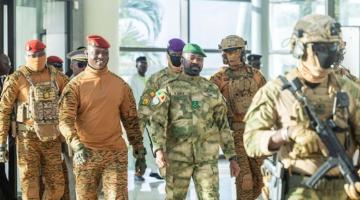 Mali, Burkina Faso, and Niger are leading the way toward the realization of Pan-Africanism and the struggle against imperialism in the 21st century.
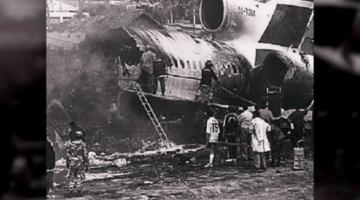 The 1976 bombing of Cubana Flight 455 was part of a six-decade U.S.-orchestrated campaign of destabilization against Cuba, which has now escalated into a genocidal siege aimed at starving the Cuban…


