Nicaragua and Namibia stand against Germany in solidarity with Palestine. (Design: Palestine Chronicle)
The Palestinian fight against colonialism is recognized by nations in the global south as one that mirrors their own. Solidarity and cooperation among the colonized must continue to grow on the foundation of those shared histories.
Originally published in Ramzy Baroud.
The distance between Gaza and Namibia is measured in the thousands of kilometers. But the historical distance is much closer. This is precisely why Namibia was one of the first countries to take a strong stance against the Israeli genocide in Gaza.
Namibia was colonized by the Germans in 1884, while the British colonized Palestine in the 1920s, handing the territory to the Zionist colonizers in 1948.
Though the ethnic and religious fabric of both Palestine and Namibia are different, the historical experiences are similar.
It is easy, however, to assume that the history which unifies many countries in the Global South is only that of western exploitation and victimization. It is also a history of collective struggle and resistance.
Namibia has been inhabited since prehistoric times. This long-rooted history has allowed Namibians, over the course of thousands of years, to establish a sense of belonging to the land and to one another, something that the Germans did not understand or appreciate.
When the Germans colonized Namibia, giving it the name of ‘German Southwest Africa’, they did what all other western colonialists have done, from Palestine to South Africa to Algeria, to virtually all Global South countries. They attempted to divide the people, exploited their resources and butchered those who resisted.
Although a country with a small population, Namibians resisted their colonizers, resulting in the German decision to simply exterminate the natives, literally killing the majority of the population.
Since the start of the Israeli genocide in Gaza, Namibia answered the call of solidarity with the Palestinians, along with many African and South American countries, including Colombia, Nicaragua, Cuba, South Africa, Brazil, China and many others.
Though intersectionality is a much-celebrated notion in western academia, no academic theory is needed for oppressed, colonized nations in the Global South to exhibit solidarity with one another.
So when Namibia took a strong stance against Israel’s largest military supporter in Europe – Germany – it did so based on Namibia’s total awareness of its history.
The German genocide of the Nama and Herero people (1904-1907), is known as the “first genocide of the 20th century”. The ongoing Israeli genocide in Gaza is the first genocide of the 21st century. The unity between Palestine and Namibia is now cemented through mutual suffering.
But it is not Namibia that has launched the legal case against Germany at the International Court of Justice (ICJ) but, rather, Nicaragua, a Central American country that is also thousands of miles away from both Palestine and Namibia.
The Nicaraguan case accuses Germany of violating the ‘Convention on the Prevention and Punishment of the Crime of Genocide’. It rightly sees Germany as a partner in the ongoing genocide of the Palestinians.
This accusation alone should terrify the German people, in fact the whole world, as Germany is affiliated with genocides from its early days as a colonial power. The horrific crime of the Holocaust, and other mass killings carried out by the German government against Jews and other minority groups in Europe during WWII, is a continuation of other German crimes committed against Africans, decades earlier.
The typical analysis of why Germany continues to support Israel is explained on the basis of German guilt over the Holocaust. This explanation, however, is partly illogical and partly erroneous.
Illogical, because, if Germany has, indeed, internalized any guilt from its previous mass killings, it would make no sense for Berlin to add yet more guilt by allowing Palestinians to be butchered, en masse. If guilt indeed exists, it is not genuine.
And erroneous, because it completely overlooks the German genocide in Namibia. In fact, it took the German government until 2021 to acknowledge the horrific butchery in that poor African country, ultimately agreeing to pay merely one billion euros in ‘community aid’, which will be allocated over the course of three decades.
The German government’s support of the Israeli war on Gaza is not motivated by guilt, but by a power paradigm that governs the relations among colonial countries. Many countries in the Global South understand this logic very well, thus the growing solidarity with Palestine.
The Israeli brutality in Gaza, but also the Palestinian sumud, resilience and resistance, are inspiring the Global South to reclaim its centrality in anti-colonial liberation struggles.
The revolution in the Global South outlook – culminating in South Africa’s case at the ICJ, and also the Nicaraguan lawsuit against Germany – indicates that the change is not the outcome of a collective emotional reaction. Instead, it is part and parcel of the shifting relationship between the Global South and the Global North.
Africa has been undergoing a process of geopolitical restructuring for years. The anti-French rebellions in West Africa, demanding true independence from the continent’s former colonial masters, in addition to the intense geopolitical competition – involving Russia, China and others – are all signs of changing times.
And, with this rapid rearrangement, a new political discourse and popular rhetoric are emerging, often expressed in the revolutionary language emanating from Niger, Burkina Faso, Mali and others.
But the shift is not happening on the rhetorical front only. The rise of BRICS as a powerful new platform for economic integration between Asia and the rest of the Global South has opened up the possibility that alternatives to western financial and political institutions are very much possible.
In 2023, it was revealed that BRICS countries are now holding 32 percent of the world’s total GDP, compared to 30 percent held by the G7 countries. There is much political value to this as four of the five original founders of BRICS are strong and unapologetic supporters of the Palestinians.
While South Africa has been championing the legal front against Israel, Russia and China are battling the US at the UN Security Council to institute a ceasefire. Beijing’s Ambassador to The Hague went as far as defending the Palestinian armed struggle as legitimate under international law.
Now that global dynamics are working in favor of Palestinians, it is time for the Palestinian struggle to return to the embrace of the Global South, where common histories will always serve as a foundation for a meaningful solidarity.
Ramzy Baroud is a journalist and the Editor of The Palestine Chronicle. He is the author of six books. His latest book, co-edited with Ilan Pappé, is “Our Vision for Liberation: Engaged Palestinian Leaders and Intellectuals Speak out”. Dr. Baroud is a Non-resident Senior Research Fellow at the Center for Islam and Global Affairs (CIGA). His website is www.ramzybaroud.net


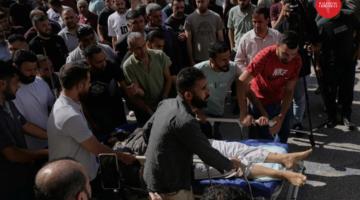
 ‘Anti-Communism Week’ is a legal blueprint for crushing dissent. By labeling social justice activism as terrorism and empowering a new national task force, the state is preparing for the most intense…
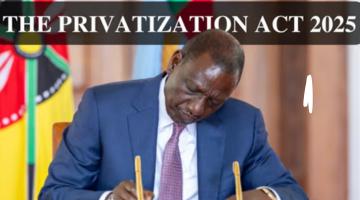 Kenya is auctioning its sovereignty to foreign powers. The final item on the block is the genetic data of its own people.
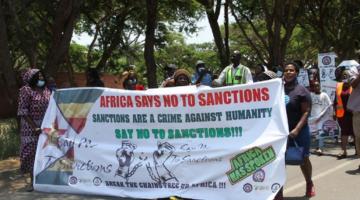 The West's concept of human rights has always justified imperialism. The People(s)-Centered Human Rights framework offers a radical alternative—a practical tool for oppressed people to define their…
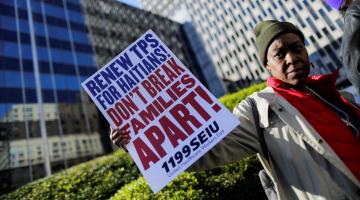 U.S. immigration policy is the domestic arm of its foreign policy. The attack on Haitian migrants is a direct consequence of Washington's ongoing war on Haiti's sovereignty, making their defense a…
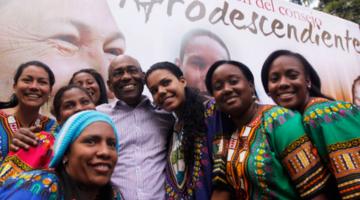 Venezuela's revolution is a project of Afro-descendant empowerment and a force against imperialism that has long exploited the African diaspora and the Global South.


