The genocide in Gaza includes the calculated destruction of Palestinian intellectual labor and knowledge producing institutions, part of Israel's larger colonial strategy of epistemological domination.
Originally published in Institute for Palestine Studies
On Nov. 6, 2023, an Israeli airstrike destroyed Gaza's Al-Azhar University, one of the largest educational institutions in the occupied territory. Far from being the sole university targeted during Israel's recent escalation of ethnic cleansing in Gaza, and indeed throughout Palestine, a short video published by the Palestinian Ministry of Education and Scientific Research on the same day as the attack pointed out that a total of nine university buildings (at the time of the video's publication) in Gaza and two in the West Bank had been either “completely or partially damaged.” According to the video, at least 227,335 Palestinian students, including 555 Palestinians in Gaza with scholarships abroad, had faced severe disruptions to their higher education at the time.
In the weeks since, Israel's assault on Palestinian schools and universities has only intensified. On Jan. 18, Israel destroyed Al-Israa University with 315 mines — it was the last university standing. Every university in Gaza had been destroyed, in full or in part, along with over 350 schools, educational institutions, and public libraries during the ongoing genocidal campaign.
With this in mind, the bombing of university buildings in Gaza cannot be simply understood as attacks on bricks and mortar but also as assaults on archives, student and staff records, and the intellectual labor of the university's community. Indeed, the attack upon Al-Israa University also included the demolition of a nearby museum — a clear attempt by the Israeli military to cover up and dispose of the evidence of their looting of the over three thousand rare artifacts that it housed. Attacks that obliterate universities such as Al-Azhar and Al-Israa equate to the erasure of the accomplishments of Palestinian knowledge producers and contribute to Israel's ongoing epistemicide of the Palestinian people — a process intertwined with their summary genocide.
Epistemicide can be broadly defined as the destruction of knowledge systems and the knowledge that they generate. The Latin American sociologist Ramón Grosfoguel explains how epistemicide played a crucial role in Europe's colonization of the rest of the world, including the settler colonization of the Americas. It granted European philosophy an “epistemic privilege,” allowing it to become the “new foundation of knowledge in the modern/colonial world.”
In other words, it created a world in which only knowledge produced by European colonists and settlers was deemed legitimate, while colonized societies were compelled to construct new systems from scratch — often mirroring those of their colonizers — because their own systems had been destroyed. As a result, the structural conditions of knowledge production that facilitated the mechanisms of their colonialization also imposed constraints on their liberation.
Israeli efforts to discredit and sabotage Palestinian knowledge production, along with its literal and material attacks on Palestinian institutions of learning and their respective communities, serve as evidence of this.
The British Mandate and the Hebrew University
An early example of epistemicide in Palestine dates back to the British Mandate's attempts to thwart the development of a Palestinian system of higher education while enabling the establishment of Zionist Jewish universities. The Hebrew University of Jerusalem, established as a public university in 1925, is the most notable example of this. In response to the absence of a comparable Arab Palestinian institution, the eminent historian Ilan Pappé argues that the failure to open an Arab university in Jerusalem can be attributed to a combination of British colonialism, Zionist lobbying, anti-Arab racism, and an overall underestimation by both British officials and some Palestinian leaders of the scope and ambition of the settler colonial project of Zionism.
Furthermore, according to Pappé, the British Mandate afforded Zionist institutions a level of autonomy that “enabled it to build itself up as part of an independent infrastructure for a state within a state,” thus allowing it to become foundational to the future Israeli state. At the same time, he describes the Mandate as micromanaging Palestinian education in an attempt to keep it apolitical and under the control of British colonial officials. As Pappé explains, the British “deemed the Palestinians yet another colonized people who had to be oppressed, while regarding the Zionist settlers as fellow colonialists.” A Palestinian university, according to Pappé, “would have empowered the anti-colonial narrative, helping to counter the project of the Hebrew University that provided scholarly scaffolding to the Zionist ideology.” In practice, this colonial sabotaging of Palestinian attempts at building knowledge systems laid the foundation for Israeli epistemicide.
The Nakba and Oral History
Nur Masalha describes the Nakba as causing the destruction of Palestinian society, and this would include their knowledge systems. Needless to say, the dispossession of Palestinian land and resources, along with the majority of the Palestinian population's new status as exiles and refugees, posed significant challenges to attempts to reestablish Palestinian systems of knowledge production. It is, therefore, unsurprising that oral history and memory accounts of the experiences of those who survived the 1948 expulsions are, in Masalha's words, “central to Palestinian history and the Palestinian society of today.”
Palestinian oral histories, however, are routinely discredited and delegitimized by the Israeli government, its knowledge institutions, and those who participate within them. As the Tantura affair demonstrated over two decades ago, even attempts by Israeli researchers to construct knowledge on Palestinian history, and specifically Palestinian villages, using Palestinian sources and memory accounts (as well as an equal number of Israeli ones in this case) can be dismissed as illegitimate. Although Teddy Katz's work as the man at the center of the affair has since been vindicated by the publicizing of the recorded confessions of the perpetrators of the Tantura massacre as part of the 2022 documentary film carrying the village's name, the accounts of the massacre's Palestinian survivors remain sidelined.
Unlike Katz, however, there is a countless number of Palestinian knowledge producers whose work is yet to be, and may never be within their lifetimes, similarly vindicated. In 2019, the Israeli Ministry of Defense created a department known as Malmab, tasked with concealing and locking away previously declassified archival materials related to the Nakba, among other topics. Former Malmab head Yehiel Horev explained that this was due to the possibility of such materials generating “unrest” among Palestinians. Coupled with the systematic discrediting of Palestinian oral accounts, Malmab's locking away of Israeli written sources further sabotages Palestinian knowledge production.
Epistemicide and Palestinian Institutions Today
Another facet of Israel's epistemicide of Palestinians is the interventions that the Israeli Occupation makes into the operations and academic freedom of homegrown Palestinian knowledge institutions.
Beyond the standard pattern of Israeli border control routinely denying exiled Palestinian researchers access to their homeland to conduct research, participate in conferences, or even join the faculty at Palestinian institutions, Israel, in 2022, extended the powers of the Coordination of Government Activities in the Territories (COGAT) authority to determine the terms within which foreign academics, including Palestinian citizens of foreign countries, may conduct their work in the West Bank.
As well as being a clear attack on Palestinian academic freedom, this narrowing of the field of supposed “acceptable knowledge production” maintains the Israeli state's epistemic privilege over that of Palestinians. The COGAT's ability to intervene in Palestinian knowledge production in such a patrimonial and patronizing manner — reaching the point where it is tasked with deciding what counts as a “necessary field” in which a Palestinian institution may hire a foreign citizen — further delegitimizes Palestinians not only as knowledge producers but as the sovereigns of their own knowledge production. This amounts to an extermination of the very Palestinian epistemic imperatives that outline the relationship between knowledge and existence, both around the world and in Palestine.
Knowledge and Genocide
It is not only Israel and its institutions that have participated in the silencing, attacking, discrediting, and undermining of Palestinian knowledge production. Powerful institutions within the “blancosphere” (also popularly referred to as “The West”), including governments, news organizations, and academic institutions, also contribute to further enabling the epistemicide of Palestinians.
A brazen example of this would be U.S. President Joe Biden unilaterally passing judgment regarding who was culpable for the attack upon the Al Ahli Baptist Hospital in Gaza, accepting Israel's claims of innocence uncritically while wholly dismissing the accounts of Palestinian eyewitnesses. Similar roles are played by references from the BBC and many other mainstream media houses to the Gaza Ministry of Health as a “Hamas-run Ministry” — an attempt to delegitimize its reporting of casualties.
Not all examples are so brazen, however. Little has changed since Edward Said argued, in the aftermath of the Israeli invasion of Lebanon, that Palestinians have been denied the “permission to narrate.” According to him, the privileging of a “Western master narrative, highlighting Jewish alienation and redemption” erases the Palestinian understanding of reality, where the struggle for liberation is far from over. In this sense, the epistemic privilege accorded to the Israeli state and its institutions through its epistemicide of Palestinians plays a role in legitimizing it in the eyes of those more powerful than it.
Therefore, in attempting to resist the genocide of Palestinians in Gaza and across the entirety of historic Palestine, it is absolutely vital to recognize and push back against epistemicide in all of its forms. Rana Barakat asserts the importance of centering Palestinian Indigenous sovereignty, resistance, and endurance within analyses of Israel's settler colonial project. It is crucial to add here that recognizing Palestinians not just as narrators of history but as producers of knowledge within the context of the land of Historic Palestine and the experiences of Palestinian people all over the world pushes back against the Israeli state's attempts to solidify its epistemic privilege through escalating its epistemicide.
To conclude, Israel's attempts to destroy Palestinian knowledge and systems of knowledge production form an essential component of its protracted genocide of the Palestinian people. Yet, as my late grandfather, who was expelled from his home in Jerusalem in 1948, said to me throughout my life: “You will always protect your wealth, but your knowledge will always protect you.”
Abdulla Moaswes is a writer, researcher, translator, and educator. His current academic explorations focus on the globalization of settler colonial logics. He has previously written about the politics of food, with special reference to chai karak, and the sociopolitical role of internet memes in South and West Asia. In addition to this, Abdulla also writes poetry and speculative fiction.



 In this week’s segment, we hear about the ongoing uprising in France against neo-liberal austerity, colonialism, and white supremacy. But first, we discuss a new report that reveals a 25% decline in…
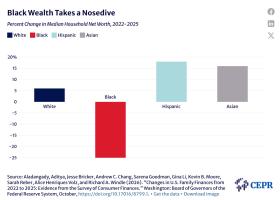 The Center for Economic and Policy Research (CEPR) recently reported on Federal Reserve data indicating that Black people in the U.S. have lost 25% of their wealth between 2022 and 2025. Whites,…
 Bouna Mbaye is an activist, writer, and a member of the Pan-African League-Umoja, the Pan-African Brigade for Palestine, and the US Out of Africa Network. He joins us from Paris to discuss the…
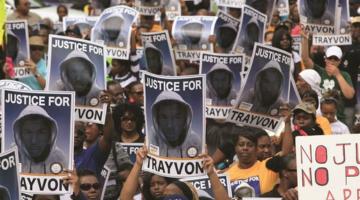 As Black Agenda Report is poised to celebrate its 20th anniversary, we reprint Glen Ford's commentary on the killing of Trayvon Martin and the impunity provided to his killer in a criminal justice…
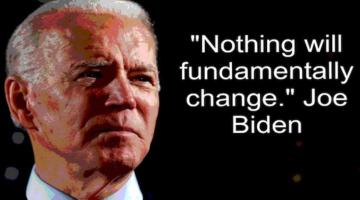 The Democratic Party is terrified of even small liberal reforms and will not abide left leaning democrats thwarting their plans for austerity and neoliberal orthodoxy.


