Luwowo Coltan mine near Rubaya, North Kivu the 18th of March 2014. © MONUSCO/Sylvain Liechti
Quiet as it’s kept, the African continent is the most susceptible to the impacts of climate change. And it has a history of colonialism, capitalist extraction, and labor exploitation to blame for that.
Originally published in Hood Communist.
No matter what they say now about highways and hospitals and penicillin, whatever was done in those colonies was not done for the natives. And the Belgians may not know this, but the natives do. What happened was very simple.
You cannot walk into a country and stay there as long as the Europeans did and dig coal and iron and gold out of the earth and use it for yourself…By and by, it’s inevitable that someone will make a connection between the machines you have and the power you have.
-James Baldwin, 1961
Much attention is paid to the ongoing environmental crises engulfing the regions of South Asia, North America, and Europe, and rightfully so. The global climate crisis—as well as environmental injustice generally—is contiguous and virulent. But much less attention, however, is paid to the ongoing ecological crisis of Africa; the mother of all civilization. This is true as it pertains to scholarship, as well as in media coverage. Only 3.8% of global funding for climate change research is spent on topics concerning Africa, and 78% of such funding is given to institutions based in North America and Europe. Only 14.5% of such funding is given to institutions based in Africa. It is almost as if the ecological crisis of the present does not exist on the African continent.
Except it does. Despite barely contributing to global greenhouse gas emissions, Africa is the continent most susceptible to the impacts of climate change, and is warming faster than most other world regions. In addition to this, various communities in the regions of East Africa, North Africa, and Central Africa are suffering from drought and famine, whether through the intentional manipulation of embargoes or through environmental struggles. The mechanisms of capitalism’s industrial extraction are amplifying this duress. Neocolonialist extraction of African material resources is exhausting not only African labor, but also African land. For the purposes of clarifying the West’s relationship to the increased exhaustion of the African environment, this essay will take two specific examples in which the exploitation of labor is concerned with environmental degradation: West African cocoa and cobalt mining in the Democratic Republic of The Congo (DRC). These are not the only examples of labor exploitation and land degradation on the continent, but they are two particularly prominent examples.
The Cocoa Crop, Deforestation, and West Africa
One striking example of Western corporations exploiting Africa’s material resources and human labor can be found in the region of West Africa, Ghana and the Ivory Coast specifically, which contain two-thirds of the world’s cocoa supply. The farming and production of cocoa in the West African region contributes to a rapid deforestation of the land. In 2017, the equivalent to 40 football fields of tropical forests were lost each minute due to demand for cocoa, palm oil, soybeans, timber, beef and rubber. The Ivory Coast, specifically, has lost 80% of its forests in the past 50 years. The deforestation of West African forestland reduces the ability of such forests to absorb dangerous materials such as carbon dioxide, generate rainfall, and also severely decreases the biodiversity of the region.
 Figure of Ivory Coast’s Deforestation, Taken From Urban Forest BNP in Abidjan, by Kouadio Kouakou Ignace and Ripudaman Singh
In recent decades, the effects of global warming and deforestation have caused areas in West Africa to become hotter and dryer, making it harder for African cocoa farmers to effectively farm cocoa whilst simultaneously putting pressure on the environment. Chocolate has remained a highly valued commodity in the West, and large chocolate corporations such as Mars Inc., have refused to raise the inhumane wage given to cocoa farmers of roughly $5/day. West African labor essentially funds the $100 billion dollar industry of chocolate, and receives just a fraction of the revenue, at the expense of their own environmental degradation, and the exploitation of child labor.
“We do all the work manually and we get just a small amount of money,” one Côte d’Ivoirian farmer, Coulibaly Abou said. “When these kids do not go to school, they start asking us why we are not sending them. It is so hard for us.”
To be clear, the solution to change these conditions rely on the doctrines of pan-Africanism and scientific socialism. What needs to occur is:
(1) withholding African cocoa and labor from Western corporations, and organizing/protecting the farmers of this industry,
(2) ceasing the deforestation of West African lands and instituting reforestation projects, and
(3) the nationalization of the cocoa industry under a socialist state
This cannot be achieved without unification in the objectives of African governance. For example, if the government of Ghana were to cease participation in the cocoa industry, the Ivory Coast would be able to capitalize on this absence in participation, at the expense of Ghanaian workers, and vice versa. This is why it is imperative that Africans unify in their goals.
The DRC, Cobalt Mines, and Toxic Waste
It is almost commonly known at this point in time that the lithium-ion batteries that power Apple and Tesla products are made available due to the extremely grotesque and exploitative process of cobalt mining in the Democratic Republic of the Congo (DRC). The DRC produces an estimated 70% of the world’s cobalt, and most of it is extracted from one city—Kolwezi.
As demand has increasingly grown for lithium-ion batteries, the size of the cobalt mines in Kolwezi have risen with them. “The mines aren’t only growing around the city, they are often creeping into people’s neighborhoods,” an article by Victoria Beaule of ABC reads. “These satellite images of the west of the city reveal entire streets have disappeared over the last few years.”
In addition to the cobalt industry’s gradual destruction of everyday citizens’ homes and neighborhoods, it is estimated that millions of trees have been cut to make way for cobalt mines, leading to deforestation. In addition, the toxic waste that is dumped through the mining of cobalt in these areas is contributing to a decreased biodiversity in the Congo: swaths of fish have disappeared from streams, and crops & worms that are vital to the fertility of the soil have died as well. The toil endured by humans’ bodies is no small cost either: the air quality that surrounds the mines is destructive enough to cause birth defects when parents live or work near the Congo’s cobalt mines.
Similar to the situation in the Ivory Coast & Ghana, the laborers of these cobalt mines, children and adults alike, suffer from unlivable wages, only receiving between $0.75 – $3 per day for the extremely dangerous labor they undertake day by day.
The solutions to the issues here are similar to the first, except the fact that modern mining can cause permanent landscape damage. In the continent of Africa, rich in resources, wealthy in human life, workers must unite. It is the responsibility of African peoples in the global north to fight against imperialism, both economic and political in nature. A united Socialist Africa is the only pathway for the continent to regain its righteous control over its natural materials & for African workers to maintain their integrity.
Jody Roumain is a writer and student organizer based in Washington, D.C.

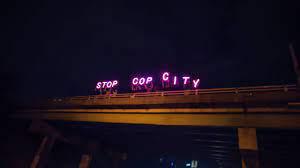 The plan for an Atlanta police training facility known as "Cop City" is the latest phase of state repression in that region.
 In the wake of the would-be fiftieth anniversary of Roe v. Wade, Shirley Chisholm's 1969 statement on abortion is bold, progressive, unsentimental – and necessary.
 What could possibly go wrong with a $90 million, 85-acre police training ground that the community doesn't want? Someone could be killed, and that happened before Atlanta's awful Cop City…
 Stand in solidarity with our Councilmember (Versus voices of white supremacy/death…)
 The Ukraine conflict was caused by the U.S. backed right wing coup in 2014 and the duplicity of Europeans who claimed to be working for peace. Anyone who supports these actions but claims leftist…


