
Related Stories
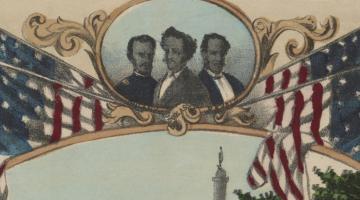
From the 1870 15th Amendment to the Voting Rights Act of 1965, voting rights for Black people have proven to be ephemeral.
The Supreme Court decision in Louisiana v.

Public reaction to the Fani Willis soap opera is an example of how cynical Black misleadership creates confusion among the masses.
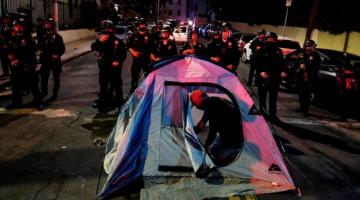
The Supreme Court will soon decide if unhoused people can be issued jail time or fines for sleeping on the streets.
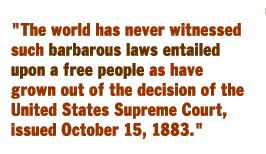
The Supreme Court has always been a political institution.
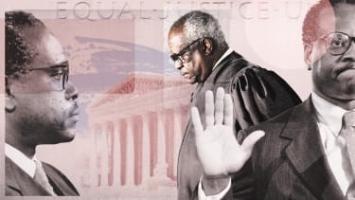
The recent Supreme Court decision which banned the use of race as a criterion for college admissions is indeed racist.

The recent Supreme Court ruling which bans affirmative action as an admissions' criteria does not apply to the military academies.
More Stories
 Dr. Jemima Pierre, BAR Editor and Contributor spoke to The Other Narrative about why Haiti is paying a price - 220 years after it won Independence from the jaws of colonizers. She discussed…
 We hear from the first journalist to have been arrested on charges of violating the Terrorism Act. First, Jill Stein discusses the Green Party campaign and the Democratic Party's attempts to stop…
 Green Party nominee for president, Dr. Jill Stein, talks to us about her campaign and how she plans to surmount the challenges the Green Party faces from the Democratic Party.
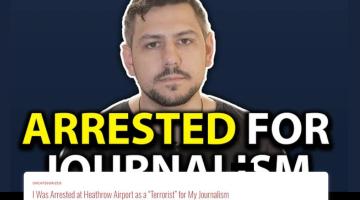 Richard Medhurst joins us to discuss his recent arrest under the Terrorism Act for his journalism, his case, and the implications of prosecuting journalists.
 What does democracy mean if elections are ignored and journalists are charged as criminals? That is the case today, as western countries descend into crises of their own making and are more blatant…



