Saudi Foreign Minister and and representatives of the Sudanese army and rival paramilitary Rapid Support Forces after signing an agreement for a seven-day ceasefire in Jeddah, Saudi Arabia, May 20, 2023. (Photo: Saudi Press Agency/Handout via REUTERS)
The Sudanese Communist Party has welcomed the ceasefire between the army and the Rapid Support Forces but has warned against monopolization of the peace process by US and Saudi Arabia. It has called for the involvement of Sudanese civil society and African Union peacekeepers.
Originally published in INTERNATIONALIST 360°.
Heavy shelling in Sudanese capital Khartoum and its sister-cities of Khartoum Bahri (North) and Omdurman continued on the morning of Monday, May 22, hours before a seven-day ceasefire was scheduled to begin at 9:45 p.m local time.
The “Agreement on a Short-Term Ceasefire and Humanitarian Arrangements” was signed on May 20 by the envoys of the Sudanese Armed Forces (SAF) and paramilitary Rapid Support Forces (RSF)—former allies and partners-in-coup who have been fighting each other since April 15.
By then, the death toll of civilians caught in the crossfire had climbed to 850, while nearly 4,000 others were injured, said the Sudanese Doctors Union (SDU), stressing that these figures do not include casualties among fighters.
While none of the previously announced ceasefires have held out, this is the first time the warring parties have signed a written agreement with a mechanism for monitoring. A Monitoring and Coordination Committee is to be established, comprising three representatives from SAF, three from RSF, and three each from the US and Saudi Arabia, which have been jointly facilitating the negotiations in the Saudi city of Jeddah since May 6.
While welcoming the ceasefire agreement, spokesperson of Sudanese Communist Party (SCP) Fathi Elfadl told Peoples Dispatch that this 12-person committee is insufficient to monitor and ensure compliance. “It does not include a single representative of the civilians who have been suffering the most in this conflict,” he added.
‘Humanitarian corridors should be brought under civilian control’
Under the agreement, the SAF and RSF have committed “to ensure the safety of humanitarian workers” and to “secure and provide free passage and unimpeded road access along designated corridors or routes for humanitarian assistance delivery.”
Elfadl insists that “these humanitarian corridors should not be left in the hands of the SAF or RSF. They should be brought under the control of Sudanese civil society organizations like the doctor’s union and the Sudanese Red Crescent.”
Elfadl argues that since the purpose of the agreement is not just to halt the fighting but to also ensure that much-needed humanitarian aid reaches the people, the fighting forces must not be in control of this process.
“The Resistance Committees (RCs), which have been working throughout the fighting to help people access essentials for survival, should be in charge of receiving the international aid and ensuring its proper distribution,” he said.
The network of over 5,000 RCs organized in neighborhoods across Sudan had repeatedly mobilized hundreds of thousands in protest against the military coup in October 2021 by SAF chief Abdel Fattah al Burhan and RSF head Mohamed Hamdan Dagalo, a.k.a Hemeti.
After the internal power-struggle between the two leaders erupted into an armed conflict on April 15, pitting the two security forces against each other in heavily populated cities, the RCs have been on the civilian frontline, organizing relief and assisting with evacuation.
Over half the population in need of aid
The RCs have arguably emerged as the most representative and well-organized body of the Sudanese civil society, with the credibility needed to handle aid at such a critical time when more than half of the country’s population is in need of humanitarian assistance.
“The number of people in need (PiN) of humanitarian assistance has increased from 15.8 million, (last) estimated in November 2022, to 24.7 million in May 2023, representing a 57 percent increase,” states the Revised Humanitarian Response Plan for Sudan.
“This is the highest number we have ever seen in the country,” said Ramesh Rajasingham, head of Geneva’s UN Office for the Coordination of Humanitarian Affairs (OCHA), which published the revised plan on Thursday, May 17.
“When you have a crisis like this and you don’t have access to basic services, you don’t have access to health and water, there’s an enormous risk… of famine as well,” he warned, blaming the conflict for this increase in the number of people in need of aid.
For Elfadl, it is a foregone conclusion that any aid passing through the hands of the SAF or the RSF—depending on who is in control of the given area—will be diverted away from the civilians in need.
Should not be an invitation to vacate the capital
“During the short-term ceasefire period,” the SAF and the RSF “shall guarantee the freedom of movement of civilians throughout the country,” states the agreement. “Allowing safe passage for civilians to leave areas of active hostilities on a voluntary basis, in the direction they choose,” was also a commitment made by the warring parties earlier on May 12 in the so-called Jeddah Declaration for protection of civilians.
Elfadl says these commitments should not turn out to be an invitation for people to vacate the capital Khartoum, “which has been the center of the pro-democracy revolution and resistance to the military junta. They should instead assure peace and security in the capital to allow people who had fled to return and breathe life back into the December Revolution.”
The agreement reaffirms the unkept promise made in the Jeddah Declaration to vacate “all public facilities such as hospitals, medical facilities, and water and electricity installations and refrain from using them for military purposes.”
However, the RSF’s continued occupation of several such infrastructure has drawn airstrikes from the SAF. The Sudanese Journalists Syndicate (SJS) has demanded that the RSF vacate the Radio and Television Corporation building which it has been occupying.
The terms of the ceasefire—which can be renewed and extended—not only prohibits “attacks and offensive actions” but also the “acquiring, fortifying defenses, resupplying, or distributing arms or military supplies, including from foreign sources.”
US and Saudi Arabia should not be allowed to monopolize the peace process
While successful implementation of this ceasefire agreement would be a great respite for the population, Elfadl argues that sufficient mechanisms have not been put in place to ensure compliance, relying largely on the will of the fighting forces themselves.
“A regionally constituted peacekeeping force should be deployed under the flag of the African Union (AU),” he said. It is worrying that the AU or the Intergovernmental Authority on Development (IGAD)—comprising eight countries in this region of Eastern Africa—is absent from the negotiations, he said, warning against allowing the US and Saudi Arabia to monopolize the peace process.
Pavan Kulkarni is a writer for Peoples Dispatch.


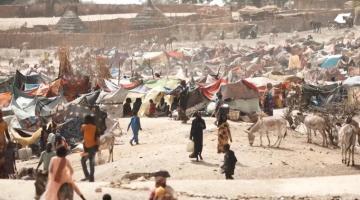
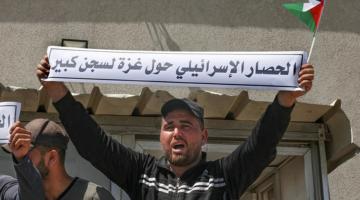 Three years into Israel's genocide in Gaza, the consequences of a decision driven by siege, settlement expansion, and assaults on Al-Aqsa are still unfolding.
 In this week’s segment we hear about the right-wing politics of the anti-migrant movement in South Africa, ANC failures, and upcoming elections in that country. But we begin with the first and only…
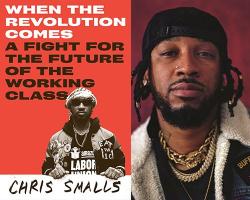 Chris Smalls discusses his memoir, "When the Revolution Comes: A Fight for the Future of the Working Class," published by Penguin Random House. He is the first and only union leader to successfully…
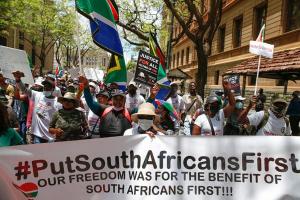 Our guest is Nairobi based political writer and strategist Clinton Nzala. He joins us to provide an update and an analysis of the South African anti-migrant March and March movement, which is…
 The Hague Group’s goal is to “. . . take coordinated legal and diplomatic measures against Israel’s violations of international law.” But international law was never a reality.


