Universities and museums around the world still hold human remains in their collections. Harvard University follows this discredited practice and has the skull of an enslaved Brazilian who took part in the 1835 Malês uprising.
This article was originally published in Middle East Eye.
The Islamic community of Salvador, in Brazil’s Bahia state, has pushed Harvard University to repatriate the skull of an enslaved man who allegedly took part in a famous uprising of African Muslims in the city in 1835.
The skull is part of a Harvard collection of human remains of 19 people of African origin likely enslaved in the Americas.
The University’s Peabody and Warren museums also hold the remains of some 6,500 Native Americans and have for decades faced pressure in the United States to return all of them to their communities or descendants.
Earlier this year, Harvard established a committee to investigate the institution’s collection of human remains and ways of returning them.
According to student newspaper The Harvard Crimson, the university agreed in September to repatriate the remains, though no further details on the process have been published.
Bahia's Muslim community, which began its campaign in September, now plans to make direct contact with Harvard through the Islamic Centre and House of Nigeria in Salvador.
The victim
In 1835, 600 African Muslims - some freed people, but mostly enslaved men - took to the streets of Salvador and fought soldiers to try to take control of the city and the surrounding countryside.
The night of fighting resulted in the deaths of at least 70 Males - a word used to designate African Muslims in 19th-century Bahia, which probably comes from imale, a Yoruba term for Muslim. Some 500 others were imprisoned, flogged and deported. The skull supposedly belongs to a man who was wounded in the fighting and died in hospital.
Joao Jose Reis, a leading historian in Brazil and an expert on the Males uprising, first heard about the Harvard skull earlier this year.
“The skull record says that that individual took part in the uprising as a leader and that he was taken to a hospice after being wounded,” Reis told Middle East Eye.
According to the university, US citizen Gideon T Snow, who lived in Brazil in the 19th century, sent the skull to Boston, where - “prior to 1847” - it was donated to the collection of the Boston Society for Medical Improvement. Warren Anatomical Museum, part of Harvard Medical School, subsumed the collection in 1889.
Reis, a professor at the Federal University of Bahia (UFBA), argues that Harvard should try to use the skull’s DNA to identify the man’s ethnic origins - both for the sake of researcher and for the Bahia region’s Muslim community.
'Inspiring' revolt
The Males uprising has, over the past three decades, taken on a foundational importance for Bahia’s Muslims.
“We heard about the Males and knew there were documents about them in Bahia,” said Lebanese-born Ahmad Ali Saifi, a major Muslim community organiser in Brazil, based in the city of Sao Bernardo do Campo, in Sao Paulo State. “I travelled there at the end of the 1980s and met with experts in their history.”
Shortly afterwards, Saifi invited Misbah Akanni, a Nigerian exchange student living in Salvador, to study the Males and help to organise the region’s Muslims, who did not have an established community.
“I have first heard about the Males at university in Nigeria, in the classes of a visiting Brazilian professor,” Akanni told MEE.
Akanni settled in Salvador and brought together Muslims of different nationalities, including from African countries, the Middle East and Brazil. The new community, around 1,000 people, organised several conferences about the Males’ history, which attracted keen interest, especially among Black people.
“The uprising is inspiring for poor, Black Brazilians,” Akanni said. “It makes many of them feel proud.”
Nigerian-born Abdul Ahmad, the local sheikh, believes the region’s history is why Salvador "has been the Brazilian city with the highest number of Black converts [to Islam] every year. Slavery is something negative, but the history of the rebellion is not. When people learn about the Males’ heritage in Bahia, they begin to see Islam with different eyes,” he said.
Most signs of the Males’ historical presence were suppressed after the rebellion, but some remain, including Arabic inscriptions inside Catholic churches built by Muslim slaves.
In 1835, according to Reis’s estimates, there were between 3,300-4,400 African Muslims in the city.
The total number of Africans in Salvador was just under 22,000, Reis has calculated, roughly a third of the population. Most were slaves.
Reasons to rebel
The uprising had many causes, from the inherent injustice of slavery to the terrible living conditions of the enslaved, to the lack of social mobility in Bahia for freed people of African descent.
What's more, in Brazil, which didn't abolish slavery until 1888, Catholicism was the state religion, so the Males were regularly hindered in the practice of their faith.
“The Males were cultured people, as many of them were literate - and many white people were not,” Akanni added. “Their faith also contributed to the revolt, given that Islam does not accept that a man can be enslaved by another man.”
The uprising was planned for months, but when word got to authorities it had to begin earlier than expected. On 24 January 1835 the insurgents fought soldiers across the city with only a handful of firearms, relying mostly on knives and spears.
A day later, the rebellion fell. Many insurgents were wounded or killed in combat; others were imprisoned or expelled from Brazil. Four of the leaders were publicly executed.
The heavy repression that followed aimed to both crush any new rebellions and erase Islam in Bahia. Meetings of Black people were criminalised. Much of Islam's social influence disappeared in the aftermath of the revolt.
The repatriation of the Male skull “would help to consolidate the role of the Males in Salvador,” said Waldemar Oliveira, a PhD student at New York University who is researching the history of the Islamic community in the city. "It would be a way for the current Muslim community to say that the Males’ defeat in the 19th century did not represent the end of the Afro-Muslim experience in Bahia.”
The Muslim Male rebels did not have a proper funeral in 1835, according to Hannah Bellini, a post-doctoral researcher at UFBA who also studies Salvador’s Islamic community.
“The return of that skull would not only constitute an important measure of reparation from Harvard, considering its history of involvement in scientific racism,” she told MEE. "It would also be a way to correct a very violent practice, for Muslims, which is the exhibition of human remains.”
Sheikh Ahmad worries about the possibility of the skull ending up in a Brazilian museum.
“As soon as that skull arrives in Brazil, we have to provide the proper funeral and bury it. The human body is not simply an object that can be exhibited in a museum.”
Eduardo Campos Lima holds a degree in journalism and a PhD in literary studies from the University of São Paulo, Brazil. Between 2016 and 2017, he was a Fulbright visiting research student at Columbia University. He writes about Brazil and Latin America, with a special focus on human rights.

 We revisit BAR’s 2017 analysis of the protection afforded Rwanda’s Paul Kagame by the human rights industrial complex and continue our discussion with BAR’s poet in residence about his upcoming…
 Camila Escalante joins to discuss Ecuador’s intrusion into Mexico’s embassy in Quito and the arrest of Ecuador’s former Vice President who had been given asylum there.
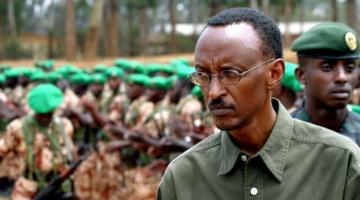 We revisit a discussion with Ann Garrison and the late Glen Ford about U.S. and human rights industrial complex support for Kagame in 2017.
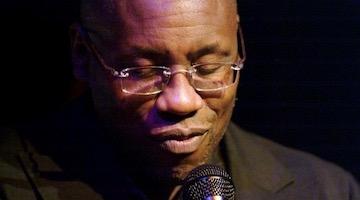 In the second part of a two-part interview, we speak with Raymond Nat Turner about his work and an upcoming performance with his group, Upsurge New York City, on April 13.
 The recent 2024 United National Antiwar Coalition conference brought together an international group of activists from member organizations who mobilize against imperialism, racism, and neo-…


