Eritrea emerged as an independent nation after decades of struggle. It celebrates Martyrs' Day in honor of those who paid the ultimate price.
On June 20th, Eritrea celebrates Martyrs' Day, in honor of those who fell in the 30-year war for independence from Ethiopia, from 1961-1991, and those who have fallen in the ensuing off-and-on war with Ethiopia’s Tigray People’s Liberation Front (TPLF).
A former Italian colony, Eritrea aspired to independence after the Italians suffered defeat in World War II, but it was instead drawn into the Cold War politics that dominated the Horn of Africa—and most of the world—once it was over. To reward Ethiopia for its service during the war, the United States pressured the United Nations to give Eritrea to Emperor Haile Selassie to administer and then to annex in 1962. In 1961, a group of students, professionals, and college professors founded the Eritrean Liberation Front and began the longest war for independence in Africa, in which ten percent of Eritrea’s population are thought to have died.
The United States supported Ethiopia from the end of World War II until 1974, when Emperor Selassie fell to the socialist revolution led by Mengistu Haile Mariam. In 1991, Mengistu’s government in turn fell to the Eritrean People’s Liberation Front (EPLF) and a coalition of rebel forces, the Ethiopian People’s Revolutionary Democratic Front (EPRDF), which was led and dominated by the TPLF. Shortly thereafter, the EPLF renamed itself the People’s Front for Democracy and Justice (PFDJ), and declared its independence from Ethiopia, which was formalized by a referendum in 1993.
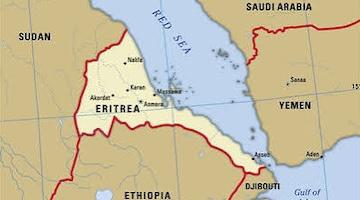
The TPLF, through EPRDF, then deployed and exacerbated ethnic division to rule Ethiopia autocratically, behind a thin coalition veneer, from 1991 until 2018, when they were ousted by widespread protest that brought Ethiopian Prime Minister Abiy Ahmed to power on April 2 that year. The new prime minister quickly arranged a peace summit with Eritrea, just three months later, on July 8-9, 2018, and it became clear that Ethiopia’s war with Eritrea had in fact been a war between Eritrea and the TPLF, whose expansionist ambitions included seizing a large swathe of Eritrea, including its Red Sea ports, and parts of Ethiopia’s Amhara and Afar Regions, to create a “Greater Tigray.”
On November 3, 2020, TPLF troops within the Ethiopian army attacked the army’s command base and began a battle to reclaim power in Addis Ababa or, short of that, to secede and fulfill its territorial “Greater Tigray” ambitions by annexing the northwest corner of Ethiopia, including a piece of its Sudan border, and most of Eritrea’s Red Sea coast.
However, though it’s holding on in Tigray Region, the TPLF has made no territorial gains. It has in fact lost Ethiopia’s northwest corner, including the traditionally Amhara districts of Welkait, Tsegede, Humera, and Tselemsti, which it annexed after 1991.
It has gained no territorial ground in Eritrea and it’s all but impossible to imagine that it will, given that Eritreans sustained a 30-year war of independence, and have already fought off another two decades of TPLF aggression.
Eritrea’s long struggle is told in “Eritrean Journey,” a gorgeous text and photo history by Robert Papstein, with a preface by anthropologist Asmarom Legesse. I recommend it to anyone interested in Eritrea and the Horn of Africa, or in black-and-white photography.
On its cover is a photograph of an AK-47 hung on a tree branch by an independence fighter joining civilians, young and old, to learn to read and write. The journey documented in the book is not only that of a war but also that of development, beginning with the basics: literacy, education, health, multiculturalism, and empowering women.
In the introduction, Papstein writes, “I first went to photograph the so-called ‘Ethiopian famine,’ which in Eritrea, was largely man-made by the Ethiopian government in order to starve the Eritreans into accepting Ethiopian domination.”
Later in the same introduction, he writes, “Ironically, in the midst of war and famine, Eritrea was actually a positive story showing how people’s lives could be substantially improved with extremely limited resources, when concepts of social justice and self reliance motivated action. The Eritreans refused to consider themselves victims, so common in other former colonies at the time, choosing self–confidence instead.”
That’s a good summary of my own experience of Eritrea, during the week I had the good fortune to spend there in April. The development strategy I saw and discussed in “Notes from Eritrea” and “Notes from Eritrea Part II” are quintessentially expressed in the Agriculture Ministry’s commitment that, “Not one drop of water shall fail to irrigate the soil, and not one drop shall erode the soil.” One of the loveliest things about Eritrea’s capital, Asmara—whose central city is so lovely that it’s a UNESCO World Heritage Site—is all the gardens and urban farms.
Eritrea is very arid, and was, for many years, largely populated by pastoralists. The finance minister told me that people had asked him incredulously, “You are going to farm this land?” He said yes, they were, and indeed they are, one irrigation dam at a time.
Ann Garrison is a Black Agenda Report Contributing Editor based in the San Francisco Bay Area. In 2014, she received the Victoire Ingabire Umuhoza Democracy and Peace Prize for her reporting on conflict in the African Great Lakes region. She can be reached at ann(at)anngarrison.com.



 “Between October 2 and October 8, 1937, between 15,000 and 40,000 Haitians and Black Dominicans were slaughtered by Dominican troops…”
 The UN's renewal of the Gang Suppression Force mandate is part of a wider hemispheric project to reassert military control across the Americas. Caribbean leaders cannot claim to support a Zone of…
 The Islamic Revolutionary Guard Corps (IRGC) has issued a letter addressed to the American people, outlining its views on recent developments and Iran-U.S. relations.
 The Trump administration's new sanctions on Cuba, are part of a dual strategy to create unendurable hardship while simultaneously making Cuba financially dependent on the United States.


