In this series, we ask acclaimed authors to answer five questions about their book. This week’s featured author is Mercy Romero. Romero is Associate Professor of American Literature and American Studies at Sonoma State University. Her book is Toward Camden.
Roberto Sirvent: How can your book help BAR readers understand the current political and social climate?
Mercy Romero: Toward Camden is a site-specific study and meditation on memory and the built environment. When I started writing the book, I had no idea what would end up happening. I thought I just had a project; I didn’t realize I was going to be swept up off my own feet. Not only is writing a process of learning (and un-learning), but what we can come to know is humbling. That the boarded up house and then the vacant lot I was writing about across the street, thinking with, that those processes would kind of end up taking us up too. That my grandmother’s house, our house, would wind up lost to us, boarded up too. That was a real source of sadness, and I can say without a doubt that it still shapes my family’s futures and fate. I wish I could say that it all worked out, but being turned out and coming to peace with it is no easy thing. Some days I find meaning, others I just feel upset and set up. So many people are losing their homes and making life by staying with others and going it outside. What is there to understand there? I don't like making sense of horrible things like that. It just needs to stop. That's what my gut says. I needed to write the book I ended up writing, but I kind of wish I didn’t need to. I wish everyone I wrote about was still alive and that we could all be together again in my grandmother’s house. People need housing. It should be freely given. We need to be safe outside too, safe from racism and policing.
What do you hope activists and community organizers will take away from reading your book?
When I have shared bits of the book some people tell me they find themselves both listening and in the memories of their own life, of feeling people and places that they have loved. I hope that activists and community organizers who are reading the book have this experience that comes with listening to it read aloud, that they pause in the reading and maybe feel some of that too. I hope that the reading is inhabited by curiosity. The histories of African American and Puerto Rican solidarities in Camden are real. From riots to worship to friendships to more. I began the book by registering a scene of disruption with the order of police brutality and hyper segregation because that is a beautiful and painful history and struggle, and it matters. People carry deep histories. I think of how war and empire have wreaked havoc on my family and community and made us know things we wish we didn't. People are complex and that is a way to meet folks where they are at, to practice compassion and maybe understand some radical life choices that you may not get upon first glance.
We know readers will learn alot from your book, but what do you hope readers will un-learn? In other words, is there a particular ideology you’re hoping to dismantle?
The book offers time with a people and a place, a built environment that has been so thoroughly put upon by white supremacy and segregation. The book doesn’t see us or our places through that or see what we have been left with through that horror. The jails, the prisons, the slow demolition of a place and the remaking of that place in the image of the state and with our dispossession in mind. I started the first chapter of the book with a moment of extreme vulnerability, my own, my father’s, my mother’s, my grandmother’s, and my sister’s. Our confrontations in different ways with the intimate histories of forced and coerced sterilization. And how when my dad went through the roof in a hospital delivery room on the occasion of my birth, he wasn’t acting crazy (he was though) he was going off on a doctor who was trying to sterilize my mother. Come what may I love my dad for that. Our vulnerability and acting out is a strength. I’d also like to dismantle fear and nervousness (my own). I wonder if the book can be a place where I (or you) am not afraid? Probably not. I haven’t thought about that before this. But I’m gonna keep on thinking about it. I like Gayl Jones’s novels The Healing and Mosquito especially, because when I was at my most vulnerable, they helped me not to be afraid. The ways her books accompany the reader and are full of women talking and thinking.
Who are the intellectual heroes that inspire your work?
Mostly poets! When I was a kid, my mom told us to memorize parts of books, in case they took the books away. That was kind of scary but it has stayed with me. Some of the poets I love and commit to memory: Sonia Sanchez, Audre Lorde, Lucille Clifton, Julia de Burgos. The ways and thoughts of Oscar Lopez Rivera, Steve Biko, Harriet Jacobs, and Assata Shakur continue to teach me. Zora Neale Hurston and Gayl Jones are two of my intellectual heroes and my favorite authors. As I said, The Healing and Mosquito were more than books to me, but actual friends. And Their Eyes Were Watching God is a continued revelation.
In what way does your book help us imagine new worlds?
Being raised in Camden was like being in a different world. I didn’t interact with white people until I got a scholarship to high school and then I was blown away by what I saw. Going back to Camden every evening was returning to another world. A world that I loved. I never wanted to leave that world, messed up as it could seem. I didn’t like becoming a minority which is what happened to me when I left Camden. I feel like the book I wrote is a new world for me. For many academics of color from working poor backgrounds, we straddle some real different worlds. As a writer, I like to keep things kind of rough and maybe that has to do with always leaving room for mishap and mistake and nonalignment. I love Star Trek, but I don’t want a shiny new world. I want this old broken-down world, but I want it without white supremacy and capitalism.
Roberto Sirvent is editor of the Black Agenda Report Book Forum.

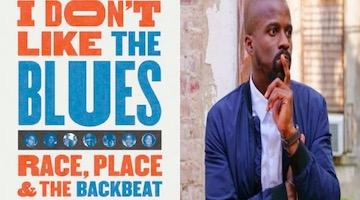 What happens if we really pay attention to what black folks in the rural South are saying and doing in their everyday lives?
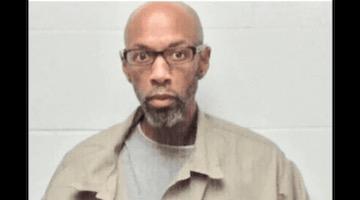 The Trump administration plans to execute five people before there is a change of power. “The death penalty is the ultimate human rights violation.”
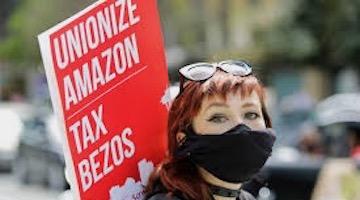 Dozens of leaked documents from Amazon reveal the company’s use of Pinkerton operatives to spy on warehouse workers, labor unions and social movements.
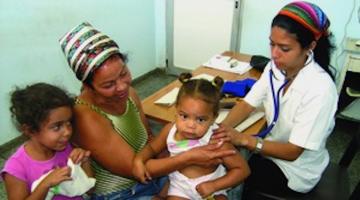 Cuban medical professionals created a project to join science and statecraft and secure health as a fundamental right of citizenship.
 Imperialists continue to exercise control of former colonies from the comfort of their metropolises as their former subjects appear resigned to their post-colonial fates.


