In this series, we ask acclaimed authors to answer five questions about their book. This week’s featured author is Aria S. Halliday. Halliday is Assistant Professor in the Department of Gender and Women’s Studies and Program in African American and Africana Studies at the University of Kentucky. Her book is Buy Black: How Black Women Transformed US Pop Culture.
Roberto Sirvent: How can your book help BAR readers understand the current political and social climate?
Aria S. Halliday: My book considers the rise of Black popular culture in the US and how the idea of “buying black” has a historical connection to Black people’s struggle for popular culture that reflects our communities, identities, and political commitments. Our desire for authenticity through representation always creates tension with the capitalistic desire of economic dominance. I argue that Black women have been instrumental is creating and narrating opportunities for Black people to be seen in the popular sphere. Black women infuse the products they create with their own cultural knowledge and understanding of how Black consumers identify with specific cultural resonances (like afro puffs, raising your children to seek self-determination, and stories of famous Black women). They use their knowledge to sell products creating the opportunity for representation but also for appropriation. As Black people living in the age of fast communication and social media, we must contend with this struggle and how we shape the possibilities for representation in the future.
In the Coda (similar to a conclusion, but honestly asks more questions), I specifically talk about the desire to put Black women like Harriet Tubman on our money and how issues around representation are at the forefront of US commitments to social justice. We asked for student loan reparations, and we got representatives kneeling in kente cloth stoles. We asked for change in the ways police interact with all of us, but especially Black folks, and we got Juneteenth as a holiday. We asked for Black mothers to live beyond the births of their babies, and we got Maya Angelou on the quarter. Representation, even if we like it, is the response we’ve seen to concrete challenges we have made to this system. But what about changes that will actively transform our lives? What about justice?
What do you hope activists and community organizers will take away from reading your book?
I hope activists and community organizers will understand how culture is an important way that young people are learning and engaging with our history and our future. I argue throughout the book that Black cultural production in intrinsically tied to the Black intellectual tradition as well as struggles for liberation. From Marcus Garvey to Nicki Minaj, we are all connected to creative, intellectual, and liberatory communities that growth together and inform one another. Perhaps they are not in agreement in how to express our political aims, but cultural production is an intellectual space and can be liberatory. Using culture and cultural artifacts in organizing spaces, we could shape the ways that our culture is used and sold back to us beyond Black History Month or Juneteenth.
We know readers will learn a lot from your book, but what do you hope readers will un-learn? In other words, is there a particular ideology you’re hoping to dismantle?
In Black culture, we have a saying—“if you can see it, you can be it”—or some version of that. This phrase explains the belief that representation holds the immense power of allowing anyone to imagine a future for themselves based on the images they see. While I don’t disagree that representation has power, I don’t believe that it can construct your future for you. Many of us are living lives beyond what we could have ever seen for multiple reasons.
I hope that readers will unlearn their allegiances to the ideology of representation because in many ways it is a lie based on stereotypes. We are a diverse and multifaceted people. Popular culture, in the most basic sense, means culture that has become accessible and known to everyone. We cannot continue to believe popular culture will show the world who we are. We also cannot continue to argue over appropriation or authenticity within popular culture. Representation is based in stereotype (it must distill the many narratives into one) and therefore cannot be every part of who we are. Once our culture leaves our homes, neighborhoods, and social spaces (whether political or religious), we must allow it to do what culture does—spread and expand beyond the original creation and the community it comes from.
Who are the intellectual heroes that inspire your work?
I have so many! My grandmother and my mother taught me how to read, understand, and strategize, which inform my approach to research. But more generally, I conceptualize my work and my life based on the intellectual tradition of Black feminism. My Black feminist heroes reinforce the belief that according to the Combahee River Collective “Black women are inherently valuable.” It means centering the experiences of Black women, their labor and scholarship, their desires and dreams, their trauma and experiences with violence within and beyond the Black community. Their statement and the work that has grown from it inspires me to write and center Black women and girls in my work. Specifically, bell hooks, Angela Davis, and Claudia Jones are the Black women who I hold dear intellectually. They were and are scholars, forward-thinkers, world-traveling and community-engaged people who show their care and love for people through their intellectual labor. Claudia Jones was the first Black (and Caribbean) women to discuss the ways Black women are “superexploited” in the context of capitalism; Angela Davis is the prototype for being a Black woman scholar, activist, organizer, and lover of people. I was deeply affected by bell hooks’ passing because she has really shaped every aspect of my intellectual identity. There is nothing she hasn’t written about and her work and life will forever impact what I do.
In what way does your book help us imagine new worlds?
We currently live in a dismal and depressive environment. It’s hard to imagine a different experience than how the world has been and one that supports hierarchies based in whiteness, misogyny, homophobia, transphobia, violence, domination, and control, let alone wake up without feeling exhausted from the daily barrage of drama and stress. All the way down to how a “person” is defined is based in whiteness. So, to imagine a world different than that, and that would center the lives and experiences of Black girls and Black women—the folks I speak to and about in my book—would mean a complete shift in the way that the world works.
My book asks us to reconsider the place of representation and its purpose in the future of our world. It helps us imagine a world beyond the simple argument that representation must be positive or negative. It also challenges the idea that popular culture should represent all of us. We are the foundations of the earth, the creators and transformers of culture, and the future of all things beautiful, creative, and just. I believe my book helps us see this vision more clearly through the kaleidoscopic knowledge we see through cultural production.
Roberto Sirvent is editor of the Black Agenda Report Book Forum.

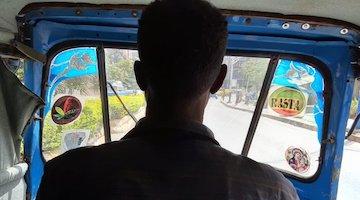 Ann Garrison ends her reporting from the Horn of Africa with updates on the Grand Ethiopian Renaissance Dam and the conflict between Ethiopia and the TPLF.
 Reading, writing, ‘rithmetic of rifles (for Uvalde and other schools…)
 BAR Book Forum editor Roberto Sirvent and Julian Akil Rose discuss community organizing, Black Queer Feminism, the struggle for police and prison abolition, and an end to militarism.
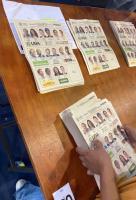 "From May 26 to May 31, I was in Cali, Colombia serving as an election observer with an international delegation of mostly Black women. This is a preliminary report."
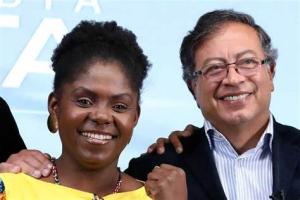 The Historic Pact candidates Gustavo Petro and Francia Marquez won the first round of the Colombian presidential election but now face conservative candidates in a June 19 runoff.


