The British crown and the colonists were both determined to seize lands from native peoples and to continue enslavement.”
“White settlers were in a constant state of fear of slave revolts.”
“He has excited domestic insurrections amongst us, and has endeavoured to bring on the inhabitants of our frontiers, the merciless Indian Savages, whose known rule of warfare, is an undistinguished destruction of all ages, sexes and conditions.” -- Declaration of Independence
The July 4 holiday in the United States commemorates the signing of the Declaration of Independence in 1776. Anyone educated in this country has been propagandized with lies about patriotic colonists seeking freedom from a tyrannical British monarch. Our minds were filled with tales of Paul Revere and Betsy Ross which erase the role that indigenous and Black people played as they attempted to end true tyranny over their lives. The present day traditions of enjoying cookouts, vacations, and fireworks should not obscure the true meaning of this date. In fact, analyzing this history is an absolute necessity.
The men who every school child is taught to think of as “patriots” had two concerns which pushed them to declare independence. First, in 1763 the British emerged victorious after the end of a conflict against France. It was known in Europe as the Seven Years War and in America as the French and Indian War. The American moniker existed precisely because the French allied themselves with indigenous nations against the British. British victory brought them French held territory west of the Appalachians in the region now comprising midwestern states, but they knew they could not easily end indigenous wars if settlers along the eastern seaboard were allowed to go further west.
“Tales of Paul Revere and Betsy Ross which erase the role that indigenous and Black people played as they attempted to end true tyranny over their lives.”
Because of continued resistance from leaders such as Pontiac of the Ottawa nation, King George III issued the Proclamation of 1763, which forbade settlement west of the Appalachian mountains. One of the speculators poised to become a wealthier man if settlements were permitted to move westward was George Washington.
He was not alone in his wish to conquer the entire continent and to get rich doing it. Property claims had already been made in these regions, and neither he nor the rest of his cohort were going to let British treaties with indigenous people stand in their way. They largely ignored the edict and went wherever they wanted to go.
Their second concern was whether the British were committed to continuing the previously unfettered right to slave holding. In 1769 an enslaved man named James Somerset was purchased in Virginia and brought to England. He eventually escaped but was recaptured and was in the process of being sold to Jamaica. But Somerset had friends who went to court on his behalf. In 1772 a judge ruled that enslaved people could not be forcibly removed from England.
“George Washington was not alone in his wish to conquer the entire continent and to get rich doing it.”
The ruling didn’t end slavery in British territories and in fact it lasted in those regions for 50 more years. But even this narrow decision was too much for white Americans who feared that the crown might undermine or even end their right to slaveholding.
The ongoing effort to subdue native peoples created more conflict with colonial settlers. Virginia’s royal governor Lord Dunmore joined colonists in encroaching on western native lands, and he incited the short-lived Dunmore’s War 1774. But the marriage of convenience was short lived as the crown sought to keep the settlers under control by seizing their stores of gunpowder. The battle of Lexington and Concord was just one result of this conflict over armaments. In Virginia it ended with Dunmore taking refuge on a ship offshore in 1775. From that hiding place he hoped to manage people who were determined to do what they wanted. He declared martial law, threatened to burn Williamsburg to the ground, and declared that enslaved people would win freedom by serving in the king’s army. Some 800 of them did just that and formed what became known as the Ethiopian Regiment. White settlers were in a constant state of fear of slave revolts and Dunmore’s actions meant to keep them in check only heightened their determination to run the country without British interference.
While slaveholding appeared to be under threat, British efforts to create loyalty among the people of Quebec again threatened the colonists’ plan to take the entire continent. The Quebec Act of 1774 provided religious freedom to Catholics and declared that their land claims extended to the regions of the Great Lakes and Ohio Valley that American colonists wanted for themselves.
“Lord Dunsmore declared that enslaved people would win freedom by serving in the king’s army.”
The crown and the colonists were both determined to seize lands from native peoples and to continue enslavement. But their interests were also hostile to one another and war was the inevitable result. White settlers wanted full independence for themselves and no control over their actions at all.
The indigenous populations were nearly eradicated in the decades long quest for conquest. Expanding slavery was an integral part of those efforts against native peoples. Genocide could not be carried out completely nor could any accommodation be made with European nations in the quest to control land from sea to shining sea. That is why the settlers declared their independence.
The process of decolonizing ourselves is a difficult one. We have been cut off from our history, and we don’t know where or how our people played a part. As we try to educate ourselves, we may find it difficult to give up traditions that we have claimed as our own. Regardless of personal choices made on July 4th, the causes of the Declaration of Independence must be known and acknowledged. That is the beginning of true independence for Black people.
Margaret Kimberley’s Freedom Rider column appears weekly in BAR, and is widely reprinted elsewhere. She maintains a frequently updated blog as well at http://freedomrider.blogspot.com . Ms. Kimberley lives in New York City, and can be reached via e-Mail at Margaret.Kimberley(at)BlackAgendaReport.com.
COMMENTS?
Please join the conversation on Black Agenda Report's Facebook page at http://facebook.com/blackagendareport
Or, you can comment by emailing us at comments@blackagendareport.com

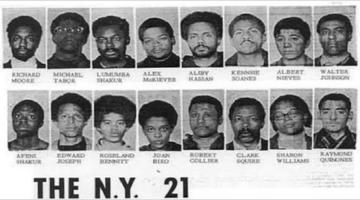 The trial of the New York Panther 21 was the moment in the Black liberation movement that ushered in an era of intensified state repression and violence and increasingly aggressive tactics…
 Three members of the Uhuru Movement were recently indicted on charges related to operating as "unregistered foreign agents." This attack has huge implications for free speech everywhere.
 After months of social unrest, the youngest leader in the West African state’s history will take office pledging a progressive program.
 We hear from a Black and Brown coalition in Chicago about their meeting with minister Naledi Pandor of South Africa and their mobilizations for solidarity with Palestine.
 This week we hear about how the latest round of sanctions are harming the people of Cuba, and how they are responding. But first we talk to members of a Chicago Black and Brown coalition about…


