The National Workers Union
While stationed on the islands during World War Two, US GIs engaged in land dispossession, rape, murder, bullying and violence against local people.
“It was not unusual to find the body of a local woman with her throat slit in one of the rivers traversing this US base after a weekend.”
The history of the US occupation of Trinidad is not widely known here or in the rest of the Caribbean. Caribbean people, including citizens of Trinidad and Tobago, know little about the American occupation of the then British colonies during and after the Second World War. During a recent discussion with some comrades, objection was raised to the use of the term “occupation” to describe the experience.
We must not allow a definition of “occupation” given by the British colonial power to mislead us into believing that the deal they made with the US during World War II to give lands across the West Indian islands in exchange for 50 old naval assets did not result in the military occupation of our country with its attendant violence, discrimination and plunder.
They engaged in land dispossession, rape, murder, bullying and violence against local people and created “federal military preserves” where local law and authority had no jurisdiction. Both my father and grand-father worked with the Yankees during the occupation so my knowledge is first grounded in their oral histories and later records of the US and British Imperial archives.
There were several military bases in Trinidad but none in Tobago. The Chaguaramas naval base occupied the entire northwest peninsula of Trinidad and all the adjacent islands at the entrance to the Gulf of Paria. Military historian and former TT Coast Guard chief Gaylord Kelshall has written books on the history of the strategic role and importance of this naval base to the US /UK war effort and the battle for the Atlantic sea lanes.
The Fort Reid Army Air Base at Wallerfield was the logistical hub for the North African campaign and was the largest airbase in the world during that period. It was not unusual to find the body of a local woman with her throat slit in one of the rivers traversing this base after a weekend.
“The US created ‘federal military preserves’ where local law and authority had no jurisdiction.”
The Andrews Sisters immortalized the prostitution driven by the Chaguaramas occupation when they stole the calypso composed by Lord Invader which celebrated “Drinking rum and Coca Cola, going down Point Cumana…” Point Cumana and Carenage being the villages at the entrance to the US “federal” territory.
The US Army established its first training school for jungle warfare on the north Manzanilla Peninsula and it operated thus until its transfer to Panama after the war.
A primary mission of the military occupation of Trinidad was to also protect the several oil refineries located here which supplied the fuel for the US/British war machine during and after World War Two.
Other smaller bases were located at Carlsen Field, Couva, Cedros and there was an emergency landing strip at Toco, Kelshall also created and curated the Chaguaramas Military Museum, which now faces demise since his death since, with the exception of the annual November Remembrance Day ceremony, none of the neo-colonial regimes since 1962 have examined that aspect of our history and paid proper respect, gratitude or reparations to the people who were subject to the occupation.
The Chaguaramas base was also the site of one of the OMEGA navigation stations which allowed Polaris submarines to circumnavigate the globe before satellites took over and it was also the site of one of the radar tracking stations used for the Apollo missions.
Much more information can be obtained from the archives of the Imperial War College and Pentagon and US Naval archives. I hope this helps you obtain more perspective on our region’s role in the military adventures of the empires.
The National Workers Union is a new union with old values, based in Trinidad and Tobago.
COMMENTS?
Please join the conversation on Black Agenda Report's Facebook page at http://facebook.com/blackagendareport
Or, you can comment by emailing us at comments@blackagendareport.com

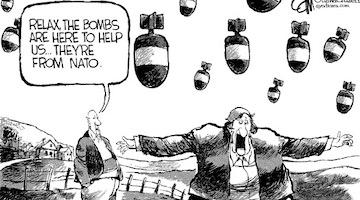 This week the U.S. state’s propaganda and the Black elite were on your minds.
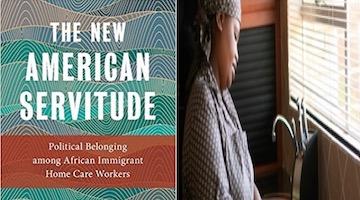 Senior care puts care workers into racialized, gendered, and age hierarchies, making it difficult for them to achieve social and economic mobility.
 I am hoping my call will provoke/inspire us to practice forms of life and liveliness differently.
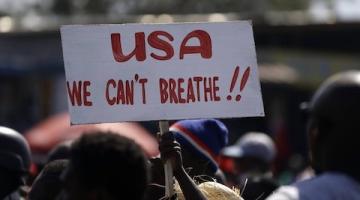 While Biden is telling Haitians “Don’t come over,” Haiti and its allies have been saying “U.S. Out of Haiti.”
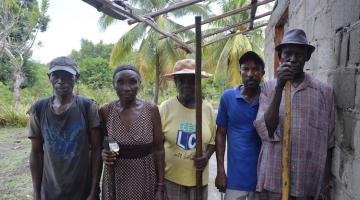 The author unpacks the tired trope of “poor rich Haiti,” highlighting the role of foreign capital and local elites in the destruction of life in the countryside.


