The author helps us think about Blackness, queerness, and artistic production in new lights.
“Art is a tool for change and community building.”
In this series, we ask acclaimed authors to answer five questions about their book. This week’s featured author is GerShun Avilez. Avilez is Associate Professor of English at the University of Maryland. His book is Black Queer Freedom: Spaces of Injury and Paths of Desire.
Roberto Sirvent: How can your book help BAR readers understand the current political and social climate?
GerShun Avilez: We are living in a moment of intense anti-Blackness and anti-queer sentiment. My focus on Black queer artists illuminates the complex ways systems of oppression work as well as how Black queer people deal with these oppressions—sometimes successfully and sometimes not. Black Queer Freedom is about how Black queer people remain resilient in the context of constraint and injury. We live in a climate that requires resilience–and resistance. Even if there is a change in our administration with the election this year, there will still be structural forces and everyday interactions that constrain and injury Black queer people. We have to find ways to be resilient in the context of ongoing oppressions, and art is often a building block of personal and communal resistance. To add to this point, my specific focus on police violence, immigration, incarceration, and medical institutions in the chapters speaks to some of the major sites of activism in the contemporary world. Rather than thinking about each phenomenon independently of the other, my book offers ways to think about connections between and among these sites of possible injury. These sites collectively represent the kinds of institutionalized and personal violence that are leveraged against racial and sexual minorities.
What do you hope activists and community organizers will take away from reading your book?
What I hope activists and community organizers take from reading my book is a reinforcing of the value of art to social activism. The book affirms what many activists and community organizers know: art is an important site of identity and a tool for galvanizing folks to action. As much as we might seek legislative and policy change, we need art to help us imagine ways through social challenges. Art is pleasurable. Art can even offer us a respite from the difficulties of the world. However, Black queer artists also outline the barriers to social change, put pressure on social norms, and offer radical, new ways of thinking about the self and society. Their works provide enjoyment, while also providing images of and language for revolutionary social change. Art could and should be part of our organizing—whether that means community projects such as mural paintings or poetry readings as a rally. Art is a tool for change and community building. An example would be the poetry of Pat Parker, which I discuss in the first chapter. Parker performed her poetry at public gatherings and her work sought to create unity among queer populations during the 1970s and 1980s while also insisting upon the particular precarity of Black women. When I think of contemporary queer activism, the “Say Her Name” campaign, or the work done in response to Breonna Taylor’s murder, I cannot help to think about the relevance and value of the poetry of Parker as a means for arguing for action.
We know readers will learn a lot from your book, but what do you hope readers will un-learn? In other words, is there a particular ideology you’re hoping to dismantle?
Because of the realities of racism, sexism, and homophobia, some people have trouble talking about Black queerness outside of notions of social restriction: to be a Black queer person means to have to deal with restraint. Other people stress the power attributed to being queer: being outside of the norm is seen as beneficial and empowering. For me, Black queer life is not an either-or situation. In Black Queer Freedom, I offer a way to think about the devastating nature of different kinds of discrimination, while also showcasing how Black queer people make a life in the context of such devastation and constant attacks. The ideas of life and freedom within the context of social restraint is the focus and primary lesson of the book I want to share.
Who are the intellectual heroes that inspire your work?
My graduate advisor, Thadious M. Davis, continues to influence my approach to talking about Black life and culture. It is because of her that I could imagine a place in the profession for myself. I think I am always writing to her. All of the artists I write about greatly influence me, but especially Toni Morrison, Cheryl Clarke, and Alice Walker. I keep returning to their works, and I learn something new every time. I would also mention Melvin Dixon, Janet Mock, and Tarell Alvin McCraney as writers who have profoundly shaped by thinking about Black LGBTQ life and how to write about it.
In what way does your book help us imagine new worlds?
As I stated earlier, my emphasis on art is in part about highlighting the idea that art helps us to imagine new social and political realities. However, a dominant way my book asks the reader to imagine new worlds is in its diasporic focus. My book encourages people to think about Black queer experience across national and cultural borders. What would happen, I ask, if we put queerness in the foreground of our understandings of the diaspora? How might we think about queer life differently if we did not think about it primarily in the context of one place or region—even if we keep in mind social and historical differences? These are questions I ask and seek to answer in the book, and I believe that in doing so, I help the reader to think about Blackness, queerness, and artistic production in new lights. This direction might lead us to imagine new worlds or at least to question things we take for granted in our current world.
Roberto Sirvent is Professor of Political and Social Ethics at Hope International University in Fullerton, CA, and an Affiliate Scholar at Yale University’s Interdisciplinary Center for Bioethics, where he directs the Race, Bioethics, and Public Health Project. He is co-author, with fellow BAR contributor Danny Haiphong, of the book, American Exceptionalism and American Innocence: A People’s History of Fake News—From the Revolutionary War to the War on Terror.
COMMENTS?
Please join the conversation on Black Agenda Report's Facebook page at http://facebook.com/blackagendareport
Or, you can comment by emailing us at comments@blackagendareport.com

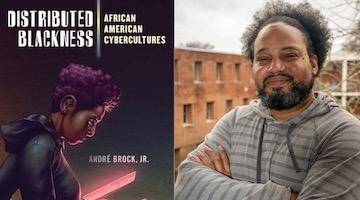 The online aggregation and coherence of Blackness online, absent Black bodies, is what inspired the author’s book.
 The very physical category of femaleness was articulated by feminists and non-feminists alike as the sole property of whiteness in the 19th century,
 Seventy years after the civil preparedness film Duck and Cover, it is long past time to reckon with the way white supremacy shaped U.S.
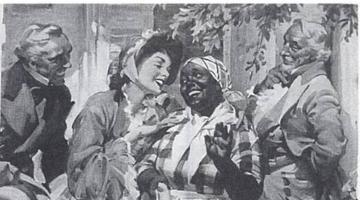 Textbooks are a battleground in which the humanity and status of black Americans are contested
 Amazon will not stop squeezing every drop from workers until those workers have more power.


