US troops have been dispatched to the Democratic Republic of Congo, where the results of presidential balloting are still unknown.
“Congolese are on edge, fearing fraudulent presidential election results and state violence to suppress mass protest.”
As of January 8th, there was still no news about the unresolved presidential election in the Democratic Republic of the Congo, even though Congolese went to the polls on December 30, so I took a look back into the 1966-2010 US diplomatic cables from Zaire on the Wikileaks website. (Zaire became the Democratic Republic of the Congo in 1997.)
Many of these cables are about transportation. There’s a jungle between eastern and western DRC, and even in the relatively traversable east and west, dirt roads and mud prevail. President Joseph Kabila demonstrated his own failure to do anything for his own people by getting stuck in the mud, along with his entourage of officials, assistants, and armed guards, while campaigning from east to west during the 2011 election year. (So-called, since the election couldn’t have been less free and fair unless the election commission had formally announced Kabila’s victory before Congolese went to the polls.)
“There’s still little of the manufacturing or domestic transportation infrastructure required to build a modern domestic economy.”
Before and after the US and Belgium assassinated Patrice Lumumba in 1961, the West’s puppets and their puppet-masters have been concerned with getting DRC’s vast resources out, not from one place to another within the DRC. Nearly 60 years later, there’s still little of the manufacturing or domestic transportation infrastructure required to build a modern domestic economy.
A thorough review of the Zaire/DRC/Wikileaks transportation cables could tell a tale of imperial exploitation that would fill a whole book. Resources, troops, weapons, diplomats, corporate executives, and military officials move in and out, traversing the difficult terrain in one way or another. There’s next to no discussion about helping the Congolese people make their way around their own country, though there is one called “REPORTED FRENCH BARTER OF COBALT FOR BUSES.” It doesn’t say about who will ride the buses from where to where or for what purpose, but since buses are a typically humble form of transportation, we can imagine that the buses were meant for the Congolese people.
“Two-thirds of the world’s cobalt reserves are in the Katanga Copper Belt.”
Cobalt, the mineral sent to France in exchange for the buses— with cash intermediation or not—is essential to both weapons and renewables manufacture. Two-thirds of the world’s cobalt reserves are in the Katanga Copper Belt, running from DRC’s southeastern Katanga Province into Zambia. Like “the three ts”—tin, tungsten and tantalum—which are plentiful in DRC’s North Kivu Province, Lockheed Martin can’t go to work without it. Neither can any of the world’s other big league weapons manufacturers, so cobalt is the most strategic of strategic minerals.
A diplomatic cable generated in the country’s capital, Kinshasa, on April 7, 1978, and declassified on March 20, 2014, illustrates the extractive purpose of most transport infrastructure in DRC. It’s a white supremacist classic titled Evacuation of Kivu Coffee by Air:
1. AROUND THE FIRST OF MARCH AIR ZAIRE FINALLY BEGAN REGULAR DC-8 CARGO FLIGHTS CARRYING COFFEE FROM GOMA TO MOMBASA. THERE HAVE BEEN TWO FLIGHTS PER DAY TOTALLING AROUND 72 TONS. AT THAT RATE IT WILL STILL TAKE SEVERAL MONTHS TO EVACUATE THE 17,000 TONS OF COFFEE THAT WERE STOCKPILED IN NORTH KIVU WHEN THE FLIGHTS BEGAN, EVEN ALLOWING FOR SOME EXPORTING BY TRUCK. TRANSPORTING THE COFFEE FROM OTHER POINTS IN NORTH KIVU (PRINCIPALLY BUTEMBO AND BENI) TO GOMA IS A PROBLEM BECAUSE OF THE SHORTAGE OF TRUCKS AND FUEL. COFFEE EXPORTERS SAY THAT AIR EXPORT IS NOT APPRECIABLY MORE EXPENSIVE THAN SURFACE EXPORT IN VIEW OF ITS SPEED AND GREATER SECURITY.
2. THE COFFEE FLIGHTS HAVE BROUGHT AN IMPORTANT INCIDENTAL BLESSING TO GOMA--AMPLE CARGO SPACE ON THE RETURN FLIGHTS FROM MOMBASA. AS A RESULT GOMA'S STORES ARE WELL STOCKED AND GUESTS AT GOMA'S TOURIST HOTELS CAN NOW ENJOY FRESH SHRIMP. BOWEN
Sheryl P. Walter Declassified/Released US Department of State EO Systematic Review 20 Mar 2014
More than 40 years after a US diplomat sent this 1978 cable, most Congolese travel on dirt roads, without leadership that cares enough to build even the most fundamental infrastructure, not only roads and mass transit, but also potable water and electricity. As I write this, on January 8, Congolese are on edge, fearing fraudulent presidential election results and state violence to suppress mass protest. In nearby Gabon, US combat troopsare poised to cross borders and invade to protect US citizens and interests as needed. Are they there to make sure that Joseph Kabila, the president they installed and kept in power for 18 years, cedes power to former Exxon-Mobil executive Martin Fayula, their new horse to ride? That’s just my best guess, so I keep checking the headlines form DRC and Gabon every few hours. Neither Congolese nor Gabonese can because their governments cut off their Net access.
Ann Garrison is an independent journalist based in the San Francisco Bay Area. In 2014, she received the Victoire Ingabire Umuhoza Democracy and Peace Prizefor her reporting on conflict in the African Great Lakes region. She can be reached at ann@anngarrison.com.
COMMENTS?
Please join the conversation on Black Agenda Report's Facebook page at http://facebook.com/blackagendareport
Or, you can comment by emailing us at comments@blackagendareport.com

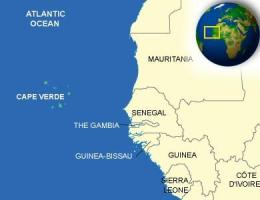 The Trump and Biden administrations violated the Vienna Convention on Diplomatic Relations by arresting and kidnapping Venezuelan diplomat Alex Saab. Cape Verde was under U.S. pressure to participate…
 $100 billion was pledged to assist the Global South amidst the climate change crisis but world wide defense spending now exceeds $2 trillion. War making trumps saving humanity from…
 The U.S. and Australia have fiercely opposed the new security agreement between China and the Solomon Islands. They are attempting to construct a Monroe Doctrine in the Pacific, imposing US hegemony…
 The U.S. has not invited Cuba, Venezuela, or Nicaragua to attend the upcoming Summit of the Americas in Los Angeles, California. Other nations threaten to boycott if every…
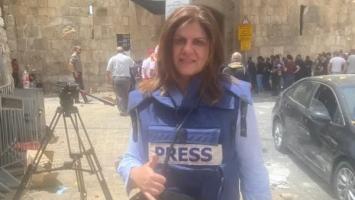 Apartheid Israel continues its shameful tradition of targeting journalists. Al Jazeera's Shireen Abu Akleh is the latest person clearly identified as a journalist who was shot and killed by the IDF.


