Time to begin critically unpacking intersectionality and its nappy headed stepchild afro-pessimism
The US left has a fundamental problem, perhaps the root of most of its other problems. That fundamental problem is that the US left is not organized as or led by any class conscious or class oriented formations. Union membership is somewhere around 5% of the workforce, and major unions have long been captured by the Democratic party. So the US left is composed of the black activists in their boxes, the gender activists in theirs, the immigrants and their friends over here, Latinos over there, the environmentalists in their corners and the rest in their own zones, each and every one doggedly “centering” their own experience, and if we’re lucky “intersecting” now and then.
It’s a recipe for impotence and futility. But this is the US of A, we tell ourselves, where for some reason a class struggle oriented left has not emerged in any of our lifetimes. Adjusting to this toxic reality rather than taking the responsibility for changing it, US leftists have developed a self-deceiving and self-limiting language, a discourse that normalizes a kind of alternate universe in which class analysis is deprecated and discouraged and class struggle taken pretty much off the table. Intersectionality, and its nappy headed stepchild Afro-pessimism are prominent features of the stifling closet in which the US left has locked itself.
The word intersectionality was originally used by legal scholar Kimberlé Crenshaw in her discussion of a civil rights lawsuit filed by a black woman who alleged she’d been discriminated against as a black person AND as a woman. Absurdly the court rejected her claim, saying the plaintiff needed to choose whether she alleged discrimination on the basis of gender or of race, but not both. Crenshaw coined the term intersectionality to cover these instances of multiple and overlapping oppressions. As a legal theory it hasn’t gained a lot of traction. But in the worlds of politics and the nonprofit industrial complex intersectionality has become a pervasive buzzword.
In the worlds of politics and nonprofits intersectionality has become a sneaky substitute for the traditional left notion of solidarity developed in the process of ongoing collective struggle against the class enemy. Intersectionality doesn't deny the existence of class struggle, it just rhetorically demotes it to something co-equal with the fights against ableism and ageism and speciesism, against white supremacy, against gender oppression, and a long elastic list of others. What’s sneaky about the substitution of intersectionality for solidarity is that intersectionality allows the unexamined smuggling in of multiple notions which directly undermine the development and the operation of solidarity. Intersectionality means everybody is obligated to put their own special interest, their own oppression first – although they don’t always say that because the contradiction would be too obvious. The applicable terms of art are that everybody gets to “center” their own oppression, and cooperate as “allies” if and when their interests “intersect.” What this yields is silliness like honchos who run the pink pussy hat marches telling Cindy Sheehan earlier this month that their womens’ movement can’t be bothered to oppose war and imperialism “...until all women are free,” and the advocates of this or that cause demanding constant, elaborate performative rituals of those who would qualify for "allyship."
The nonprofit industrial complex, funded as it is by the one percent, loves, promotes and lavishly rewards intersectionality at every turn because it buries and negates class struggle. Intersectionality normalizes the notion that the left is and ought to be a bunch of impotent constituency groups squabbling about privilege and “allyship” as they compete for funding and careers, not the the force working to overthrow the established order and fight for the power to build a new world. Even Hillary Clinton uses the word now.
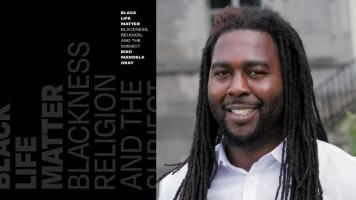
Afro-pessimism is a term coined by Dr. Frank Wilderson at UC Irvine, and a nappy headed stepchild of intersectionality. Afro-pessimism, to hear Wilderson tell it is the realization that black people have no natural allies anywhere, that we are born with ankle irons, whip marks on our backs, bulls eyes on our foreheads and nooses around our necks. Blackness, he says is “a condition of ontological death,” and the dead have no allies, at least among the living. Wilderson is at least honest. He freely admits that afro-pessimism leads nowhere and offers no answers to any strategic or even tactical questions. Wilderson’s shtick is that of an old man throwing word grenades and he seems not to care much where or how they explode, as long as they do. Whatever works for him, I guess.
But in the context of a US left that just doesn’t DO class struggle Wilderson’s grenades are being picked up and thrown again and again, both by old heads who ought to know better, and by younger ones looking to fit in with what bills itself as the movement. The intersectionality that dominates the US left is a kind of poisoned atmosphere in which the purple prose of afro-pessimism fits and thrives, a place where the dishonest can pretend, and the unwary can believe it provides the answers that even Wilderson says it does not.
To be fair, some intersectional activists do pretend to embrace class struggle. Patrice Cullors one of the three ladies responsible for the #blacklivesmatter hashtag famously proclaimed herself and Alicia Garza were “trained Marxists.” One might imagine that a trained Marxist would look at US history and discerning that there are no leading class struggle organizations contending for power, try to figure out how to overcome the obstacles to their creation and successful operation.
But the embrace of intersectionality has led the US left in precisely the opposite direction. Intersectionality pretends that class struggle and overthrowing the capitalist order and fighting for power are impractical, impossible, non-pragmatic or just secondary to gender struggles, to the plight of immigrants, to the environment, or in the case of afro-pessimism, to those permanent ankle chains, whip marks and nooses around our necks. Intersectionality calls upon the left to adjust to powerlessness and our poisoned atmosphere, not to contend for the power to change it.
Intersectionality is a deep hole. Afro-pessimism is a shovel. The next thing we should do is stop digging.
Bruce A. Dixon is managing editor at Black Agenda Report and co-chair of the GA Green Party. He lives and works near Marietta GA and can be reliably reached via email at bruce.dixon(at)blackagendareport.com. He’s trying to get better at answering his Twitter @brucedixon.




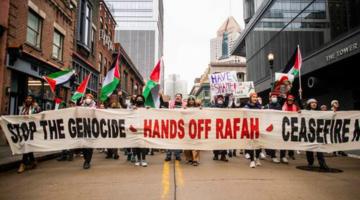 The ICGSP put out this call for movements around the world to support the university movement for Gaza solidarity.
 Kenyan President William Ruto is serving the role of a comprador facilitating the continued colonization of Kenya and betraying the revolutionary history of their people.
 The destruction of encampments and the arrests of more than 3,000 students and faculty members have not stopped the movement for divestment.
 The U.S. policy regarding the genocide in Gaza is one of incompetence and duplicity.
 Afghans for a Better Tomorrow discuss the current state of Afghanistan and their work organizing against U.S. imperialism.


