Since 1968 or 69, almost 50 years now I’ve been hearing the descendants of Africans in the US described as an “internal colony.” Back in the day it seemed perfectly applicable. Africa, Asia and the Americans had been colonized by Europeans who ruled over the natives, just as white Americans ruled over us. The internal colony thesis tied us to anticolonial struggles in Africa, Asia and Latin America, explaining some of what we had in common. Beginning about a decade ago I grew uncomfortable enough with the the internal colony thing to stop using it in writing of my own. I never challenged anybody else on it though, perhaps because I never thought about it long and hard enough to understand how or why I ought to.
A couple months ago I caught this interview with UIC scholar Cedric Johnson on Dead Pundits. Johnson is the author of The Panthers Can’t Save Us Now. Johnson is doing what scholars are supposed to do, unpacking and interrogating our core assumptions, refining some, affirming others and bagging a few for the trash can. He offered several useful observations on black nationalism, black power and the utility of the “internal colony” as a working description of the situation of black people in the US which have helped put sufficient flesh on the bones of my own misgivings to make them ready for prime time.
To start with, the internal colony thing is a half century old. If we were building bridges or aircraft, studying math or geology or languages we wouldn’t go a half century without questioning our analytical tools. So are we an internal colony, really?
The situation of the descendants of Africans in the US today looks a lot less like an internal colony than it might have 50 years ago. Today there are thousands of actual black people in the actual US ruling class and an entire layer of thousands more aiming, training and competing for spots on the escalator. There are black lobbyists and corporate functionaries like the black Jones Day partner who oversaw the gutting of city pensions and fire sale of Detroit’s assets, the two dozen or so black admirals and generals who surrounded Barack Obama onstage at the 2008 Democratic convention. There are black media figures and celebrity charter school crooks like Magic Johnson and Iyanla Vanzant, and black near billionaires like Junior Bridgmon whose success stories are built on low wage viciously exploited black labor.
That doesn’t happen in colonies. Samora Machel in Mozambique would have been a doctor but colonial Portugal didn’t allow blacks in medical school so he had to be a nurse. The French never dreamed of allowing an Algerian or Vietnamese to be president, any more than the Brits would have let a Jamaican or Ghanaian serve as PM. But we just had eight years of a black president. This is not the colonial model, it’s something else entirely.
Colonies have territories too… where is the black territory in the US? It doesn’t exist. The internal colony thing is not an accurate description, it’s metaphor. Johnson calls it analysis by analogy, which is comforting and convenient but not really analysis at all.
If even Africans on the continent have stopped describing their societies as “neocolonial” a decade or two ago why are so many supposedly woke analysts of the black condition in the US still stuck on the internal colony metaphor which illuminates nothing and describes nothing in the real world? We can’t change the real world if we can’t describe it accurately. It’s time to take out the trash, and the internal colony thing with it, and maybe take a closer look at the usefulness some of the other constructs which are tied to it.
For Black Agenda Radio, I’m Bruce Dixon. Find us on the web at www.blackagendareport.com.
Bruce A. Dixon is managing editor at Black Agenda Report and a member of the state committee of the GA Green party. He live sand works near Marietta GA and can be reached via email at bruce.dixon(at)blackagendareport.com.

 Renowned Cuban journalist Rosa Miriam Elizalde discusses the long-lasting impact of the US allegation that “sonic attacks” were carried out against US embassy staff.
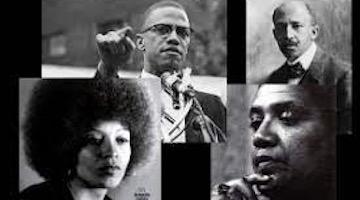 Exploited within the belly of the beast, the struggle for Black emancipation cannot avoid its global ramifications when it comes to ending the hegemon’s domestic violence and global destructiveness
 Free All Political, Elderly and Covid-Infected Prisoners, Say Mumia Supporters
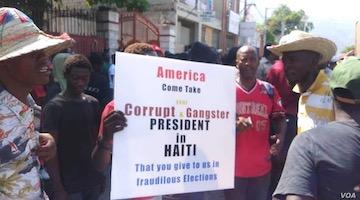 “The US is responsible for the complete destabilization of Haitian democracy and the complete loss of Haitian sovereignty,” said Dr Jemima Pierre, an anthropologist in the African
 “As soon as movements emerge that identify the normal operations of the police” and other capitalist institutions as the problem, the regime directs the language of the debate towards reform, said



