“It defines as middle class someone who has a daily income of between $4 and $70.
The African middle class is of huge interest to business. This was confirmed again recently by well attended seminars in South Africa’s big cities to discuss “African Lions: groundbreaking study on the middle class in sub-Saharan Africa.”
The study was motivated by the African Development Bank’s diagnosis that (the African middle class) has grown by over 240% in just over a decade, and the bank defines 15 million households as now being middle class.
The narrow focus of the study is guided by a particular interest and echoes a poorly informed narrative about the structure of societies in Africa. It is void of any class related analysis and offers little bearing on reality. People are seen only as consumers with no political relevance.
The study was done by the University of Cape Town’s Unilever Institute of Strategic Marketing and the global market research company IPSOS over 18 months in ten cities -- Abidjan, Accra, Addis Ababa, Douala, Dar es Salaam, Kano, Lagos, Nairobi, Luanda and Lusaka.
It defines as middle class someone who has a daily income of between $4 and $70. He or she also has a disposable income; is employed or is running a business or studying at college; and has some secondary school education. According to this criteria, a whopping 60% of the urban population surveyed fall into this definition of middle class.
The researchers conclude that those who qualify as middle class have an average income of $12 a day and an average household income of $17 a day. Of these, a third had a full time job, while many ran mainly informal businesses.
“People are seen only as consumers with no political relevance.”
According to the study, an estimated 100 million people outside South Africa have an aggregated spending power of more than $400 million a day.
It’s clear that the research is motivated by economic interests, targeting the so-called middle class as the object of desire for retailers. As the head of the institute explained, the core of the interest in the estimated ZAR1.3 trillion-a-month market was a better understanding of the consumer landscape on the continent, (by exploring) aspirations, media consumption, buying patterns, brand relationships and much more (of such middle class).
Similar interests by the private sector exist in business circles beyond the continent. Large companies paid $1160 and small ones $510 to gain insights into the investment opportunities at a recent “Middle East and Africa Summit” in Stockholm. The second day was devoted to sub-Saharan Africa, which was described as having a bulging middle class hungry for inclusion and more sophisticated consumer demands.
Such approaches perpetuate the original hype over the discovery of the emerging middle classes in the global South, defined in terms of higher living standards. They are measured on consumption and lifestyle related to Western products and status symbols. But no insights are offered into how being middle class could be understood in a social context. This would include status and awareness as well as the political choices people make.
This would require a different, analytically much more ambitious grasp of the economic and political realities in African cities and indeed wider societies.
The fight back
In the meantime, scholars in a variety of academic disciplines have started to critically explore the middle class notion. They properly investigate its meaning and definition. This is important because a middle class debate reduced purely to the exploration of consumer habits can only be used for self-serving purposes.
In contrast, the new scholarly efforts put an African middle class debate into more meaningful perspectives. They offer a deeper analysis of cultural factors and identities, consciousness, social positioning and relations to other groups as well as institutions and the state. They are on their way to a proper class analysis and the policy options and implications by the social group or groups in formation.
The challenge is to look beyond the superficial number crunching that defines a middle class in purely income and expenditure figures, void of any further analysis of other relevant factors.
Such apolitical perspectives tend to put an ideological smokescreen around socio-economic processes. These rest on the assumption that relatively high economic growth rates suggest “progress” and “development.” Meanwhile, little changes in the daily lives of most people. Crumbs from the table of the haves don’t lift them out of a fragile socio-economic habitat bordering on poverty. Many urban and rural people continue to exist in utter destitution.
Social change
Engaging with such challenges, exploring how being middle class could be understood and mobilised for social change, would require a different analytical grasp of the socio-economic and political realities in African societies.
Presumably, such different research findings would most likely not be of interest to the business. But, the more socio-politically motivated analyses might contribute towards raising awareness of the class structures perpetuated. These are not fundamentally changed by a growing number of consumers, who are able to buy goods in the shopping malls and enjoy a “Western” lifestyle.
Rather, the advocacy and promotion of social justice and equality based on truly transformative social policies with deeper redistributive effects, could in the long run create a much larger and more sustainable market.
Henning Melber is Extraordinary Professor, Department of Political Sciences, University of Pretoria. He is the editor of ‘The Rise of Africa’s Middle Class’. This article previously appeared in The Conversation and Pambazuka News.

 The police department’s PR team has more than doubled in size in the past two years. Some of its recent hires have histories of dishonesty and misconduct.
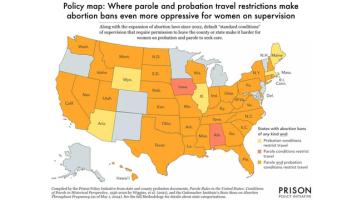 More than half of the 800,000 women under community supervision live in states with abortion restrictions, making the path to access more difficult — or impossible.
 The arrest and deportation of several prominent Kanak leaders have reignited widespread protests in New Caledonia.
 Julian Assange accepted a plea deal in exchange for his freedom from the bipartisan effort to keep him imprisoned and to charge him with a crime for publishing material the state wants to keep a…
 This week, we learn about a lawsuit by Black and Latino residents over the redrawing of an electoral district map that leaves them without representation. We discuss New York State's…


