by Puneet Chadha and Jamile Araújo
More than half of Brazil’s population is of African descent, yet concerted action among Afro-Brazilians has often been elusive. Black organizations from across the nation gathered in the city of Salvador to resist the “regressive measures” imposed by the “putschist government” of Michel Temer. “To tackle this serious crisis, of national and international scope, it is important and necessary to unify the Brazilian black movement organizations.”
It is Necessary to Unify the Brazilian Black Movement
by Puneet Chadha and Jamile Araújo
This article previously appeared in The Dawn.
“The elites reject projects for national development based on social inclusion and distribution of land, income and wealth, with less racism, inequality, misery, poverty and hunger.”
The 4th National plenary of the Convergence of the Struggle to Combat Racism in Brazil (Black Convergence) was held in Brazil on July 1. Flávio Jorge, member of the Soweto Black Organization of São Paulo and of the Executive Board of the National Coordination Committee of Black Entities (Conen), was interviewed by Brasil do Fato on the role of convergence and the challenges of the black movement in the current Brazilian situation.
The plenary was attended by more than 100 people from all regions of Brazil. The issues on the agenda included the fight against the genocide of black youth, combating femicide, the criminalization of LGBT-phobic acts and the war on drugs. At the end of the plenary, they wrote the Second Letter of Salvador, which claims for direct presidential elections in Brazil as a first step towards a wider political dispute that enables the creating of popular force enough to convene a National Constituent Assembly. The full Letter in Portuguese is available here.
Brazil de Fato: what is Black Convergence?
Flávio Jorge: The Convergence of the Struggle to Combat Racism in Brazil, or “Black Convergence,” began to be created thanks to a national meeting of the Brazilian black movement organizations held in November 2015 in the city of Salvador, Bahia. The followup of that meeting was held on January 21, 2016, during the Thematic Social Forum of Porto Alegre, in Rio Grande do Sul, where leaders of the black movement representing 21 national, regional and State organizations from 13 states of the country, decided to create this common space and spark a political dialogue for the construction of the unity in the struggle to combat racism in our country.
Why is it important to gather and unify black movement organizations in this juncture?
As stated in the Porto Alegre Declaration, which announced the creation of Black Convergence, the world is going through a serious crisis economic, political, environmental, humanitarian and moral crisis.
The Brazilian people is not immune to this crisis, which has been exacerbated with the impeachment of President Dilma and regressive measures, of neoliberal nature, that are being imposed on Brazilians by the conservative majority of the National Congress and the putschist Government of Michel Temer and parties that support him.
These are measures that directly affect the black population, which makes up for 53% [of the country], that is, the majority of the Brazilian population. To tackle this serious crisis, of national and international scope, it is important and necessary to unify the Brazilian black movement organizations.
What challenges is the black movement facing right now?
The Conen [National Coordinating Committee of Black Entities] has denounced that the coup under way in Brazil is headed by elites. These elites have always praised the Portuguese colonization of our territories by Europe, are rooted in a 19-century pro-slavery mentality, and still think of Brazilian society as a Casa Grande-Senzala* type structure.
These elites reject projects for national development based on social inclusion and distribution of land, income and wealth, with less racism, inequality, misery, poverty and hunger. They do not accept public policies or actions of the black movements that have achieved changes in the living and working conditions of the black population, the reduction of socioeconomic inequalities arising from racial differences and overcoming of racism in Brazil. These are the main reasons behind the coup they made: to revert all of those changes.
To the Conen, the main challenge of the black movement is, in addition to fighting against the putschist Government of Michel Temer—which is struggle that today unifies the Brazil Popular front, the People Without Fear Front and the Black Convergence— is immediately we consider a project and a political program of medium and long term to a Brazil that even valuing our advances and achievements, remains a country fair, where social and racial inequalities remain immense.
What are the consequences of the national plenary?
The leaders who attended the National Plenary represented the main political forces that combat racism in Brazil, and they have shown political will to unify the Brazilian black movement to resist and confront the serious crisis that we are experiencing in our country and in the world. This political will is expressed in the second Letter of Salvador which was agreed upon at the end of the plenary session.
I would like to highlight the significant participation of black youth in various organizations, who are willing to organize the 2nd National Meeting of Black yYouth (Enjune). At that Meeting they will also launch the campaign “Stop the Extermination of Black Youth” which is to be implemented by Black Convergence.
Long live the black Brazilian movement!
* The casa-grande (“big house”) refers to the slave owner’s residence on a sugarcane plantation, where whole towns were owned and managed by one man. The senzala (“slave quarters”) refers to the dwellings of the black working class, where they originally worked as slaves, and later as servants.

 In this series, we ask acclaimed authors to answer five questions about their book. This week’s featured author is Crystal Eddins. Eddins is Assistant Professor of Africana Studies at UNC Charlotte.…
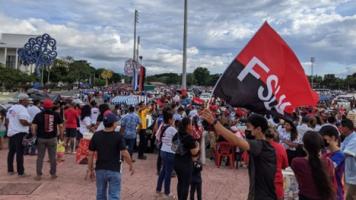 Genuine peoples holidays are hard to come by in the U.S. But in Nicaragua the ongoing revolutionary process is widely celebrated.
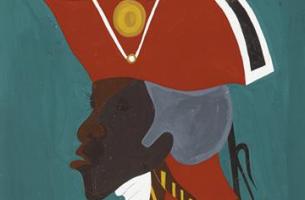 In 1929, Black radical Cyril Briggs penned an essay on Toussaint L’Ouverture and the Haitian Revolution. For Briggs, both provided inspiration for the fight against the U.S. occupation of Haiti. We…
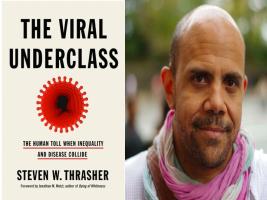 This week’s featured author is Steven W. Thrasher. Thrasher holds the inaugural Daniel H. Renberg chair at Northwestern University’s Medill School, the first journalism professorship in the world…
 The ineffective and unpopular UN Mission to Haiti must end.



