by Josh Hoxie
Despite mountains of facts, two-thirds of Americans continue to insist institutional racism is not the root of social inequality. Instead, they locate the problem in individual behavior, or in lack of education, or single-parent households. Yet, “white two-parent households turn out to have ten times more wealth than the equivalent black families,” Black folks are no more spendthrift than whites, and education counts for less than white skin.
What Explains the Racial Wealth Divide?
by Josh Hoxie
This article previously appeared in Inequality and Portside.
“White households with workers who have less than a high school degree have more wealth than black households with workers who’ve attended at least some college.”
No myth around around our staggering racial wealth divide may be more entrenched than the notion that black and brown people have less money because they’ve made poor personal decisions.
Tom Shapiro, a professor at the Institute on Assets and Social Policy, and his colleagues at Brandeis University teamed up with the New York-based think tank Demos to release a new report [1] that directly takes on this devilishly persistent “deservedness” myth.
When asked in public opinion polls whether white families are better off financially than black households, less than half of white respondents acknowledge they are. Among the folks who acknowledge the racial wealth divide exists, two thirds [2] assert that discrimination rooted in individual people is a greater problem than discrimination that is built into our laws and institutions.
The divide in wealth between white and black families, the new report shows, cannot be explained by differences in financial or lifestyle choices. The significance of the choices individual people of color make pale against “a century of accumulated wealth.” In other words, the majority who responded to that poll are wrong.
“Structural racism,” the research team notes, “trumps personal responsibility.”
The new report from Brandeis and Demos — The Asset Value of Whiteness: Understanding the Racial Wealth Gap [1] — takes each aspect of the deservedness myth head on, touching on everything from education and consumption to family formation and workforce participation.
Does lack of education explain the racial wealth divide? White households with workers who have less than a high school degree have more wealth than black households with workers who’ve attended at least some college.
“Among the folks who acknowledge the racial wealth divide exists, two-thirds assert that discrimination rooted in individual people is a greater problem than discrimination that is built into our laws and institutions.”
Among workers with equal levels of education, the median white adult with at least some college holds 7.2 times more wealth than the comparable median black adult and 3.9 times more than the median Latino.
“Higher education is valuable,” the new study’s authors conclude, “but when it comes to wealth, white privilege is equally, if not more valuable.”
How about single-parent status? Does that explain the racial wealth gap? Black two-parent households do have more than three times the wealth of black one-parent households. But white two-parent households turn out to have ten times more wealth than the equivalent black families.
In fact, white one-parent households have more wealth than black two-parent households. Again, the racial wealth divide persists regardless of how smart an individual’s personal financial decisions may be.
Some apologists for inequality cite differences in spending habits as the reason why the racial wealth divide persists. Black people waste their money on frivolities, the argument goes, while whites save.
In real life, white families spend 1.3 times more than comparable black families, on average across all income levels. Black consumers spend either less or the same as their white counterparts on clothing, jewelry, personal care, entertainment, eating out, and other non-essentials. Black families consistently outspend whites in only one category: utility bills.
Differences in personal spending habits, the researchers sum up, “cannot explain the racial wealth gap: white households spend more than black households with similar incomes, yet also have more wealth.”
The Asset Value of Whiteness offers a variety of policy solutions to our growing racial wealth divide, most notably calling for the implementation of a “racial wealth audit,” a tool that can measure how new potential public policy will raise or lower racial wealth gaps.
That audit, given the current legislative climate, seems far off. But the work of shifting the narrative that holds in place our persistent racial divide remains as pressing as ever.
Josh Hoxie directs the Project on Opportunity and Taxation at the Institute for Policy Studies and is co-editor of Inequality.org [3].

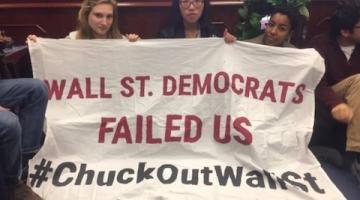 Both candidates are jockeying for who can best gaslight the U.S. public into remaining loyal to one side of the two-party corporate duopoly or the other.
 Cheri Honkala tells Ann Garrison that the Biden campaign headquarters threw up a rent-a-fence when they heard the Poor People’s Army was coming.
 A big BOOM— 27,000 tons of ammonium nitrate… chemical compound for agricultural Fertilizer… ‘stored’ 6 years at the port of Beirut 220 dead 5,000 injured
 The Big Business-backed Harris earned a reputation as a friend of the police and an agent of racially disparate mass incarceration.
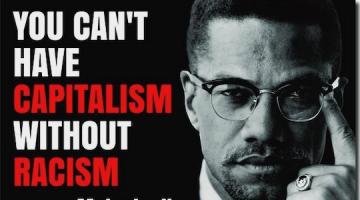 Anti-Blackness and antiradicalism function as the legitimating architecture of modern U.S. racial capitalism.



