by BAR editor and columnist, Dr. Marsha Adebayo
The final stage of the battle to pass the No FEAR Act, designed to protect those who blow the whistle on discrimination in the federal civil service, was overshadowed by the events of 9/11/01. Yet it was a near-miraculous victory, drawing together perhaps the strangest set of bedfellows in U.S. political history to confront “the outrageous abuse that is taking place in the federal government and its impact on national and international policy.”
Journey to No FEAR: 9/11
by BAR editor and columnist, Dr. Marsha Adebayo
“It is a rare moment most will never see when history greets victory with a kiss.”
The following text is an excerpt from my book: No FEAR: A Whistleblower's Triumph over Corruption and Retaliation at the EPA. The vote for the Notification of Federal Employees Anti-discrimination and Retaliation (No FEAR) Act was scheduled for September 11, 2001. Whistleblowers and civil rights activists were on the steps of the US Capitol when the planes flew into the Pentagon. This is a two-part series that recounts that fateful day. We present Part II of this excerpt in honor of the victims of the 9/11 attacks and the whistleblowers that attempted to warn and were met with retaliation. The concluding section of this Chapter recounts the unanimous vote for No FEAR in the House of Representatives.
Whistleblower protection in that first, queer daze after the attacks seemed insignificant to most Americans, but to us it was ironic. We knew instinctively that some unknown federal workers could have warned—or more than likely did try to warn—America about those very attacks. In fact, on September 13, 2001, two days after the disaster, Dwight Welch in his capacity as both an EPA biologist and union leader wrote to EPA administrator Christine Whitman warning her about human exposure to chemicals combusted as a result of the attacks on the Pentagon and the World Trade Center.
“As I drove by the Pentagon on Wednesday, I noted the building was still burning! This old building is loaded with toxins such as asbestos, PCBs, and materials which upon burning could create even more toxic combustion products. . . . The decision to encourage nonessential Pentagon employees to report to work not only compromised employee health and safety and showed a lack of compassion for the grieving. . . . On my way to work today, I heard a radio broadcast which indicated that the EPA said that smoke coming from the Pentagon and the WTC [World Trade Center] was not all that hazardous. I hope this was an error on the part of the broadcaster. I would like to see that data upon which this pronouncement was made.”
“If you weren’t about 9/11, you didn’t exist for either Congress or the news.”
Dwight’s warning, as well as other whistleblowers, would be ignored. Firefighters, first responders, and volunteers were exposed to toxic sub- stances. Dwight never received the courtesy of a response to his memo.
Considering that whistleblowers, such as Dwight and Siebel Edmonds, continued to sound the alarm, it took some getting used to when the congressional and media reaction to our raising the topic of No FEAR legislation was greeted with questions about our relevance after 9/11. If you weren’t about 9/11, you didn’t exist for either Congress or the news. But we existed among ourselves, and we were not going to be brushed aside any more than was F. James Sensenbrenner, who called to say he was serious about No FEAR legislation and was going to see it through. Sadly, the next few years would find whistleblowers in the forefront of telling truth to power when intelligence officers revealed that the government had known a lot more about the impending 9/11 disaster than the Bush administration had led the country to believe.
The House vote was rescheduled within a week of Sensenbrenner’s call, for October 3, 2001. Scores of federal workers were sitting in the ornate gallery of the US House of Representatives. To many of the nervous, fidgety, battle-weary, and post-9/11 traumatized federal workers, this was the day that we had dreamt about, fought for, and perhaps even secretly thought we would never see. Win or lose, this was our day.
Congressman Sensenbrenner took to the podium, with Beth Sokul seated behind him. “Mr. President, it is my honor to introduce the first civil rights law of the twenty-first century—No FEAR. The law is being introduced because of the outrageous abuse that is taking place in the federal government and its impact on national and international policy.”
The wild swings in emotion that had washed over all of us in the last month had redefined exhaustion for me. After the push to get the vote right before the attacks, we had all been nearly giddy approaching the Capitol the first time around. The anguish that had unfolded with the deadly attacks had knocked down a part of all of us.
Congresswoman Sheila Jackson Lee took the podium.
“Mr. President, I rise to cosponsor the first civil rights act of the twenty-first century—No FEAR. . . .
“Federal government workers have fought long and hard. Many have lost their families, their jobs—everything they hold dear—to see this day.” The congresswoman’s voice was deep and powerful. “If we could place a human face on this law, it would be the face of Dr. Marsha Coleman-Adebayo. She has been a tireless fighter and leader.”
I felt the hands of coalition members patting me on the shoulder. One of them spoke softly to me from behind. “How does it feel to have the entire Congress condemn the way EPA treated you?”
Segun squeezed my hand.
The vote was called. The illumination of the names of the 435 members was near blinding, the feeling otherworldly. Members representing every community in the United States spilled onto the floor of the Capitol. They were laughing and horse trading votes. Sensenbrenner, Sokul, and Jackson Lee looked up into the gallery; their eyes were asking: Do you see what is happening? The moment was here. Our eyes communicated back: Are you sure you have the votes to pass this law?
“We were still waiting for the hammer to hit with the votes in the nay category, but the yeas kept piling up.”
In the gallery we were federal government workers, we were family, we were friends, and we instinctively all locked arms. One member of our group leaned over the back of my chair.
“What’s the magic number? 218.”
We were dead silent before the numbers began to appear in the yea and nay columns posted on the wall above the podium. We were prepared for a fight. We had all tasted victory and defeat before, but none of that seemed as laden as the outcome today. Fifty votes went into the yea column, then one hundred.
Someone said, “My God! We are looking at a unanimous vote for No FEAR!”
Two hundred yeas. We looked at one another—what was happening? 210.
218!
“My God!” I whispered loudly to Segun, “We just passed a law!” Sensenbrenner, Beth, and Jackson Lee looked up to the gallery, giving us the thumbs-up. We were still waiting for the hammer to hit with the votes in the nay category, but the yeas kept piling up: 300 . . . 350 . . . 400 . . . 420. No FEAR had passed the House of Representatives! We all jumped up and started hugging and kissing. Some were crying.
It is a rare moment most will never see when history greets victory with a kiss.
Beth Sokul met us as we filed out of the gallery. She was reserved but overjoyed. We all took turns hugging her. Beth is in our blood forever now.
“We need to see the chairman,” I told her. “We need to savor this moment together.”
Beth called him on his cell phone. Segun and most workers had to leave before the core of our group followed Beth down the long hall that was filling with laughter and its echoes. The chairman was sitting behind his desk. He stood up when we arrived.
“Mr. Chairman,” I said, “today we have made Martin Luther King and all the civil rights martyrs proud. We have just passed a law without money or resources. What we had was our faith in Almighty God and a passion for justice. Under your leadership, and Congresswoman Jackson Lee’s, the US Congress has carried out its historic mission to fight for people who cannot fight for themselves. Today, the Congress was truly the people’s house. And we thank you, and Beth, for all of your commitment and hard work.
“I would like to celebrate this moment in the way that Dr. King taught us, by singing ‘We Shall Overcome.’ Do you know the words?”
I had never understood the words to this song before that moment.
“I said, ‘today we have made Martin Luther King and all the civil rights martyrs proud.’”
We crossed our hands, in the traditional style, and sang with all our hearts. Young Republican staffers, hearing unfamiliar sounds coming from the chairman’s office ran in as if Congressman Sensenbrenner had been taken hostage, but stopped—first embarrassed and then delighted—when they found Sensenbrenner absorbed in the singing.
As we started to file out of the office, thanking Beth and the chairman for the vote, Blair Hayes stopped to shake hands with him.
“The way you look, and the party that you represent, and the state you come from,” Blair said, “I never would have picked you as someone who would have supported someone who looks like me.”
Sensenbrenner laughed. As I turned to leave, the congressman pulled me aside. “Marsha, you had me and Jackson Lee on this side of Congress. The Senate is going to be a completely different ball of wax.”
Riding the indescribable high from the vote, I told Sensenbrenner, “After the year and a half it took to win this vote—we’re ready for anything.”
See Part I in last week’s issue of BAR.
Dr. Marsha Adebayo is the author of the Pulitzer Prize nominated: No FEAR: A Whistleblowers Triumph over Corruption and Retaliation at the EPA. She worked at the EPA for 18 years and blew the whistle on a US multinational corporation that endangered South African vanadium mine workers. Marsha's successful lawsuit led to the introduction and passage of the first civil rights and whistleblower law of the 21st century: the Notification of Federal Employees Anti-discrimination and Retaliation Act of 2002 (No FEAR Act). She is Director of Transparency and Accountability for the Green Shadow Cabinet, serves on the Advisory Board of ExposeFacts.com and coordinates the Hands Up Coalition, DC.

 Anne Venhuizen is an attorney in The Bronx Defenders' Impact Litigation Practice.
 Christopher Bruce is Policy Director of the Georgia ACLU.
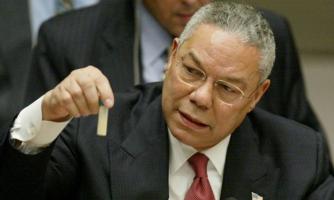 On September 11 remember how legal rights were destroyed under the Patriot Act and how plots for worldwide endless war were hatched.
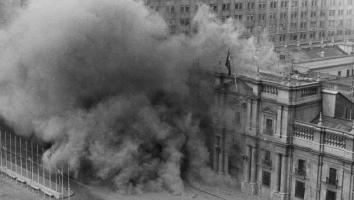 The September 11, 1973 overthrow of Chile’s Salvadore Allende offers lessons to Haiti, and the radical world.
 Black Agenda Report Editor and Columnist Ajamu Baraka has thoughts on September 11, Haiti, white supremacy in Biden’s Ukraine policy, the criminalization of dissent, and other issues.


