by Adam Bledsoe
In the wake of the “soft coup” in Brazil, Interim President Michel Temer has rolled back gains made by Afro-Brazilians. Temer is withholding land titles from quilombos, descended from Black maroon communities, where Blacks can continue “their long-held traditions of fishing, cultivating their own crops, collecting shellfish, and extracting fruits and vegetables from their land in the face of armed antagonists intent on erasing their very existence.”
The Racist and Sexist Nature of Brazil’s New Government
by Adam Bledsoe
“Michel Temer’s actions have further compromised the Brazilian quilombos’ ability to protect their unique ways of life, thereby adding a new aspect of anti-Black racism to the national landscape.”
The overtly racist and sexist nature of Michel Temer’s government in Brazil is cause for concern in South America’s largest country. Over the past several weeks critics have appropriately pointed out the various ways in which the new government has threatened the country’s most marginalized sectors—closing avenues to affordable housing, removing women and people of color from government posts, and threatening to de-fund constitutionally-guaranteed services like healthcare and education. While all of these actions have been aptly criticized for their potential effects on the Brazilian poor, Temer’s decision to dissolve the National Institute for Colonization and Agrarian Reform (INCRA) has not received sufficient attention, despite the fact that such a measure means the continuation and intensification of anti-Black racism for many Brazilian communities. Specifically, Brazil’s quilombo communities face dire prospects as a result of INCRA’s closing.
The word “quilombo” is of African origin and was used to designate Brazil’s maroon communities during pre-abolition times. This concept was resurrected during the late 20th century by Brazil’s Black Movement as Black Brazilians sought to address the country’s long history of anti-Blackness by demanding that Afro-descendant communities with unique cultural, social, and political practices—modern day quilombos—be granted legal land titles. The Movement succeeded in securing legislation for the recognition of quilombo land rights in Brazil’s 1988 constitution, and INCRA was designated as the body that would measure and delimit quilombo territories. INCRA, therefore, played a vital function in quilombo efforts to attain legal possession of their lands. This territorial titling is often crucial to the continuation of these communities’ existences, as quilombos often engage in various subsistence practices, such as fishing, farming, foraging, and shellfish collection. Clearly, access to land is central to quilombo ways of life. By dissolving INCRA, Michel Temer has actively eliminated an organ upon which Brazilian quilombos counted for legal recognition. Moreover, Temer has taken further steps to systemically marginalize quilombo land tenure.
“Access to land is central to quilombo ways of life.”
Not only has INCRA been dissolved under Temer’s government, but its territorial titling functions have been passed on to the Ministry of Education, which is headed by José Mendonça Bezerra Filho of the Democrats Party—a political party that actively tried to prevent the formalization of quilombola rights in 2012. In other words, quilombo titling is now undertaken by a politician from a party fundamentally opposed to the very existence of quilombo communities. It is obvious that by jeopardizing the process of territorial titling, Michel Temer’s actions have further compromised the Brazilian quilombos’ ability to protect their unique ways of life, thereby adding a new aspect of anti-Black racism to the national landscape. A number of cases from the northeastern Brazilian state of Bahia demonstrate the ways in which the recent government changes act as further marginalizing factors against quilombos..
The state of Bahia has the highest number of culturally certified quilombos in all of Brazil. Despite the large number of cultural certifications among the communities there, the great majority of quilombos in Bahia remain territorially un-titled. In many cases this is significant because of the violence that quilombos face in their attempts to defend their ways of life. Quilombo Rio dos Macacos, for instance, located in the municipality of Simões Filho just outside the city of Salvador, has fought for years to receive its territorial title from the government in part because of the brutality it faces from the Brazilian navy. For around fifty years, the navy has encroached on and appropriated Rio dos Macacos land—a process that has entailed a variety of violent actions, as quilombo members have been beaten, shot, sexually assaulted, and had their property continually destroyed by naval soldiers. One of the ways in which the quilombo has attempted to protect its over 200 year legacy of self-subsistence has been to petition the government for territorial recognition. After years of public audiences and trips to Brasilia to meet with INCRA officials, Rio dos Macacos was set to receive its territorial title in 2016. However, with the dissolution of INCRA and the assumption of titling powers by the Ministry of Education, members of Rio dos Macacos now fear they may not receive their title, after all. During a recent trip to Brasilia to discuss what the change in government might mean for the community’s title, quilombo members were led to believe that there would be no more progress on their territory’s titling. Events in recent weeks make the prospect of indefinite lack of titling especially grim, as naval soldiers have again resorted to violent intimidation tactics against quilombo community members—confiscating the subsistence crops of a 71 year old man and employing drones to invasively observe daily life in the quilombo. The prospect of losing access to this constitutional right looms large not just for those struggling against military encroachment, however.
“The great majority of quilombos in Bahia remain territorially un-titled.”
Other quilombos face displacement at the hands of local politicians and private landowners, as well. On the other side of All Saints’ Bay, in Bahia’s Recôncavo region, Quilombo Porto Dom João is also attempting to get their territory titled as they struggle against the violence of local power brokers. Like Rio dos Macacos, the members of Porto Dom João have faced numerous threats, such as assassination attempts, property damage, and persistent forms of intimidation. These actions have been carried out by local law enforcement at the behest of Mayor Evandro Santos Almeida of São Francisco do Conde and local landowner José da Costa Falcão Junior, with the intention of removing the inhabitants of the quilombo from the area. The territorial titling process has thus been an important tool that Porto Dom João has used in their attempts to ameliorate the violence they continue to face. As is the case in most quilombos of Bahia, Porto Dom João has yet to receive its title, despite having cultural certification. The dissolution of INCRA, therefore, decreases the likelihood that Quillombo Porto Dom João will be able to lay legal claim to its land and protect it from the continued incursions of local, armed intruders.
It is true that under Dilma’s regime the titling process was often unnecessarily delayed and quilombo communities coerced into accepting diminutions of their land in order to receive titles. Still, the fact that INCRA existed meant that there was an institutional means by which quilombo communities could petition for, and receive, territorial titles legally guaranteeing the right to their land. In a country that is continually expanding practices like agribusiness and mining—activities that greatly affect both Afro-descendant and indigenous populations[i]—quilombo communities’ ability to protect their land from the increasing exploitation of land and water resources often means the difference between the preservation and erasure of their ways of life. In the cases of Rio dos Macacos and Porto Dom João, the prospect of receiving their title means the possibility of continuing their long-held traditions of fishing, cultivating their own crops, collecting shellfish, and extracting fruits and vegetables from their land in the face of armed antagonists intent on erasing their very existence.
“We must pay close attention to how quilombos and Brazil’s wider Black community are affected.”
These are but two examples among thousands of quilombo communities seeking territorial titling amidst Brazil’s persisting forms of anti-Black racism. Quilombos from all across Brazil are struggling to protect their various ways of life, employing everything from civil disobedience, protests, and actions of solidarity with one another to protect their communities from the numerous threats they face. Temer’s government, by dissolving INCRA and handing the job of titling quilombo communities to a politician with openly anti-Black sentiments, is demonstrating its lack of regard for these communities and a tendency for actively undermining the very existence of quilombos. Clearly, Brazil’s new government is effectively adding to the already multiple forms of marginalization that quilombos face. As the world continues to observe and critique the actions of Temer’s government, we must pay close attention to how quilombos and Brazil’s wider Black community are affected by these changes, as well as the ways they struggle against these systemic forms of racism. By engaging with these communities and their struggles we can draw attention to, and seek to undo, the invisibilizing of Black life in Brazil and the violence with which the state treats Afro-descendant populations. In doing this, we can support and accompany the struggle of the quilombos as they continue to their generations-long struggle for political and territorial rights.
Adam Bledsoe is a PhD student in the Department of Geography at the University of North Carolina at Chapel Hill.
Notes.
[i] See Raul Zibechi’s (2012) Terriroties in Resistance for a description of the effects that extractive industries have had on Black and indigenous communities in Brazil and Latin America, as a whole.

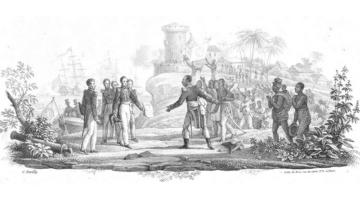 Black scholars have worked to challenge the accepted white supremacist imperialist historical narrative of colonialism and enslavement. The legacy of the Haitian Revolution sits at the center of this…
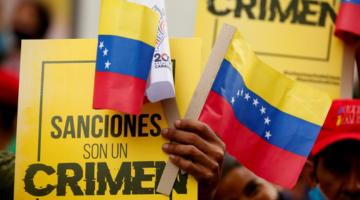 The United States once again failed in its attempt to force regime change in Venezuela and extinguish the growth of socialism in South America. Therefore, it reverted to its old and unsuccessful…
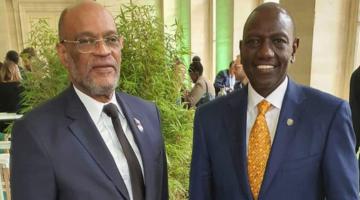 Kenya’s police deployment to Haiti and the spurious claim of "reciprocity", knowingly and willfully promoted by Ariel Henry, William Ruto, and others, is in flagrant violation of the National Police…
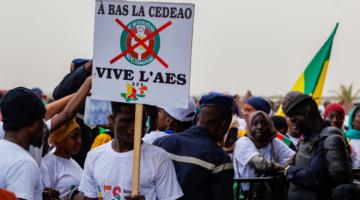 Mali, Burkina Faso, and Niger pulled out of the West African economic union ECOWAS, in major blow to the regional integration project and rejection of Emmanuel Macron’s efforts to…
 The genocide in Gaza includes the calculated destruction of Palestinian intellectual labor and knowledge producing institutions, part of Israel's larger colonial strategy of epistemological…


