by Shea Howell
The corporate rulers are relentless in their drive to push the poor out of Detroit. With tens of thousands more households facing water shut offs, the authorities held – of all things – a water fair. The author was there: “Almost everyone I talked to said the same thing, ‘The city doesn't care about us. They want us out of here.’”
There’s Nothing Fair About Detroit’s Massive Water Shut Offs
by Shea Howell
This article previously appeared in the web site of D-REM – Detroiters Resisting Emergency Management.
“Every time someone is shut off, fewer people have to pay the fixed costs of the system, so prices go up.”
Last week Director of Detroit Water and Sewerage Department Gary Brown announced that water shut offs would accelerate in Detroit. He is threatening to shut off as many as 20,000 homes as quickly as he can. In preparation for these shut offs Brown announced a Water Assistance Fair. The Fair was surrounded with publicity touting the innovative Assistance Plan (WRAP), pushed by the Mayor. Brown said the WRAP is “the most robust, compassionate and comprehensive program of its kind to help low income customers keep their water service.” He said, “We have a responsibility to our customers and citizens of the City of Detroit to make water affordable.”
I went to the Fair. There was nothing “fair” about it. Nor was there any compassion or comprehensive effort to help residents. Here is what I saw.
People were lined up around the block. The first woman I met coming out the door was upset. Her bill was coming to “resident,” as most of our bills do. The worker inside told her that she needed to pay $150 to get the bill in her own name before they would consider a payment plan. She didn’t have $150 dollars. So she left, still facing a shut off.
The next woman I met had recently had a new meter installed. She has always paid her bill on time. Her last bill was $$4,966 dollars. She was told that her bills had been estimated for the last 7 years and she now owed the full amount.
A bit further back in the line was a young woman in similar situation. Her January bill showed a $250 credit. In February she got a bill for $3,400.
“Everyone had experienced increases in their bill of between $100 and $400.”
Of the 22 people I spoke with directly, more than half had bills of over $1000, in some cases even after they had turned off water in part of their home to save money. Everyone had experienced increases in their bill of between $100 and $400.
Most people got little or no help from the city.
Moreover there was no compassion from the city. It was cold morning, with small children bundled up against the wind. Elders leaned on walkers. The only chairs were those the more experienced in dealing with the city brought with him. People stood in line for over three hours. One young, pregnant woman brought her two small children to the front of line, asking to use the bathroom. Her littlest child needed to go. Too bad. She was turned away, as was everyone else.
This is what compassion looks like from Gary Brown and the Mayor. Almost everyone I talked to said the same thing, “The city doesn't care about us. They want us out of here.”
Brown re-enforced this antagonism when he once again tried to pit one person against another. In perverse logic, Brown repeated those who don't pay, cost the rest of us more money. “Customers pay an average of $10 more on their bill each month to cover the cost of uncollectible accounts,” he said.
A more truthful statement would be that until the city adopts a water affordability plan based on income, its shut off policy will continue to drive prices up. Every time someone is shut off, fewer people have to pay the fixed costs of the system, so prices go up. Every time prices go up, more people are shut off. This is an unsustainable downward spiral.
There is a robust, compassionate way for us to ensure Water is Human Right. But it wont be found coming from the Mayor or his henchman, Gary Brown.

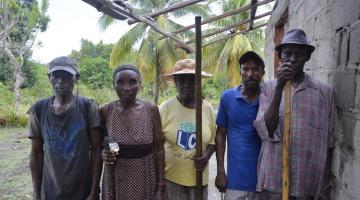 The author unpacks the tired trope of “poor rich Haiti,” highlighting the role of foreign capital and local elites in the destruction of life in the countryside.
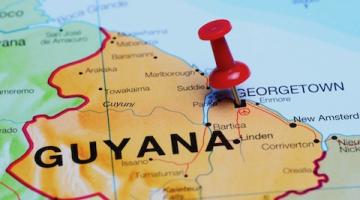 Guyana’s historically oppressed peoples direct their hostility at each other while neo-imperial powers hide in plain sight and reap the country’s wealth.
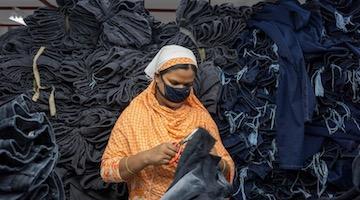 When the Covid-19 pandemic cut into corporate profits, the fashion industry simply stole billions from some of the world’s most exploited workers.
 "As long as the virus continues to circulate anywhere, people will continue to die, trade and travel will continue to be disrupted, and the economic recovery will be further delayed."
 The pandemic forced many police departments, courts and jails to take steps that reformers had been demanding for decades.



