VIDEO
SHARMINI PERIES, EXECUTIVE PRODUCER, TRNN: Welcome to the Real News Network. I'm Sharmini Peries coming to you from Baltimore.
The city of Cleveland announced a six million dollar settlement with the family of Tamir Rice in a US district court on Monday. Rice was the 12-year-old African American boy that was killed by Cleveland Police Officer Timothy Loehmann in November of 2014. According to terms of the settlement the city will not acknowledge misconduct in Rice's death. Last December a grand jury decided not to indict Loehmann or his trainer, Officer Frank Garmback, in Tamir's death.
To discuss all of this I'm joined by Glen Ford. Glen is joining us from Plainfield, New Jersey. Glen is cofounder and executive editor of the Black Agenda Report. So good to have you with us, Glen.
GLEN FORD: Thank you for having me.
PERIES: So GlARMINI PERIES, EXECUTIVE PRODUCER, TRNN: Welcome to the Real News Network. I'm Sharmini Peries coming to you from Baltimore.
FORD: Well, in terms of the Tamir Rice matter, the implication is that it is settled in the legal sense. That is, there is now no possibility of there being a federal trial of the cops involved on civil rights charges, not that anyone was expecting that to happen anyway.
This is a very, very callous city, Cleveland, with a terribly horrible record. Your viewers ought to know that just back in February of this year the city was trying to collect on a 500 dollar emergency medical care bill from Tamir Rice's family. I suppose that would be to pay for the ambulance that picked up his body from the park where he had been shot by cops two seconds after they arrived to answer a report that there was a kid with what appeared to be a gun. It was a toy gun.
Actually, I think that Tamir Rice's family may be counting their blessings for getting the money at all, because Cleveland has a real and very disturbing history of trying to stiff victims of police abuse who wind up winning in civil court after losing, of course, in criminal court. In one case, this is the case of a guy named David Ayers, he was framed by two Cleveland police detectives and sent off to prison for 11 years, he spent 11 years in prison for a murder that he didn't commit. And he managed to gather enough evidence to get out of prison and to convince a jury to award him millions of dollars because of the wrongful conduct of the police.
Well, the city of Cleveland then, after the judgment came down, said that, well, they're not responsible. It was the police's doing, and the city has no responsibility to pay them. The city then helped pay for the two detectives involved to declare bankruptcy to that David Ayers, who'd spent 11 years in prison, wound up getting very little.
And the city did the same in the case of Kenny Smith, who was a 20-year-old Black man who was wrongfully killed by Cleveland police. And the prosecutor, the same prosecutor who basically engineered the no-indictment in the case of Tamir Rice, this prosecutor praised the cops who shot Kenny Smith to death as heroes. But when it was proven to a civil jury that this was a wrongful death the city of Cleveland turned around again and said, well, that's on the police officers, and they helped the police officers declare bankruptcy and the family of Kenny Smith is still waiting for a payout.
These cities all across the country are amassing huge, huge bills in order to clean up the blood, so to speak, that their cops have been shedding in Black communities all over the place.
PERIES: Now, so this releases the police from responsibility, releases the police force from responsibilities, and it also releases the city from any responsibility of wrongdoing, accountability or even correcting the situation, and it also prevents federal prosecutors from moving in and dealing with it. Your thoughts on that?
FORD: Well, you know, the feds do have a presence in Cleveland because Cleveland is under its second federal consent decree order in the 21st century. That is, for the second time since the turn of the century a federal appointed overseer is playing a kind of role of making sure that Cleveland carries out the changes that it said it would undertake in terms of how it treats its Black citizens. Cleveland tried this once earlier this century and it didn't take, and based upon its record to date the second consent decree isn't taking either. So the feds have a role to play. It's one they negotiated for themselves in Cleveland, but it doesn't seem to be giving the Black citizens of Cleveland any relief.
PERIES: And, as most of you know, the Real News is covering the Freddie Gray case as it's ongoing at this time, and we'll be reporting on how the officers are judged upon, in terms of Freddie Gray's death, and I hope you join us. And Glen, I thank you so much for joining us today, as well.
FORD: Thank you.
PERIES: And thank you for joining us on the Real News Network.

 "As long as the virus continues to circulate anywhere, people will continue to die, trade and travel will continue to be disrupted, and the economic recovery will be further delayed."
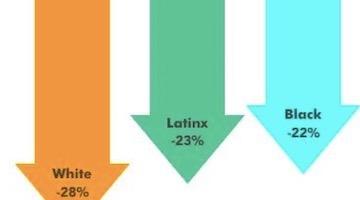 The pandemic forced many police departments, courts and jails to take steps that reformers had been demanding for decades.
 Expect “Lip Service” from Biden on Immigration Reform
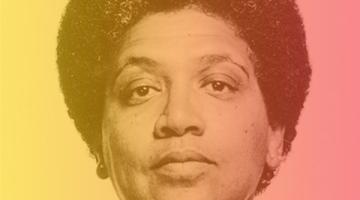 Black poet and feminist Audre Lorde showed her socialist and revolutionary colors in the wake of the US invasion of Grenada, her parent’s birthplace, in 1983, said Jack Turner, pro
 “If we want to have Black liberation, we have to abolish capitalism to do that,” said Kandista Mallett, an activist and columnist for Teen Vogue magazine who authored a recent colu


